
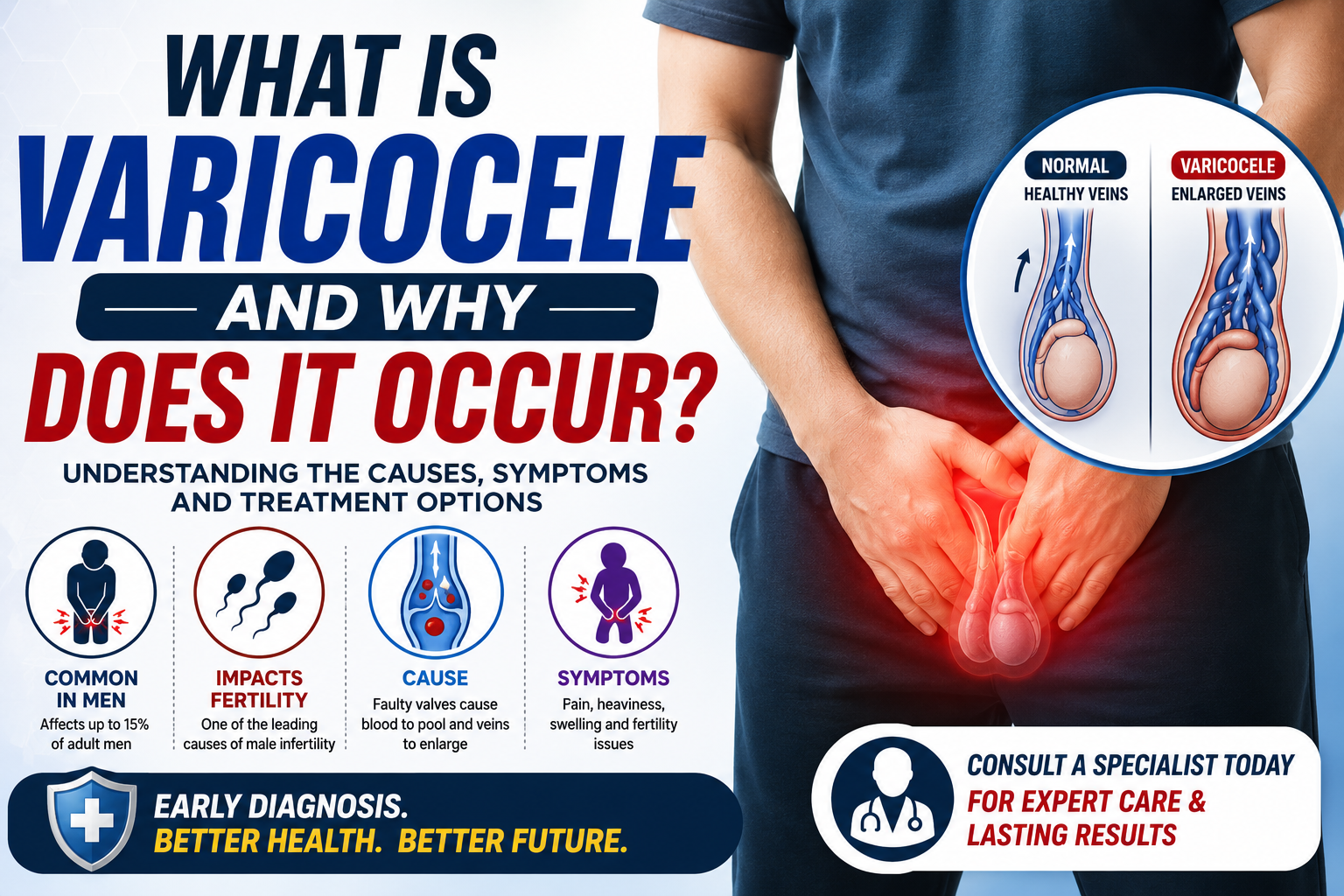
Many men are unaware they have a varicocele until they experience symptoms such as discomfort, testicular heaviness, or fertility concerns. In fact, varicocele is one of the most common causes of male infertility and affects a significant percentage of men worldwide.
Despite its prevalence, the condition often goes undiagnosed because symptoms can develop gradually or remain mild for years.
Understanding what varicocele is, why it occurs, and when treatment may be necessary can help men make informed decisions about their reproductive and overall health.
If you’re experiencing symptoms or have concerns about fertility, learning more about varicocele can help you recognize the condition early and seek appropriate medical advice.
What Is a Varicocele?
A varicocele is an enlargement of the veins within the scrotum, specifically the veins that drain blood from the testicles.
These veins form a network known as the pampiniform plexus.
When the valves inside these veins stop functioning properly, blood begins to pool rather than flowing efficiently back toward the heart. This causes the veins to become enlarged and twisted, similar to varicose veins that occur in the legs.
Varicoceles most commonly develop on the left side of the scrotum, although they can occur on both sides.
How Common Is Varicocele?
Varicocele is a relatively common condition.
Studies suggest that it affects approximately:
-
15% of adult men
-
Up to 35% of men with primary infertility
-
A higher percentage of men experiencing secondary infertility
Many cases are discovered during routine examinations or fertility evaluations.
Why Does Varicocele Occur?
The exact cause of varicocele is not always fully understood, but several factors contribute to its development.
Faulty Vein Valves
The most common cause is malfunctioning valves within the veins.
Normally, these valves ensure blood flows in one direction toward the heart.
When the valves weaken or fail:
-
Blood flows backward
-
Blood pools inside the veins
-
Pressure increases
-
Veins enlarge
This process gradually leads to varicocele formation.
Anatomical Factors
Varicoceles occur more frequently on the left side due to differences in vein anatomy.
The left testicular vein drains into the left renal vein at a different angle than the right side.
This arrangement can increase pressure within the vein and make blood flow less efficient.
Increased Venous Pressure
Any condition that increases pressure within the abdominal or pelvic veins may contribute to varicocele development.
Examples include:
-
Prolonged standing
-
Heavy lifting
-
Chronic straining
-
Increased abdominal pressure
These factors can place additional stress on the veins over time.
What Are the Symptoms of Varicocele?
Many men experience no symptoms at all.
However, when symptoms occur, they may include:
Dull Aching Pain
The discomfort is often described as:
-
A dull ache
-
Mild pulling sensation
-
Scrotal discomfort
Symptoms may worsen after standing for long periods or physical activity.
Feeling of Heaviness
Some men notice a sensation of heaviness within the scrotum.
This often becomes more noticeable as the day progresses.
Visible Enlarged Veins
In larger varicoceles, the veins may appear enlarged or twisted beneath the skin.
Doctors sometimes describe this appearance as a “bag of worms.”
Testicular Size Changes
In some cases, reduced blood flow and increased temperature may affect testicular growth or size.
Fertility Problems
For many men, infertility may be the first indication that a varicocele is present.
How Does Varicocele Affect Fertility?
One of the most important concerns associated with varicocele is its potential impact on male fertility.
Several mechanisms may contribute to this effect.
Increased Scrotal Temperature
The pampiniform plexus normally helps regulate testicular temperature.
When blood pools within the veins:
-
Scrotal temperature may rise
-
Sperm production may be affected
-
Sperm quality may decline
Reduced Oxygen Supply
Poor blood circulation may affect the delivery of oxygen and nutrients to testicular tissue.
Oxidative Stress
Research suggests that varicoceles may increase oxidative stress within the testicles, potentially damaging sperm cells.
These factors may contribute to:
-
Reduced sperm count
-
Poor sperm motility
-
Abnormal sperm morphology
Different Grades of Varicocele
Doctors often classify varicoceles according to severity.
Grade 1
Small varicocele detectable only during physical examination with specific maneuvers.
Grade 2
Moderate varicocele that can be felt during examination without special maneuvers.
Grade 3
Large varicocele that is clearly visible through the scrotal skin.
Higher grades often have a greater likelihood of causing symptoms or fertility issues.
How Is Varicocele Diagnosed?
Diagnosis usually involves:
Physical Examination
A doctor examines the scrotum while standing and may ask the patient to perform specific breathing maneuvers.
Ultrasound Imaging
Scrotal ultrasound is commonly used to:
-
Confirm diagnosis
-
Measure vein size
-
Assess blood flow
-
Evaluate testicular health
Ultrasound provides a highly accurate assessment of varicocele severity.
When Is Treatment Needed?
Not all varicoceles require treatment.
However, intervention may be recommended if a patient experiences:
-
Persistent pain
-
Fertility concerns
-
Abnormal semen analysis
-
Testicular shrinkage
-
Significant discomfort
The decision depends on symptoms, age, fertility goals, and overall health.
Modern Treatment Options
Several treatment approaches are available.
Varicocele Embolization
Varicocele embolization is a minimally invasive image-guided procedure performed by an interventional radiologist.
The procedure works by blocking the abnormal veins responsible for blood pooling.
Benefits include:
-
No major incision
-
Faster recovery
-
Minimal discomfort
-
Outpatient treatment
Surgical Repair
- Surgical techniques may also be used to tie off affected veins and redirect blood flow.
- The most appropriate treatment depends on individual circumstances.
- Can Varicocele Be Prevented?
- Because anatomical factors play a major role, complete prevention is not always possible.
- However, early evaluation and treatment can help reduce the risk of complications and preserve reproductive health.
- Men experiencing symptoms should not ignore persistent discomfort or fertility concerns.
Conclusion
Varicocele is a common condition caused by abnormal enlargement of veins within the scrotum. Although some men experience few symptoms, others may develop pain, discomfort, testicular changes, or fertility problems. Understanding why varicocele occurs can help men recognize warning signs and seek timely medical evaluation.
Fortunately, modern diagnostic techniques and minimally invasive treatments have made managing varicocele more effective than ever. Early diagnosis often leads to better outcomes and may help protect long-term reproductive health.
For expert evaluation, advanced minimally invasive procedures, and personalized care, consult specialists offering varicocele treatment in jaipur and explore the latest treatment options for lasting relief and improved reproductive health.
Frequently Asked Questions
Is varicocele dangerous?
Varicocele is usually not dangerous, but it may cause discomfort, testicular changes, and fertility problems if left untreated.
Can varicocele go away on its own?
Varicoceles generally do not disappear without treatment.
Does every varicocele affect fertility?
No. Some men with varicocele have normal fertility, while others experience reduced sperm quality.
Is varicocele embolization painful?
Most patients experience minimal discomfort because the procedure is minimally invasive and typically performed under local anesthesia.
When should I see a doctor for varicocele?
You should seek medical evaluation if you experience pain, heaviness, visible enlarged veins, or fertility concerns.