
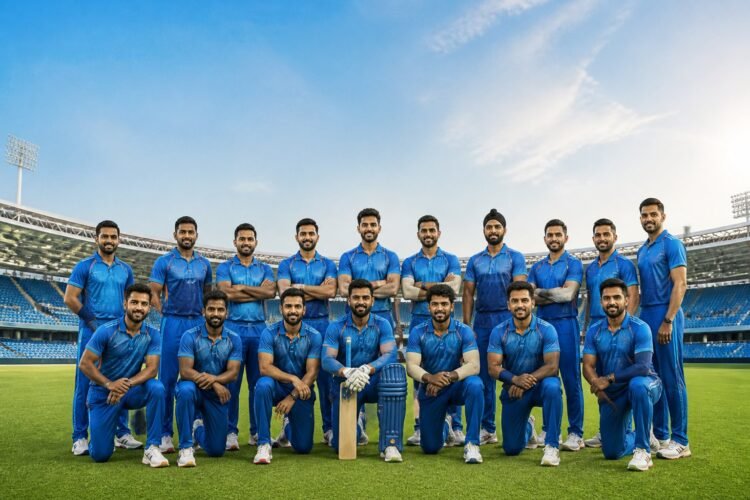
If you’ve been trying to keep track of who’s actually wearing the India jersey this year, you’re not alone. Between Tests, ODIs, T20Is, and a stacked IPL season that fed a wave of new names into the setup, 2026 has been one of the more eventful years for Team India in recent memory. This guide walks you through the full squad picture across formats, who’s leading each side, and the players worth watching as the year rolls on. If you want the bigger picture first, our overview of India’s 2026 cricket season is a good place to start before diving into the individual squads below.
The Big Picture: Three Captains, Three Teams
Team India no longer runs on a single leadership model. Shubman Gill now captains both the Test and ODI sides, a role he’s grown into after taking over from Rohit Sharma, while Shreyas Iyer leads the T20I unit following his return to the shortest format. It’s a split-captaincy setup similar to what several other top nations have adopted, and it reflects how differently the three formats are being managed. For a deeper look at how this leadership structure came about, check out our piece on India’s captaincy transition explained.
Test Squad: Building Around a New Core
India’s Test side going into the Sri Lanka tour is led by Gill, with KL Rahul serving as his deputy. The top order features Yashasvi Jaiswal, whose aggressive opening style has become a fixture of the side, alongside Rahul and Gill himself anchoring the innings. Rishabh Pant and Dhruv Jurel give the team two wicketkeeping options, with Pant’s counter-attacking batting still central to how India tries to seize momentum in the middle overs of a Test innings.
Sarfaraz Khan and Devdutt Padikkal round out the middle order, both fighting for consistent game time after strong domestic performances earned them repeated call-ups. On the bowling side, the pace attack continues to be built around fitness management as much as raw selection, something that’s been a running theme all year. If you want details on how the bowling attack has evolved, our article on India’s fast bowling rotation policy in 2026 breaks down the thinking in more depth.
ODI Squad: Experience Meets New Faces
The ODI squad blends the old guard with newer names. Rohit Sharma and Virat Kohli remain part of the setup, giving the middle order a level of experience that’s hard to replicate, while Gill leads the side as captain with Iyer as his vice-captain in this format too. Jasprit Bumrah continues to be the spearhead of the bowling attack whenever workload management allows him to play, and when he’s rested, the responsibility shifts to Prasidh Krishna and Harshit Rana.
Ishan Kishan and KL Rahul share wicketkeeping duties, and both bring different strengths — Kishan’s left-handed aggression up top versus Rahul’s more measured anchor role. Washington Sundar and Axar Patel provide the spin-bowling all-round balance that India has leaned on heavily since their white-ball successes in past ICC events. Kuldeep Yadav remains the frontline wrist-spinner, a role he’s held onto through several selection cycles. For a closer look at how the middle order has been shuffled this year, see our breakdown of India’s ODI batting order changes in 2026.
T20I Squad: A New Captain and a Youth Movement
The T20I side has seen the most visible shake-up. Shreyas Iyer took over the captaincy after Suryakumar Yadav stepped back from the leadership role, with Tilak Varma named vice-captain. It’s a squad clearly being built with the next T20 World Cup cycle in mind, and that shows in how many uncapped or lightly-capped players have been given opportunities across the England, Ireland, and Zimbabwe tours this year.
Abhishek Sharma and Sanju Samson have both had stretches as opening partners, while Ishan Kishan’s return to the T20I fold after nearly two years away has added competition at the top of the order. Shivam Dube and Nitish Kumar Reddy provide batting depth in the middle overs along with genuine bowling options, which gives the team more flexibility on different pitches. Varun Chakravarthy and Ravi Bishnoi have taken turns as the frontline wrist-spin threat, and Arshdeep Singh remains a fixture with the new ball. If you’re curious how these T20I combinations have performed match by match, our recap of India’s T20I results in England and Ireland 2026 has the full rundown.
The Teenager Everyone’s Talking About
No conversation about India’s 2026 squads is complete without mentioning Vaibhav Sooryavanshi. At just 15 years old, he became the youngest player ever picked for a senior Indian cricket team, earning his call-up after an extraordinary IPL campaign where he topped the run charts and won the tournament’s MVP award. His inclusion in the T20I squad for the Ireland and England series, and later for the Asian Games, has been one of the most talked-about selection stories of the year. Whether he goes on to break long-standing age records for an India debut remains to be seen, but his rise says a lot about how quickly the pipeline from domestic and franchise cricket into the national team has sped up. We’ve covered his journey in more detail in Vaibhav Sooryavanshi: the story behind India’s youngest cricketer.
Player Profiles: Names to Know
Shubman Gill anchors both the Test and ODI teams as captain, known for his classical technique and calm temperament at the top of the order. Shreyas Iyer leads the T20I side and has taken on the responsibility of steadying a format that’s gone through real turnover this year. Jasprit Bumrah remains India’s most important bowler across formats when fit, though his appearances are now carefully managed to protect his long-term fitness. Rishabh Pant continues to be the wicketkeeper-batter capable of changing a Test match in a single session, while Yashasvi Jaiswal has cemented himself as one of the most exciting young openers in world cricket.
On the white-ball side, Suryakumar Yadav remains a key batting presence even after stepping down from the T20I captaincy, and Axar Patel has quietly become one of the most reliable all-rounders in India’s white-ball setup, contributing with both bat and ball. Kuldeep Yadav and Varun Chakravarthy give India two very different spin options — one a classical wrist-spinner, the other known for his variations and control in the middle overs.
Why the Squads Keep Changing
If it feels like the India squad list has been shifting every few weeks this year, that’s not just your imagination. Between workload management for frontline bowlers like Bumrah, injury replacements, and selectors actively rotating players to assess depth ahead of major tournaments, 2026 has been a year of experimentation as much as competition. It’s a deliberate approach — give more players exposure now so that by the time major ICC events roll around, India has options rather than a thin bench. For a closer look at how selectors have approached this balancing act, our article on BCCI’s squad rotation strategy in 2026 goes into more detail.
Keeping Track Going Forward
With India’s Test tour of Sri Lanka underway, an ODI series against Afghanistan already played, and more white-ball cricket on the calendar before the Asian Games in Japan, squads will likely keep evolving through the rest of the year. The best way to stay current is to check squad announcements as each series is confirmed, since selectors have shown they’re willing to make changes based on recent form rather than reputation alone. Bookmark our India cricket schedule for 2026 if you want to follow along with every upcoming series and squad update as it happens.


