
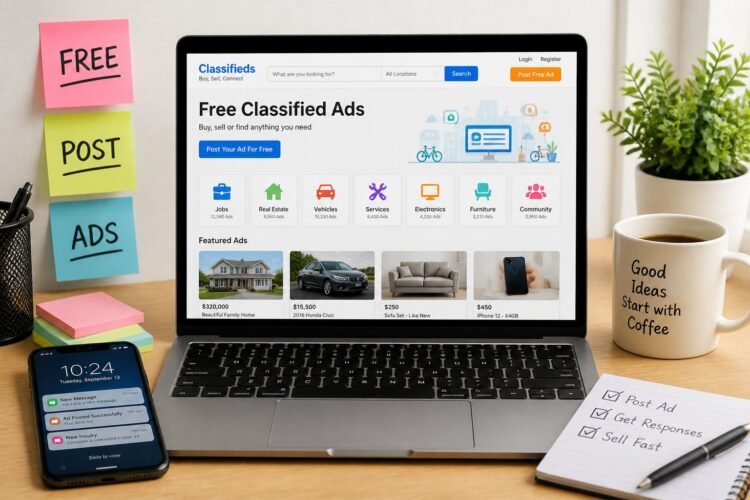
Free classified ads posting sites give you quick, cost-free ways to sell items, find services, or promote your small business—and free classified ads posting sites deliver that direct access to local and wide audiences. Use the right platforms and listing tactics, and you can reach many potential buyers without paying for placement.

This article walks through why posting on free classified sites makes sense, what features top platforms offer, how to craft listings that convert, and promotion strategies to expand your reach. You’ll also get practical fixes for common problems like low visibility or spam, so you can post confidently and get results.
Benefits of Posting on Free Classified Websites

You can reach buyers, renters, or job seekers without upfront ad spend while targeting specific cities, neighborhoods, or global markets. The following points explain how free classified sites save money, boost listing exposure, and connect you to both local and wider audiences.
Cost Savings for Businesses
Posting on free classified sites eliminates monthly ad fees and lowers customer-acquisition costs. You avoid pay-per-click budgets and long-term contracts, so small businesses can list inventory, services, or openings at zero direct expense.
Free listings let you test different headlines, images, and descriptions without financial risk. If an ad performs poorly, revise and repost immediately; this agility reduces wasted ad spend compared with paid campaigns.
You still incur indirect costs—time to create quality listings, photography, and responding to leads. Track lead-to-sale conversion so you can compare free classified performance against paid channels and allocate resources where they deliver the best ROI.
Increased Visibility for Listings
Free classified sites attract users actively searching to buy, rent, or hire, so your listings appear in front of intent-driven visitors. Posting in clear categories (e.g., “furniture — living room” or “marketing jobs — remote”) increases the chance of discovery by relevant searchers.
Many platforms allow images, contact info, and location tags; use these features to stand out. Well-photographed items and concise, keyword-rich titles improve click-through rates and response volume.
Some sites index on search engines, which can drive organic traffic to your listings. Monitor views and inquiries, and refresh top-performing ads periodically to maintain placement and visibility.
Access to Local and Global Audiences
You control geographic targeting by choosing sites and categories that serve specific cities, regions, or international markets. Use hyperlocal platforms like city-specific boards for same-day pickups or local services, and national/global sites when shipping or remote work broadens your reach.
Local audiences often convert faster for in-person transactions; list pickup options, neighborhood details, and local keywords to attract them. For broader markets, highlight shipping, international payment options, or remote service capabilities to reduce friction for distant buyers.
Combine multiple platforms to cover both scopes. Track which sites drive the most qualified leads and scale your activity on the ones that deliver measurable results.
Essential Features of Free Classified Ads Posting Sites
Choose platforms that make posting fast, searching precise, and transactions safer. The right site saves you time, brings relevant buyers or sellers, and reduces risky interactions.
User-Friendly Interface
You should be able to create, edit, and publish listings in under five minutes. Look for clear, step-by-step forms that use plain labels (title, price, location, category) and allow drag-and-drop photo uploads. Mobile-responsive layouts matter: many users browse and post from phones, so buttons and image previews must scale cleanly.
Navigation must keep common actions one tap away: a visible “Post an Ad” button, easy access to your active/pending listings, and quick links to messages. Preview and edit functions let you confirm how your ad appears before it goes live. Helpful microcopy (example titles, recommended image sizes) reduces mistakes and improves listing quality.
Effective Search and Filter Tools
Accurate search results start with indexed fields: title, category, price, location radius, and keywords. You should expect filters for price range, condition (new/used), date posted, seller type (private/business), and delivery/pickup options. Saved searches with alert notifications save repeated effort and bring targeted leads faster.
Sorting options (relevance, newest, lowest price) let you prioritize differently depending on need. Location filters should include radius sliders and map view so you can visualize distances. Advanced filters such as VIN lookup for vehicles or square footage for rentals help you find or vet listings without chasing irrelevant ads.
Secure User Verification
You need clear verification levels to trust other users. Prefer platforms that offer multi-step verification: email + phone confirmation, optional government ID checks, and two-factor authentication for account changes. Badges (verified phone, verified ID) displayed on profiles help you spot validated sellers or buyers at a glance.
Message safeguards limit contact until basic verification completes; this reduces spam and fraud. Platforms that log transaction history and allow you to report or block users create accountability. Look for escrow or secure payment integrations for high-value items, and explicit policies on refunds, chargebacks, and dispute resolution to protect your transactions.
How to Create Successful Listings
Focus on clear titles, correct categories, sharp images, and strict adherence to site rules. Each element should make your listing easier to find, understand, and trust.
Writing Compelling Titles
Write a title that puts the most important details first: product/service, condition, brand, and key spec. For example: “IKEA Bjursta Extendable Table — Solid Oak, Excellent Condition” is better than “Table for Sale.”
Keep titles between 5–12 words to balance detail and scan-ability. Use exact model names, sizes, colors, and useful qualifiers like “new,” “open-box,” or “refurbished.” Avoid ALL CAPS, excessive punctuation, and vague claims such as “best” or “cheap” without context.
Include one strong keyword that buyers will search for, then add a secondary keyword. If you sell multiples, note quantity and unit price: “10x Ceramic Mugs — $3/each.” Regularly test slight variations and track which version gets more views.
Choosing the Right Categories
Place your listing in the most specific category available. Buyers use category filters, so choosing “Used DSLR Cameras” instead of a general “Electronics” category increases relevant visibility.
If the site allows multiple categories or tags, add one extra relevant category but avoid spamming unrelated sections. Use location and sublocation fields accurately—city, neighborhood, or ZIP—to target local searchers.
Check category rules before posting. Some sites have dedicated sections for vehicles, jobs, or real estate with different required fields. Misplaced ads may be removed or earn fewer clicks.
Including Quality Images
Use 3–6 clear photos showing the item from different angles and any flaws. Shoot in natural light on a neutral background; avoid filters that distort color. Include one close-up of brand labels, serial numbers, or wear spots to reduce buyer questions.
Use at least one image sized to the platform’s recommended resolution (commonly 1024 px on the longest side) to prevent automatic downscaling that blurs details. If you sell services, add a professional headshot and examples of past work (before/after shots).
Compress images to balance quality and file size; most sites limit uploads to 2–5 MB per photo. Name files descriptively (e.g., “SonyA7III_front.jpg”) when the platform preserves filenames.
Following Posting Guidelines
Read the site’s posting rules before you publish. Note prohibited items, pricing policies, and required disclosures—some platforms mandate condition, VIN for cars, or licensing for professional services. Failure to comply can lead to removal or account suspension.
Be truthful in descriptions and include payment and pickup/shipping terms. State accepted payment methods and whether you ship or meet locally. If returns or guarantees are unavailable, say so plainly.
Monitor the listing after posting. Respond promptly to messages, update the ad when sold, and renew or repost according to the site’s timing rules to keep visibility high.
Maximizing Reach Through Promotion Strategies
Focus on methods that push your ad to more eyes: share where your buyers already spend time, consider small paid boosts when the audience is specific, and respond quickly to build trust and close sales.
Leveraging Social Media Sharing
Share your classified on platforms that match the audience. Post in local Facebook buy/sell groups, neighborhood Nextdoor threads, and community-focused subreddits. Include a clear headline, 3–5 high-quality images, price, location, and one short bullet list of key specs or benefits.
Use platform features to increase visibility: pin the post in group discussions, add location tags on Instagram, and use relevant hashtags on X/Instagram. Schedule repeat shares at different times and days; tailor the caption for each network (more casual on Facebook, concise on X). Encourage friends or past customers to repost or save the listing to expand organic reach.
Monitor social engagement and reply to comments within an hour when possible. Track which platform drives inquiries by asking buyers “where did you see the ad?” and note that in your listing spreadsheet.
Utilizing Paid Boost Options
Use paid boosts selectively when organic reach stalls or for time-sensitive items. Start with the marketplace’s basic boost (e.g., pinning or promoting for 24–72 hours) and set a daily cap you’re comfortable with—$5–$15 often suffices for local listings. Target boosts by zip code or radius rather than broad regions to avoid wasted impressions.
Test one platform at a time and measure cost per inquiry. Create two versions of your ad copy and image to A/B test which creative yields more clicks. Monitor metrics: impressions, clicks, messages, and final sale rate. Stop or refine campaigns that don’t convert within 48–72 hours.
Keep documentation of boosts and outcomes in a simple table:
- Platform
- Boost cost
- Duration
- Target radius
- Messages received
- Sale completed (Y/N)
Engaging With Interested Buyers
Respond quickly and clearly to inquiries—aim for replies within 30–60 minutes during active hours. Use a templated but personalized message that confirms availability, restates price, and offers next steps (viewing, shipping, or pickup).
Qualify buyers politely: ask if they can pick up at the listed time, confirm payment method, and request their full name for scheduling. Offer additional photos or a short video on request to reduce back-and-forth. For local meetups, suggest a safe public location and bring a companion.
Keep conversation threads organized: timestamp offers, record agreed price and pickup time, and confirm when the item changes hands. This reduces no-shows and disputes, and increases the likelihood of a smooth sale.
Common Challenges and How to Overcome Them
You will encounter duplicate postings and risky inquiries more often than you expect. Addressing those two issues saves time, protects buyers and sellers, and preserves your listing performance.
Avoiding Duplicate Listings
Post once per site and keep a master record of where and when you posted. Use a simple spreadsheet with columns for site name, post title, post ID or URL, post date, and renewal date. That prevents accidental reposts and helps track expirations.
When you must repost, edit the original listing instead of creating a new one when the site allows it. Slightly vary titles and descriptions only if you target different regions or audiences; otherwise identical copies can trigger site filters and reduce visibility.
Use consistent, searchable keywords in each posting so you can quickly search sites for duplicates. Set calendar reminders for renewals and removals. If a site flags your content as duplicate, contact support with the original post URL and ask how to consolidate or reinstate the listing.
Protecting Against Fraudulent Inquiries
Verify prospects before sharing personal details. Ask for a full name, a phone number you can call, and specific questions about the item or service; genuine buyers answer promptly and accurately. Use a separate business phone number or messaging app to keep your personal contact private.
Watch for red flags: over-eager buyers offering to pay more, buyers who push for unusual payment methods, or those who refuse in-person meetings when local pickup is expected. Insist on secure payment methods — cash, verified bank transfers, or reputable escrow services — and document every transaction.
Report suspicious accounts and messages to the site immediately. Save chat logs and screenshots before blocking the user. If a payment or identity appears fraudulent, contact your bank and the classified site’s fraud team right away.
