
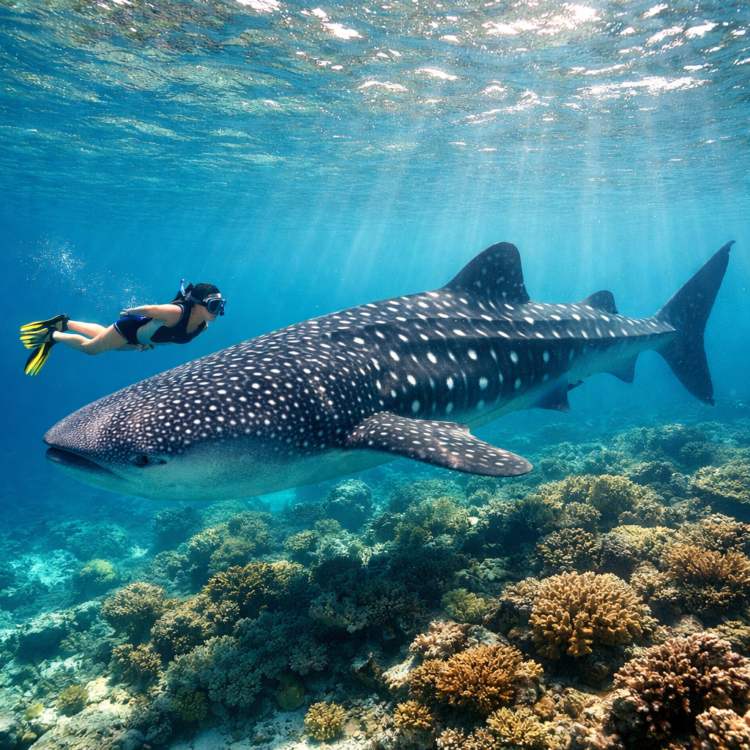
Swimming with whale sharks Ningaloo Reef off Western Australia’s coast is one of those experiences that sounds too extraordinary to be real—until you’re floating three metres from a spotted giant longer than a bus, watching it filter-feed through blue water so clear you can see every marking on its skin.
Unlike cage diving or observatory experiences, this is genuine in-water swimming. You, a snorkel, fins, and the world’s largest fish sharing the same patch of ocean. No glass between you.
Why Ningaloo Beats Almost Anywhere Else for Swimming with Whale Sharks
Ningaloo Reef is a fringing reef, meaning it hugs the coastline rather than sitting far offshore. Whale sharks cruise close to shore here—sometimes just a few hundred metres from the beach—making encounters reliably accessible without marathon boat journeys.
The season runs roughly March through July, peaking around April and May when plankton blooms draw these gentle filter-feeders north along the reef. Water visibility during these months often exceeds 20 metres. You’re not squinting through murk hoping for a glimpse; you’re watching the entire animal glide past in full detail.
The other advantage? Ningaloo sees far fewer tourists than Queensland’s reef systems. Tours are tightly regulated with strict wildlife interaction protocols, so you won’t be jostling for position with dozens of other snorkellers.
What Actually Happens on a Whale Shark Tour
Tours typically depart from Exmouth or Coral Bay early morning. A spotter plane radios coordinates to your boat when it locates a whale shark. Once on-site, you’ll kit up quickly—this isn’t a leisurely preparation.
The crew briefs you: maintain three metres distance, no touching, no flash photography, no diving down in front of the animal. Then you’re in.
The first glimpse is always startling. That enormous mouth, gaping wide to scoop plankton. The distinctive checkerboard pattern of spots and stripes. The unhurried, almost meditative pace of an animal that has nowhere it needs to be.
You’ll swim hard to keep up—whale sharks move slowly by their standards, but you’re still chasing a 5-10 metre fish through open water. Most encounters last 5-15 minutes before the shark dives deeper or your group rotates out to give others a turn. On a good day, you might swim with three or four different individuals.
Practical Tips for Swimming with Whale Sharks at Ningaloo Reef
Fitness matters more than people expect. You need to be a confident swimmer capable of keeping pace in open ocean, sometimes in mild chop. If you struggle in pools, this will be challenging.
Bring your own prescription snorkel mask if you wear glasses—trying to follow a whale shark while everything’s blurred takes the magic out of it. Most operators provide standard masks and fins, but having gear that fits perfectly makes a real difference.
What to Pack
- Reef-safe sunscreen (regular sunscreen damages coral; check labels)
- A rashguard or wetsuit—even in summer, you’ll get cold after multiple water entries
- Seasickness tablets if you’re prone—take them the night before and again that morning
- An underwater camera (many tours offer GoPro hire if you don’t own one)
- A hat and plenty of drinking water for time on deck between swims
When to Visit for Swimming with Whale Sharks at Ningaloo
March through July is whale shark season, but timing within that window affects your experience. Early season (March-April) offers warmer water—around 25-27°C—and often calmer conditions. Late season (June-July) brings cooler water (22-24°C) and occasional winter swells, but also migrating humpback whales as a bonus.
May sits in the sweet spot: reliably good weather, peak whale shark numbers, and water warm enough that you won’t freeze in a 3mm wetsuit.
Book well ahead. Tour operators limit numbers and popular dates fill months in advance, especially school holidays. Check official tourism websites for current availability and pricing rather than relying on outdated information.
Beyond the Whale Sharks: Making the Most of Ningaloo
The reef itself deserves days of your time, not just a single whale shark tour. Shore-based snorkelling is exceptional—walk off the beach at Turquoise Bay or Oyster Stacks and you’re immediately over coral gardens thick with tropical fish, reef sharks, and sea turtles.
If your dates fall outside whale shark season, don’t write off Ningaloo. Manta rays cruise the reef year-round. Humpback whales migrate through July to October. Coral spawning in March is a phenomenon divers travel internationally to witness.
The town of Exmouth serves as the main base, with Coral Bay offering a smaller, quieter alternative further south. Both have accommodation ranging from campgrounds to resorts. Exmouth has more services and tour operators; Coral Bay puts you closer to some of the best shore-snorkel sites. Check local visitor centres for current booking details and accommodation options.
Is Swimming with Whale Sharks at Ningaloo Worth It?
Here’s what I remember most: the moment a whale shark turned slightly, one huge eye visible, and I realised it was aware of me. Not bothered, not interested in interacting, just calmly acknowledging the small human finning along beside it.
That sense of shared space with something so ancient and so enormous stays with you. Photos don’t quite capture the scale or the surreal calm of being in the water with an animal that could weigh 15 tonnes but moves like it’s floating through space.
The logistics take effort—Western Australia isn’t close to anywhere, Exmouth requires a flight or a very long drive, and tours aren’t cheap (check current rates on operator websites). But if you want an encounter that’s genuinely wild, unscripted, and entirely on the animal’s terms, there are few places on Earth that deliver like Ningaloo.
You might also like:
- Aboriginal Art Collection at BAMM: A Hidden Gem in Moree’s Heritage Bank
- Early Morning Soaks: The Secret to Enjoying Moree Artesian Hot Springs Like a Local
For current opening hours, prices and bookings, see Parks Australia – Uluru-Kata Tjuta National Park.
