
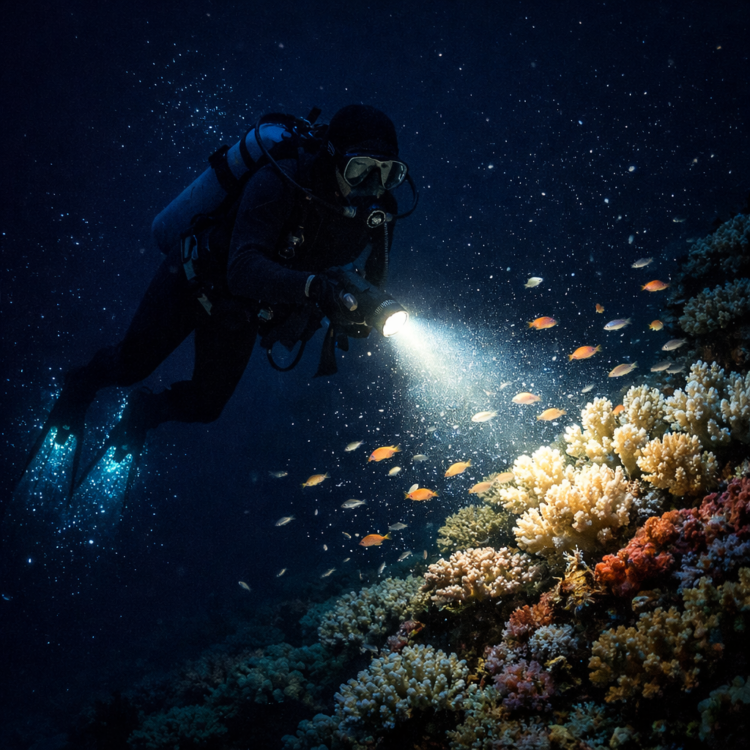
Night diving the Great Barrier Reef offers a completely different perspective on the world’s largest coral reef system. When the sun sets over Queensland’s coast, the reef awakens with creatures and colours you’ll never see during daylight hours. Parrotfish sleep in mucus cocoons, octopuses emerge from their hiding spots, and coral polyps extend their feeding tentacles across the 2,300-kilometre system.
Why Night Diving the Great Barrier Reef Is Different
The reef at night is essentially a different ecosystem. Many daytime fish retreat to sleep, while nocturnal hunters take over. Your torch beam becomes your window into this hidden world, and suddenly you’re noticing animals that were invisible by day—crustaceans, nudibranchs, and hunting cephalopods that stayed hidden in crevices just hours earlier.
Bioluminescence adds another dimension. Disturb the water and watch tiny organisms light up around your fins. It’s subtle, not the dramatic glowing waves you might imagine, but magical nonetheless. The darkness also filters out distractions, letting you focus completely on what’s directly in front of you rather than the vast blue expanse.
What to Expect on a Night Dive Trip
Most night diving on the Great Barrier Reef departs from Cairns or Port Douglas in the evening. Operators typically run shorter trips than daytime excursions—you’ll head out in late afternoon, complete a sunset dive as a warm-up, then do your main night dive once it’s properly dark. Expect to be back at the marina by 10 or 11 PM.
You’ll need to be a certified diver with some logged experience. Most operators require at least Open Water certification and recommend you’re comfortable with your buoyancy and skills before adding darkness to the equation. If you’ve never done a night dive before, don’t worry—that’s common, and your divemaster will brief you thoroughly on using your torch and the buddy system in low visibility.
The boats are smaller than day-trip vessels, usually taking 15-25 divers maximum. This creates a more intimate atmosphere, and you’re not competing with a hundred snorkellers for space.
Essential Gear and What’s Provided
Your primary torch is critical. Operators will provide one, but many experienced divers bring their own because you want something reliable and bright. You’ll also get a backup torch—not optional, this is safety equipment—and typically a third small strobe light that attaches to your tank so your buddy and divemaster can track your position.
Standard diving equipment (BCD, regulator, wetsuit, fins, mask) is included if you don’t have your own. Water temperatures stay relatively mild year-round thanks to Queensland’s location, but a 3mm wetsuit is usually sufficient even in winter months (June-August).
- Primary dive torch (high-intensity, provided or BYO)
- Backup torch (essential safety item)
- Tank marker strobe light
- Standard scuba gear (wetsuit, BCD, regulator, fins)
- Reef-safe sunscreen for the sunset dive
- Warm layer for the boat ride back
The Marine Life You’ll Actually See
Forget the greatest-hits reef fish you see during the day. Night diving introduces you to the B-team that steals the show. Spanish dancers—flamboyant pink and red nudibranchs the size of your hand—undulate through the water column. Cuttlefish and octopuses hunt actively, their skin rippling with colour changes. Crustaceans emerge: ornate crayfish, coral crabs, and cleaner shrimp that would never venture into daylight.
Sleeping fish are surprisingly approachable. Parrotfish wrapped in their protective mucus bubbles, surgeonfish wedged into coral crevices, and wrasses lying on their sides on the sand. They’re vulnerable and know it, so move slowly and keep your torch angled down rather than shining directly at them.
Some sharks become more active after dark. Whitetip reef sharks are commonly spotted, along with wobbegongs camouflaged on the seafloor. They’re not aggressive—just doing their thing—but seeing a shark at night definitely quickens your pulse.
Practical Tips for Your First Reef Night Dive
Book ahead. Night dive trips run less frequently than day tours and fill up quickly, especially during Queensland’s dry season (roughly April-November) when conditions are most settled. Check the official tourism website for current operators and seasonal schedules.
Arrive well-rested. Night dives demand more concentration than daytime diving, and you’ll be returning late. Starting the day with a dawn dive then adding a night dive sounds appealing but can leave you exhausted and less alert than you should be underwater.
Practice your torch technique. Point it where you’re looking, not straight ahead constantly. Shining your light in another diver’s eyes is annoying and ruins their night vision. Learn the basic light signals before you descend: circular motion means “something interesting here,” up-and-down means “are you okay?”
When to Go and How to Choose Your Operator
Water visibility and conditions matter more at night than during the day. Calm seas are essential—you don’t want to deal with surge in the dark. The dry season generally offers the best conditions, though night dives run year-round from most Queensland departure points.
Choose an operator with small group sizes and experienced divemasters who know the specific night-dive sites well. Not every daytime reef site works after dark—you want locations with good moorings, minimal current, and interesting night marine life. Ask about divemaster-to-diver ratios and whether they restrict numbers below certification agency requirements.
Check what’s included in the price and whether equipment rental costs extra. Policies vary between operators, so verify what you’re paying for when comparing options. Contact visitor information centres for current recommendations and booking details rather than relying on outdated information.
The Great Barrier Reef after dark feels like a secret that most visitors never discover. The crowds are gone, the light is intimate, and the creatures you encounter are going about their nocturnal business as if you’re invisible. It’s the same reef, but an entirely different world—and one that stays with you long after the daytime dives blur together.
You might also like:
- Chasing the Golden Hour: Why Sunrise at Oxley Lookout Is Worth the Early Alarm
- Caravan Parks Near the Big Golden Guitar: Your January Festival Base in Tamworth
For current opening hours, prices and bookings, see Australia.com (Tourism Australia) – Uluru & Kata Tjuta.
