
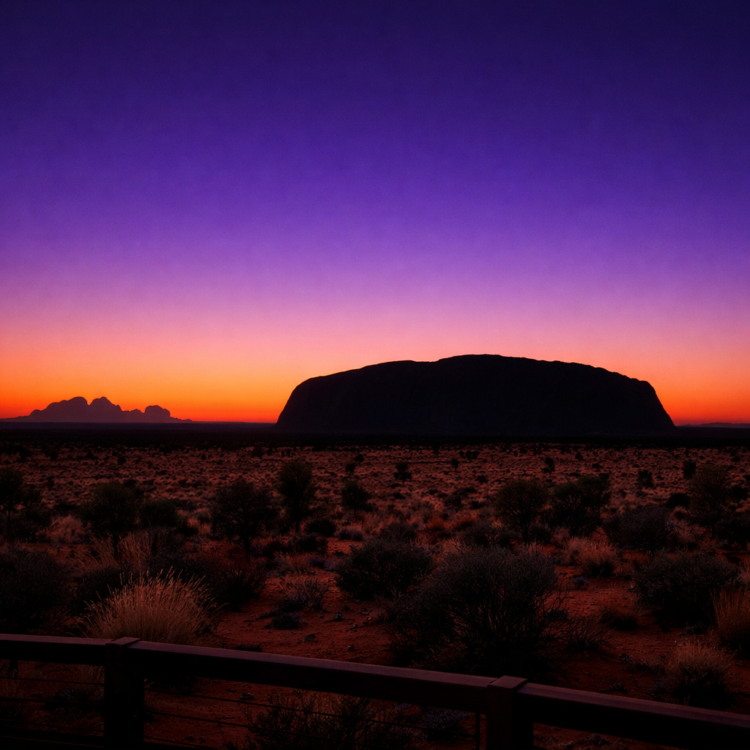
Watching sunrise at Uluru is the kind of experience that starts in the dark, when you’re questioning why you set an alarm for 4:30am. Then the sky begins to shift. The monolith emerges as a silhouette, and within minutes you understand exactly why thousands of people make this pilgrimage every year.
The challenge isn’t whether to see it—that’s a given—but how to do it right. Which viewing platform should you choose? What happens if the weather doesn’t cooperate? And how do you balance this dawn ritual with everything else the Red Centre has to offer?
Why Sunrise at Uluru Beats Sunset (Though Both Are Spectacular)
Sunset gets more attention in the brochures, probably because it doesn’t require an alarm clock. But sunrise has something sunset can’t match: you’re watching Uluru wake up, not say goodnight.
The light shifts differently in the morning. The rock emerges from deep purple to burnt orange to rust red as the sun climbs, each minute bringing a completely different colour. The air is cooler, clearer, and you’ll often have better visibility than in the afternoon when dust and heat haze build up. Plus the crowds, while still present, tend to be smaller—not everyone commits to the pre-dawn start.
The Talinguru Nyakunytjaku viewing platform, about 20 minutes from Yulara, offers the classic sunrise view looking directly at Uluru with Kata Tjuta visible in the distance to your right. It’s elevated, wheelchair accessible, and has interpretive signs explaining Anangu creation stories.
Planning Your Sunrise at Uluru Viewing: Timing and Logistics
Sunrise time in the Red Centre varies dramatically by season. In summer (December-February), that means around 6:30am. In winter (June-August), closer to 7:30am. You need to arrive at least 30-45 minutes before the sun actually breaks the horizon to watch the full colour transformation.
The gates to Uluru-Kata Tjuta National Park open before sunrise specifically for this purpose—check current opening times and park entry requirements on the official Parks Australia website when planning your trip. You’ll need a valid park pass, which covers multiple days.
Drive time from Yulara (where most accommodation sits) to the sunrise viewing area is roughly 25-30 minutes. Yes, that means leaving your hotel well before dawn. Bring a torch or headlamp for navigating in the dark, and layer up—desert mornings can be surprisingly cold, even in summer.
What to Bring for Your Red Centre Sunrise Experience
The viewing platforms have basic facilities, but you’re essentially standing in the desert before dawn. Come prepared:
- Warm layers (fleece or jacket)—temperatures can drop to single digits Celsius in winter
- A thermos of coffee or tea (there’s nothing available to purchase at the viewing platforms)
- Camera with a fully charged battery (the cold drains them faster)
- Water for after the sun is up and you start warming
- Insect repellent during warmer months
- A small torch with red light if possible (less disruptive to others)
Many visitors book sunrise tours that include the viewing experience, plus breakfast afterward and sometimes a base walk. If you’re driving yourself, you have more flexibility to linger or leave—but either way, don’t rush off the moment the sun clears the horizon. The colours keep shifting for a good 20-30 minutes.
Combining Sunrise at Uluru with the Rest of Your Red Centre Itinerary
After sunrise, you’re already in the park with most of the day ahead. This is the perfect time to tackle the Uluru Base Walk (the full loop is 9.4km and takes 3-4 hours) or at least a section of it, like the Mala Walk to Kantju Gorge.
The morning light is ideal for photography, and you’ll beat the midday heat. By early afternoon, head back to your accommodation to rest—you did get up before dawn, after all—then consider driving to Kata Tjuta (about 50km from Uluru) for a late afternoon walk through Walpa Gorge or Valley of the Winds before sunset.
If you’re basing yourself in Alice Springs rather than Yulara, be realistic about distances. It’s roughly 4.5 hours’ drive each way, which makes sunrise at Uluru a multi-day commitment rather than a day trip. Most visitors spend at least 2-3 nights at Yulara to properly experience both Uluru and Kata Tjuta without exhausting themselves.
When Weather Doesn’t Cooperate
Cloud cover isn’t necessarily your enemy. Some of the most dramatic sunrise photos come from partly cloudy mornings when the clouds light up in pink and orange. Complete overcast is less exciting, admittedly, but the rock still reveals itself as dawn breaks, and there’s something humbling about experiencing Uluru in weather that isn’t postcard-perfect.
Rain is rare but not impossible, particularly in summer. If storms threaten, check with your accommodation or the visitor centre about road conditions and viewing platform closures. The upside? Uluru after rain, with water streaming down its sides and temporary waterfalls forming, is an incredibly rare sight that many long-time guides have only witnessed a handful of times.
Respecting Anangu Culture During Your Visit
The Anangu people are the traditional owners of Uluru, and sunrise is part of their living cultural landscape, not just a tourist attraction. Photography is permitted at the designated viewing platforms, but certain areas around the base of Uluru are sacred sites where photography is prohibited—these are clearly marked.
Climbing Uluru has been closed since October 2019, respecting Anangu wishes. The sunrise viewing platforms are specifically designed to provide spectacular views while keeping visitors in appropriate areas. Take time to read the interpretive information about Tjukurpa (Anangu law and culture)—it adds profound depth to what you’re witnessing.
The Uluru-Kata Tjuta Cultural Centre, located near the base of Uluru, is worth visiting either before or after your sunrise experience. It’s run by Anangu and offers insights into their connection to country that transform how you see the landscape.
That pre-dawn alarm won’t feel early when you’re standing in the desert dark, watching one of Earth’s most recognizable landforms slowly reveal itself in the growing light. Bring your layers, charge your camera, and give yourself permission to simply stand still and watch. Some travel experiences demand participation; this one asks you to witness.
You might also like:
- Bondi to Coogee Walk at Sunrise: Why Dawn is the Best Time for Sydney’s Coastal Classic
- Picnicking at Tamworth Regional Botanic Garden: The Asian Garden’s Hidden Tables
For current opening hours, prices and bookings, see Parks Australia – Uluru-Kata Tjuta National Park.
