
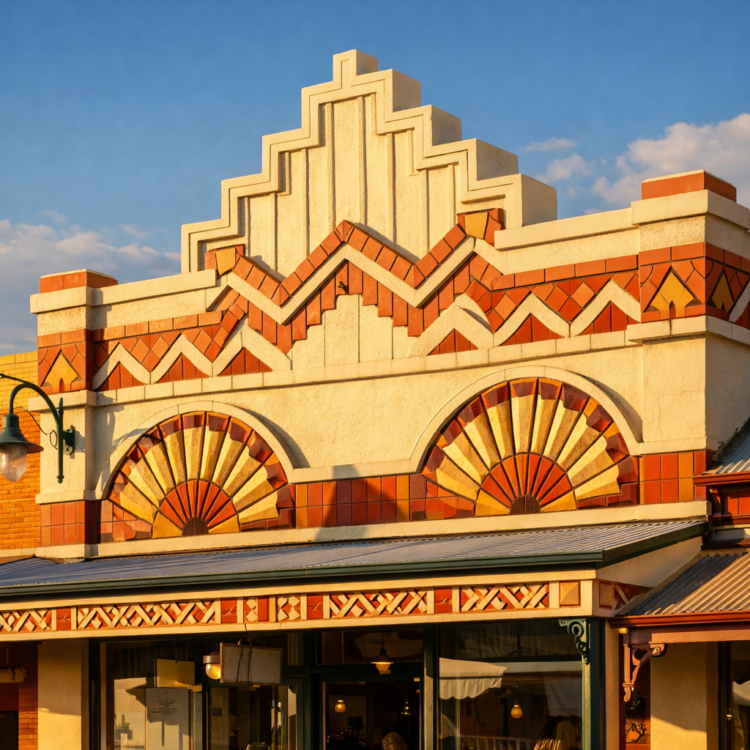
The Moree Art Deco architecture along Balo Street is more than just a collection of old buildings—it’s a masterclass in decorative detail from the 1920s and 1930s. However, most visitors walk the self-guided heritage trail without knowing what to look for. Once you understand the signature features of Art Deco design, these facades transform from pleasant streetscapes into treasure hunts of geometric patterns, stylised ornaments, and Jazz Age optimism.
Why Moree’s Art Deco Buildings Are Worth a Close Look
Moree sits in the Gwydir Valley in northwest New South Wales, about a seven-hour drive from Sydney. The town’s prosperity during the interwar period—fuelled by agriculture and the discovery of artesian water—coincided perfectly with the Art Deco movement sweeping Australia. As a result, Balo Street became a showcase of 1920s-1930s commercial architecture that remains remarkably intact today.
The self-guided Moree Heritage Trail covers around 14 sites, and you can pick up a map from the Visitor Information Centre. Instead of rushing through all of them, I recommend slowing down and really examining three or four buildings. That’s where the magic happens.
The Telltale Signs of Moree Art Deco Architecture
Art Deco buildings share distinctive characteristics that set them apart from earlier Victorian or Federation styles. When you’re walking Balo Street, look up—literally. Most of the decorative work sits above eye level, where it was meant to be admired from across the street.
Here’s what to search for:
- Geometric patterns: zigzags, chevrons, sunbursts, and stepped forms (think of the silhouette of New York’s Chrysler Building)
- Stylised floral motifs: not the realistic roses of Victorian design, but abstracted, symmetrical flower patterns
- Speed lines and streamlining: horizontal grooves suggesting movement and modernity
- Parapet decoration: the roofline often features stepped or curved parapets with ornamental panels
- Terracotta or faience tiles: colourful ceramic accents, often in cream, green, or amber tones
Don’t Forget the Ground Floor
While upper facades grab attention, check the shop fronts too. Original Art Deco detailing often survives in door frames, window surrounds, and the small decorative panels between display windows and upper floors. These elements frequently feature the same geometric motifs as the parapet above.
How to Walk the Art Deco Heritage Trail Like a Detective
Instead of trying to see everything, focus your energy on truly observing. Choose mid-morning or late afternoon light when shadows emphasise the relief work and three-dimensional details. Bring binoculars if you have them—seriously. They let you examine high parapets and frieze work without straining your neck.
Cross the street for perspective. Many Art Deco buildings were designed to be viewed from a distance, where their proportions and symmetry become apparent. Take photos from directly across Balo Street, then zoom in later to study the details you might have missed in person.
For context, combine your architectural walk with a visit to the Bank Art Museum Moree (BAMM). Housed in a 1911 heritage bank building, BAMM offers insights into the period when these Art Deco structures were built. The museum holds one of regional Australia’s most significant Aboriginal art collections alongside contemporary Australian works, giving you a fuller picture of the area’s cultural history.
Practical Tips for Your Moree Art Deco Walk
The heritage walk is entirely self-guided and free. Allow at least an hour if you’re stopping to really look, longer if you’re a photography enthusiast. There’s no bad time of year to visit, though summer in northwest NSW can be quite hot—start early in the day during warmer months.
Park near the Visitor Information Centre to collect your heritage trail map, then the entire walk is easily managed on foot. Balo Street has cafes and shaded verandahs when you need a break. For current details about the heritage trail or to arrange a guided tour if available, contact the Moree Visitor Information Centre directly.
Extend Your Art Deco Architecture Experience
After exploring the Art Deco heritage buildings, Moree offers plenty more. The town is known as Australia’s artesian spa capital, and the Moree Artesian Aquatic Centre draws mineral-rich thermal water from the Great Artesian Basin, naturally heated to around 41 degrees Celsius. It’s the perfect way to soak tired feet after your walking tour.
Several accommodation options feature artesian pools, including Gwydir Caravan Park, Motel & Thermal Pools on the corner of Newell Highway and Amaroo Drive, and Moree Tourist Park on Oak Street by the Mehi River. Check with each property for current rates and availability.
Why the Details Matter
Understanding Art Deco design transforms passive sightseeing into active discovery. Once you know what zigzag motifs and streamlined forms represent—the Jazz Age’s optimism, the machine age’s promise, the modern world emerging from the shadows of World War I—these Balo Street buildings stop being mere historical markers. They become storytellers.
Moreover, this approach works anywhere. The observation skills you develop examining Moree Art Deco architecture will serve you in every heritage town you visit afterward. You’ll start noticing architectural details you previously overlooked, seeing layers of history written in brickwork and terracotta.
So take your time on Balo Street. Look up, look close, and let the details reveal themselves. The buildings have been waiting almost a century to tell their stories—they’re worth listening to.
You might also like:
- How to Choose a Safe Meeting Spot for Online Sales
- How to Photograph Reflective Items for Online Listings Without Glare
For current opening hours, prices and bookings, see NSW National Parks – Mount Kaputar National Park.

Moree Artesian Hot Springs: Early Morning Soaking Guide
September 8, 2026 at 8:21 am
[…] Moree Art Deco Architecture: How to Spot the Details on Balo Street […]
Cotton Farm Tours Moree: What to Expect Behind the Bales
September 8, 2026 at 9:24 pm
[…] Moree Art Deco Architecture: How to Spot the Details on Balo Street […]