
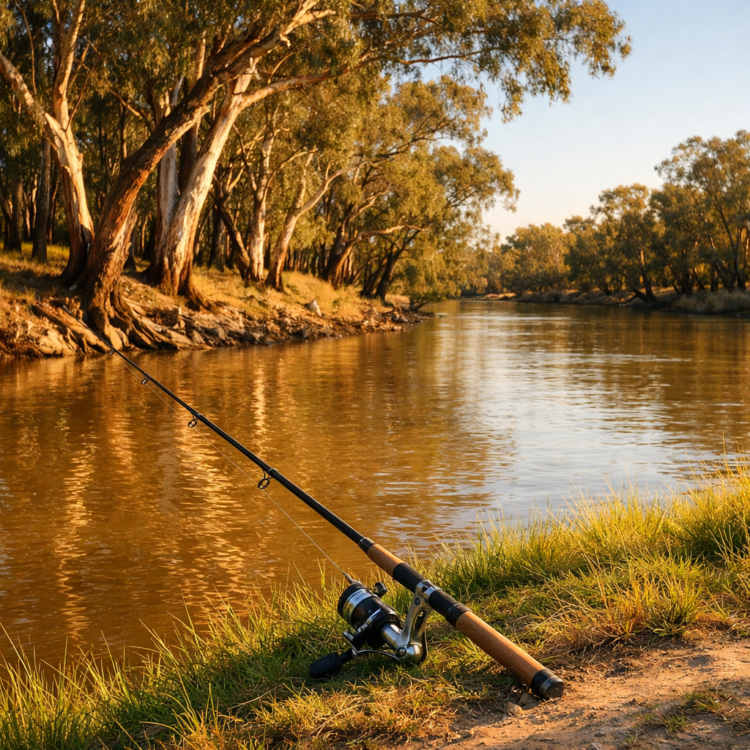
Fishing Mehi River Moree might not top every angler’s bucket list, but those who’ve discovered this quiet northwest NSW waterway know better. The Mehi winds gently through Moree township and the surrounding plains, offering surprisingly productive fishing for golden perch (yellowbelly) and European carp in a landscape far removed from the crowded coastal rivers. Better yet, you can combine a day on the water with a soak in the town’s famous artesian thermal pools—a winning combination after hours standing in the current.
Why the Mehi River Is Worth Your Line
The Mehi River is a western flowing tributary of the Barwon-Darling system, and while it lacks the drama of mountain streams, it compensates with reliable access and genuine solitude. For instance, you’ll rarely compete for a fishing spot here, even on weekends. The river meanders through open farmland and stands of river red gums, creating deep bends and shaded pools where yellowbelly love to ambush prey. Water levels vary seasonally—flow is strongest after good winter-spring rains—so it’s worth checking recent conditions with the Moree Visitor Information Centre before making the trip.
Target Species and What to Expect
Golden perch are the prized catch when fishing Mehi River Moree, particularly in the warmer months from October through March when they’re most active. These hard-fighting natives typically range from 30-45cm in the Mehi, though larger specimens to 60cm are landed each season. European carp are abundant year-round and provide excellent sport on light tackle, especially for families and beginners. Occasionally, anglers also hook Murray cod, though catches are less common than in some larger river systems.
Best Access Points for River Fishing
One of the Mehi’s greatest advantages is easy access right in town. The Moree Tourist Park (formerly Mehi River Van Park) at 28 Oak Street sits directly on the riverbank, offering campers and caravanners immediate water access. In addition, the park features artesian thermal pools on-site—perfect for an evening soak after a day casting. Public access is also available at several road crossings and riverside reserves within a short drive of the town centre, though local knowledge helps identify the most productive holes.
Tackle and Technique Tips
Yellowbelly respond well to both bait and lures in the Mehi. For bait fishing, try fresh yabbies, shrimp, or scrubworm fished on the bottom near structure—fallen timber, undercut banks, and deeper bends. Lure anglers should pack:
- Medium-diving hard-bodied lures in natural baitfish colours (45-60mm)
- Soft plastics rigged on 1/8-1/4oz jigheads
- Small spinnerbaits for working around snags
- Light to medium spin outfits (2-4kg or 4-8kg line class)
Work lures slowly and methodically—western river species rarely chase fast retrieves. Dawn and dusk sessions typically outperform midday fishing, though overcast days can produce all-day action.
Planning Your Mehi River Fishing Trip
Moree is approximately a 7-hour drive (about 630km) from Sydney and 5.5 hours from Brisbane, making it ideal for an extended weekend or longer stay. NSW TrainLink operates a daily train service from Sydney (roughly 8.5 hours), or you can fly to Moree Airport, just 5km from town, with regular Sydney flights. Consequently, the town is more accessible than many inland fishing destinations.
Stay at one of the riverside or artesian-pool equipped caravan parks: Moree Tourist Park for direct river access, or Gwydir Caravan Park, Motel & Thermal Pools (corner of Newell Highway and Amaroo Drive) for excellent on-site thermal facilities. Check with each park directly for current rates and booking requirements, particularly during peak holiday periods.
What Else to Do Between Fishing Sessions
The beauty of basing yourself in Moree for river angling is the diversity of downtime activities. The Moree Artesian Aquatic Centre offers thermal pools naturally heated to around 41°C with mineral-rich water from the Great Artesian Basin, plus waterslides, spa treatments, and saunas. Meanwhile, the town’s Art Deco heritage buildings along Balo Street and the Bank Art Museum Moree (BAMM) provide cultural interest when you’re off the water.
Furthermore, the Gwydir Wetlands State Conservation Area, roughly 60km northwest, offers seasonal kayaking and exceptional birdwatching—a natural complement to your fishing adventure. Local operators also run agricultural tours showcasing the region’s cotton and pecan farming industries, giving insight into this productive landscape.
Regulations and Responsible Fishing
Always fish with a current NSW recreational fishing licence and observe size and bag limits for all species. Golden perch have a minimum legal length of 30cm in NSW inland waters, with a daily bag limit that applies across all Murray-Darling species combined. Check the NSW DPI fishing regulations for the most current rules before you cast. As a result of careful management, the Mehi maintains healthy fish populations, but practising catch-and-release for larger breeding fish helps ensure the fishery remains productive for future visitors.
Make the Most of Moree’s Angling Secret
Fishing the Mehi River in Moree rewards those seeking quality over hype. The combination of accessible yellowbelly fishing, uncrowded riverbanks, and the therapeutic bonus of artesian thermal pools creates a distinctly relaxing angling getaway. Pack your tackle, book a riverside campsite, and discover why locals have kept this northwest NSW fishery quietly to themselves—at least until now.
You might also like:
- How to Choose a Safe Meeting Spot for Online Sales
- The Surprising Benefits of Exercising in Complete Darkness
For current opening hours, prices and bookings, see Visit NSW – Moree.

Moree Hot Springs Caravan Parks: Soaking Under the Stars
September 7, 2026 at 6:55 pm
[…] Fishing the Mehi River Moree: A Guide to Moree’s Secret Yellowbelly Hotspot […]