
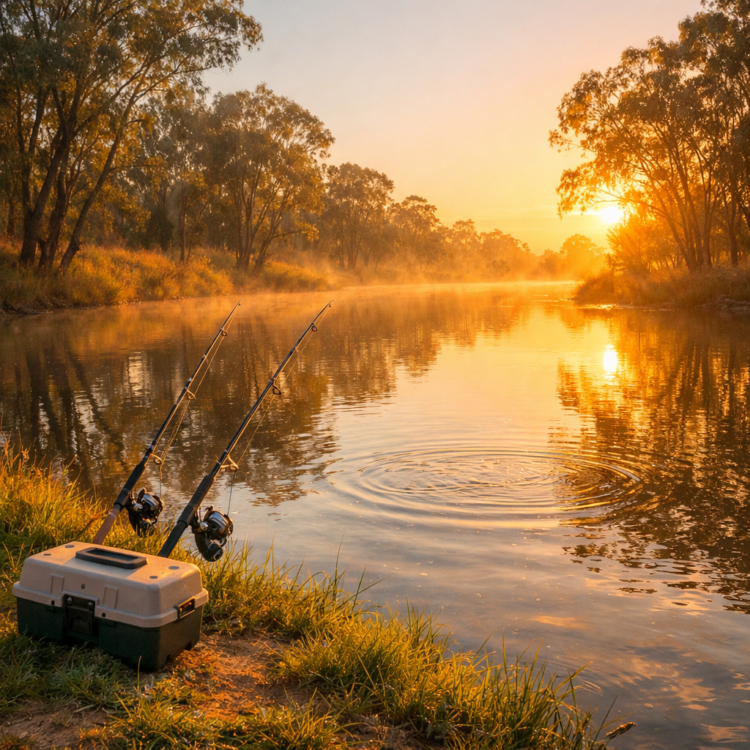
Fishing the Mehi River in Moree offers a surprisingly rewarding experience that often flies under the radar of travellers racing along the Newell Highway. This gentle, tree-lined waterway winds through town and beyond, holding healthy populations of yellowbelly (golden perch), Murray cod, and catfish that make for genuinely exciting freshwater angling just minutes from your accommodation.
Why Fishing the Mehi River Moree Beats the Crowds
Unlike the heavily fished coastal rivers or dammed impoundments that draw weekend crowds, the Mehi River sees relatively light angling pressure. As a result, fish can be less wary and more willing to take a well-presented lure or bait. The river flows through pastoral country in the Gwydir Valley, creating a peaceful backdrop where you’re more likely to share the bank with grazing cattle and waterbirds than competing anglers.
Most importantly, the river offers year-round access. However, your best fishing typically coincides with warmer months (October through April) when yellowbelly become more active and Murray cod are legally targetable during their open season. Always check current NSW DPI fishing regulations before casting a line, as seasons and bag limits change to protect spawning stocks.
Target Species and What to Expect
Yellowbelly are the bread-and-butter species here, ranging from pan-sized fish around 30cm up to genuine trophies pushing 50cm or more. They respond well to small diving lures, soft plastics, and live yabbies or worms fished on the bottom. Early morning and late afternoon sessions typically produce the most consistent action.
Murray cod, Australia’s largest freshwater fish, inhabit deeper holes and snag-filled sections. Furthermore, these prehistoric-looking predators can grow impressively large, though most catches range from 50-70cm (legal size is 60cm). Target them with larger lures like spinnerbaits or surface crawlers worked slowly past submerged timber. Remember that Murray cod have a closed season from September 1 to November 30 to protect spawning fish.
Don’t Overlook the Humble Catfish
European carp and various catfish species also inhabit the Mehi. While carp are considered pests (and must not be returned to the water if caught), catfish provide excellent sport on light tackle and are perfectly edible when prepared correctly.
Best Access Points for Mehi River Fishing
The Moree Tourist Park at 28 Oak Street sits right on the Mehi River bank, offering the ultimate convenience for anglers. You can literally walk from your caravan or cabin to productive fishing spots, then retreat to the park’s artesian pools after a morning session. For specific accommodation details and current rates, contact the park directly or visit the Moree Visitor Information Centre.
Additionally, several public reserves and road crossings provide bank access both upstream and downstream of town. Local knowledge helps here—stop by tackle shops or ask at your accommodation for current hot spots, as productive holes shift with seasonal flows and rainfall. The river meanders through agricultural land where respectful access across private property may sometimes be negotiated with landowners.
Tackle and Techniques for Success
You don’t need a boat to succeed on the Mehi River—in fact, most productive fishing happens from the bank. A medium-weight spinning outfit with 8-10lb line handles most situations perfectly. Here’s what to pack:
- Selection of hard-bodied diving lures in natural colours (shallow and medium divers, 5-8cm)
- Soft plastic paddle-tails and curl-tails on 1/8-1/4oz jigheads
- Basic bait-fishing rig components (running sinkers, swivels, size 2-1/0 hooks)
- Live bait container if you plan to catch yabbies or gather worms locally
- Landing net with rubber mesh (kinder to fish you’re releasing)
- Sun protection, insect repellent, and drinking water
Work your lures slowly and methodically. The Mehi isn’t a fast-flowing river, so fish often hold tight to structure rather than sitting in current. Cast toward fallen timber, undercut banks, and deeper bends where the outside curve creates natural holding water.
Combining Fishing with Moree’s Other Attractions
One of the beauties of fishing Mehi River in Moree is that you can balance angling with the town’s famous thermal attractions. After an early morning session on the water, head to the Moree Artesian Aquatic Centre to soak travel-weary muscles in naturally heated mineral water drawn from the Great Artesian Basin at around 41°C. The contrast between cool river fishing and hot artesian relaxation makes for a uniquely satisfying day.
If you’re travelling with non-fishing family members, they can explore the Art Deco heritage buildings along Balo Street or visit Bank Art Museum Moree (BAMM) while you’re on the water. As a result, everyone gets to enjoy their ideal Moree experience without compromise.
Planning Your Angling Trip
Moree sits about a 7-hour drive from Sydney (roughly 630km) and 5.5 hours from Brisbane, making it accessible for extended weekend trips or as part of a broader regional touring route. NSW TrainLink runs daily trains from Sydney if you prefer to arrive without driving, though you’ll want a vehicle for accessing different fishing spots along the river.
Before you arrive, ensure you hold a current NSW recreational fishing licence (required for anyone aged 18 and over). These are available online through the NSW DPI website. Check the Moree Visitor Information Centre website or call ahead for recommendations on local fishing guides if you’d like expert assistance on your first visit—local knowledge can dramatically shorten the learning curve on any new water.
The Mehi River won’t feature in glossy fishing magazine covers or television shows, and that’s precisely its appeal. This is genuine, accessible freshwater angling that rewards patience and skill with memorable catches, all within minutes of comfortable accommodation and unique artesian spa experiences you simply won’t find anywhere else in Australia.
You might also like:
- How to Write a Pet Adoption Listing That Gets Noticed
- Winter in Moree: Why Cold Nights Make the Artesian Spa Truly Magical
For current opening hours, prices and bookings, see NSW National Parks – Mount Kaputar National Park.
