
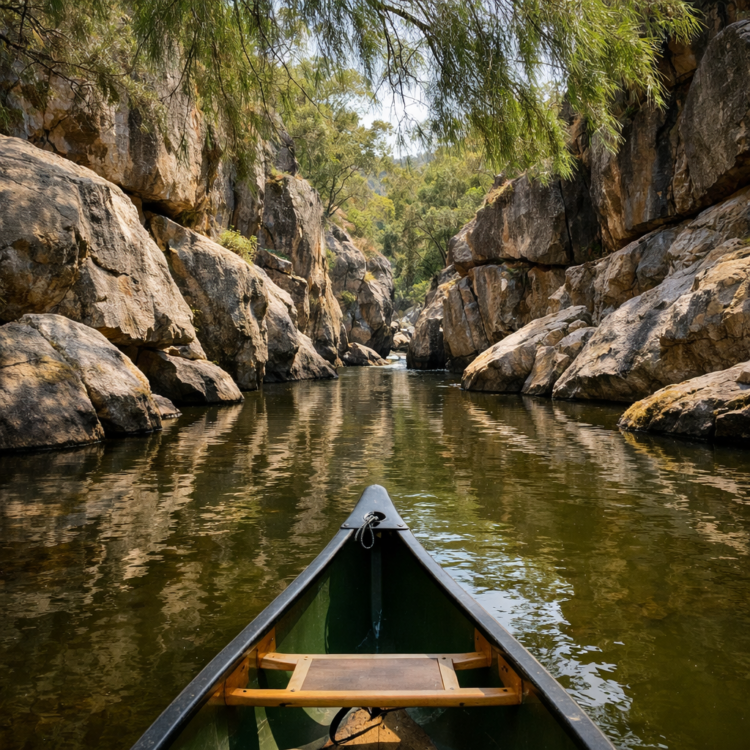
Canoeing Warrabah National Park on the Namoi River offers one of the New England region’s most rewarding water adventures—a journey between towering granite walls, over gentle rapids, and past swimming holes that feel like your own private discovery. Located about an hour’s drive from Tamworth on Kamilaroi Country, this remote park transforms a simple paddle into an exploration of dramatic river gorges and the wildlife-rich banks that line them.
Why Canoeing Warrabah National Park Beats a Bushwalk
The Namoi River carves through Warrabah in a way that reveals the park’s best secrets only to those willing to get on the water. Sure, you can bushwalk the gorge rims and catch glimpses of the granite boulders and rapids below. But paddle a canoe through the narrow sections and you’ll drift past rock ledges where eastern grey kangaroos come to drink at dawn, glide under she-oak branches alive with birdcalls, and slip into sheltered pools the walking tracks never reach.
The river current here is gentle most of the year—more drift than paddle in summer and autumn—but read the water level before you go. After significant rain, those same gentle riffles turn into challenging rapids best left to experienced paddlers. Check conditions at the Tamworth Visitor Information Centre or with the park office for current river flow details before you load the canoe.
Planning Your Paddle: Logistics and Launch Points
You’ll need to bring your own canoe or kayak; there are no hire facilities at Warrabah National Park itself. The main campground near the park entrance serves as the most practical base, with river access a short walk away. Most paddlers opt for an upstream-downstream route rather than a return journey, which means arranging a vehicle shuttle or stashing a bicycle at your take-out point.
The classic paddle runs roughly four to six kilometres depending on your chosen section, taking two to four hours at a relaxed pace with swimming stops. You’re not racing. The point is to linger in the cool shadows where the gorge walls lean in close, to beach the canoe on a sandy bank and wade into a pool rimmed with smooth granite.
What to Pack for a Day on the Namoi
- Dry bag for phone, keys, and snacks (river mishaps happen even on calm water)
- Sun protection: hat, long-sleeve rashie, and high-SPF sunscreen (the river reflections double the UV exposure)
- Plenty of drinking water—more than you think you’ll need
- Water shoes or old runners you don’t mind getting wet for scrambling over boulders
- Basic first aid kit and a whistle
- Polarised sunglasses to spot submerged rocks and the occasional platypus cruising past
Wildlife Encounters from a Canoe
Approach quietly and the river reveals its residents. Platypus feed in the early morning and late afternoon, their ripples cutting neat Vs across still pools. Red-necked wallabies browse the grassy banks, often close enough that you can hear them tearing at vegetation. Azure kingfishers—those electric-blue flashes—perch on low branches, diving for fish in the shallows.
The silence of a canoe is your advantage here. Unlike bushwalkers crunching along trails, paddlers drift into view before animals register the intrusion, offering seconds or even minutes of observation before they bound or flutter away.
The Best Swimming Holes You’ll Paddle Past
Several deep pools along the Namoi River gorge section beg for a swim stop. Look for areas where the current slows and the water darkens to green-brown—depth and shelter combined. The granite boulders create natural diving platforms (test the depth first, always), and the water stays bracingly cool even on 35-degree January days.
One favoured spot sits where a side creek enters from the southern bank, creating a shallow beach perfect for spreading out a picnic before the deeper channel where you can actually swim. The smooth rock ledges double as sun-warmed seats for drying off between dips. Just remember: no glass containers, and pack out everything you bring in.
Canoeing Warrabah: Practical Tips from the River
Mobile reception is patchy to non-existent once you’re on the water, so tell someone your plans and expected return time. The remoteness is part of the appeal, but it also means help is a long way off if things go sideways.
Water levels fluctuate seasonally. Late summer and autumn typically offer the calmest conditions for canoeing Warrabah National Park, when the river runs low and clear over its granite bed. Winter and spring bring higher, faster flows that suit more experienced paddlers but can turn the gorge sections genuinely technical. Winter also means cold water—factor in a wetsuit if you’re paddling between June and August.
The park campground offers powered and unpowered sites, making it feasible to base yourself for a weekend and paddle different sections each day. For current camping fees and booking requirements, check with the Tamworth Visitor Information Centre before you head out.
Getting to Warrabah from Tamworth
From Tamworth, head northeast through Manilla toward Barraba—the drive takes about an hour depending on where you turn off toward the park entrance. The final stretch is unsealed but usually manageable in a 2WD, though a vehicle with clearance helps after rain. Fill your fuel tank in Tamworth; there’s nothing closer.
If you’re making a New England paddling pilgrimage, Lake Keepit sits roughly 45 minutes from Tamworth in the opposite direction, offering a completely different water experience: big open lake rather than intimate river gorge. But for the solitude, the wildlife, and the sensation of drifting between ancient rock walls, the Namoi River through Warrabah has no equal in the region.
You might also like:
- Terry Hie Hie Aboriginal Area: Walking the Yana-y Warruwi Track Near Moree
- Cotton Farm Tours Near Moree: Behind the Scenes of Australia’s White Gold
For current opening hours, prices and bookings, see Tamworth Region – Getting to Tamworth.

Night Walks in the Daintree Rainforest: What You'll Find After Dark | ClassifiedZ
September 15, 2026 at 12:02 pm
[…] Canoeing Warrabah National Park’s Namoi River: Your Gorge-to-Gorge Paddling Guide […]