
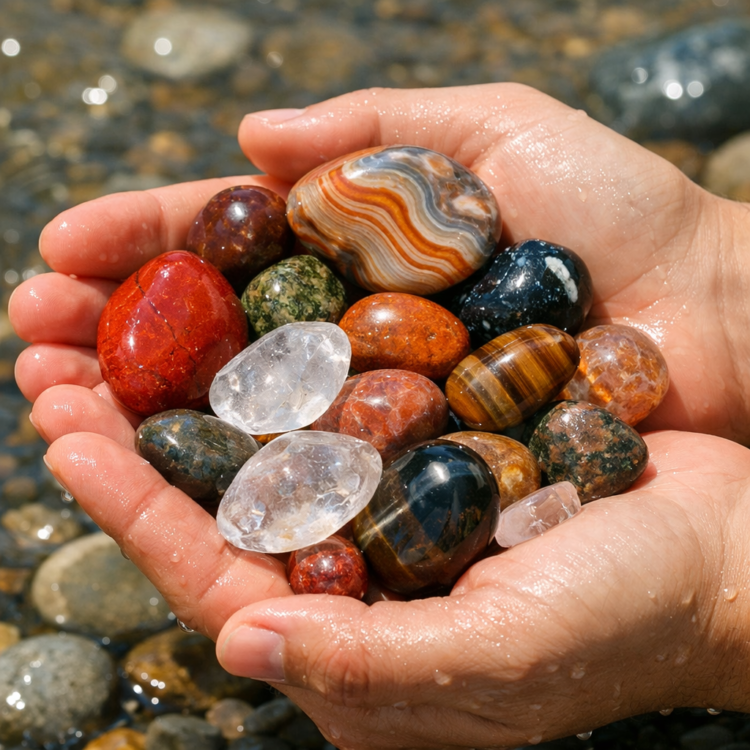
Peel River fossicking draws visitors to Tamworth not just for country music, but for the quiet thrill of scanning gravel bars for jasper, agate and quartz glinting in the sun. While the Peel River cuts through Australia’s country music capital, its banks and tributaries hold semi-precious stones weathered out from ancient volcanic deposits upstream—and unlike regulated mining areas, several accessible stretches let first-timers try their luck without permits or fees.
Why the Peel River Is Perfect for First-Time Fossickers
The beauty of Peel River gem hunting lies in its low barrier to entry. You don’t need expensive equipment or geological training—just a bucket, a small hand trowel, and patience. The river’s gravel deposits concentrate naturally where the current slows: inside bends, behind large rocks, and along exposed sandbars after the water level drops in late summer and autumn.
The stones here aren’t diamonds or sapphires, but that’s exactly the point. Hunting for banded agate or blood-red jasper teaches you to read the landscape, to notice colour and texture, to slow down. Kids love it because success comes quickly—most people find at least a few keepers within an hour.
What You’ll Actually Find Fossicking the Peel
The Peel River system carries silica-rich stones eroded from the Great Dividing Range. Look for translucent quartz in white, pink and smoky grey, often with interesting crystal formations. Jasper appears in earthy reds, yellows and browns—opaque, waxy-smooth when wet. Agate shows banding or patterns, sometimes with moss-like inclusions that catch the light.
You’ll sift through a lot of ordinary river pebbles. The trick is learning the weight and feel: semi-precious stones often feel heavier and denser than similar-sized sedimentary rocks. Wet them to see their true colours—a dull brown pebble might reveal tiger-stripe banding once you splash water on it.
Where to Access the River for Gem Hunting Near Tamworth
Public river access exists at several points along the Peel within a short drive of Tamworth’s CBD. The stretch downstream toward Warrabah National Park sees fewer visitors and offers gravel bars worth exploring, though always check current water levels and avoid fossicking during or immediately after heavy rain when currents run dangerous.
Some landholders near the river allow respectful access—always ask permission if crossing private property, and leave gates as you find them. The Tamworth Visitor Information Centre can point you toward current access points and conditions. Remember, fossicking on designated Crown land river reserves is generally permitted for personal collecting (small quantities), but commercial quantities and mechanical equipment require permits.
Essential Peel River Fossicking Gear and Etiquette
Pack light and practical:
- A sturdy bucket or cloth bag for finds
- A small trowel or garden fork for sorting gravel
- Old shoes that can get wet—river rocks are slippery
- A spray bottle of water to reveal stone colours
- Sunscreen and a wide-brimmed hat (shade is scarce on gravel bars)
- Plenty of drinking water—you’ll be bent over in the sun
Leave no trace. Don’t dig large holes that destabilize banks, and backfill any scrapes you make. Take only what you’ll actually keep or tumble-polish at home—the point is the hunt, not hauling away buckets of rocks you’ll never look at again. If you fish the same stretch, respect anglers’ space and keep voices down near anyone casting lines.
Combining Fossicking with Fishing the Peel River
The Peel River offers decent freshwater fishing for yellowbelly (golden perch) and Murray cod, with the same gravel runs that concentrate gemstones often holding fish. Early morning fossickers sometimes spot anglers working the deeper pools at dawn. If you’re keen on both activities, bring a basic rod and tackle—but check the NSW DPI fishing regulations for size limits, closed seasons, and whether you need a recreational fishing licence.
Warrabah National Park on the Namoi River (the Peel’s major tributary) combines fossicking access with established fishing spots, camping, and bushwalking. It’s about an hour’s drive from Tamworth and makes a good base if you want to spend a full day or weekend exploring riverbanks at a slower pace.
Making a Fossicking Trip Part of Your Tamworth Visit
Fossicking the Peel River works beautifully as a half-day activity—ideally on a warm, clear morning when the light hits the stones just right. Pair it with a picnic lunch along the riverbank, then head back into Tamworth to explore the Big Golden Guitar, the Tamworth Regional Botanic Garden, or grab an early dinner before sunset at Oxley Lookout.
If you’re visiting during the Tamworth Toyota Country Music Festival in January, a morning fossicking escape offers a peaceful counterpoint to the crowds and music. Alternatively, April’s Taste Tamworth Festival means excellent regional food and wine back in town after a morning fossicking on the Peel.
For accommodation, both Tamworth Holiday Park on Goonoo Goonoo Road and BIG4 Paradise Tamworth offer convenient bases close to river access points. Check with the parks directly for current rates and availability—and ask staff for local fossicking tips. They’ve heard every story about the big agate that got away.
Whether you leave with a pocket full of polished jasper or just muddy boots and a new appreciation for the landscape, Peel River fossicking teaches you to see Tamworth’s country differently. It’s geology you can hold in your hand, history tumbled smooth by the river, and a reason to spend a morning under the wide New England sky doing something wonderfully, refreshingly slow.
You might also like:
- Driving to Tamworth from Sydney: The Scenic Route Worth Taking
- How to Visit the Big Golden Guitar: Secrets of the Photo Stop Everyone Gets Wrong
For current opening hours, prices and bookings, see Tamworth Region – Getting to Tamworth.
