
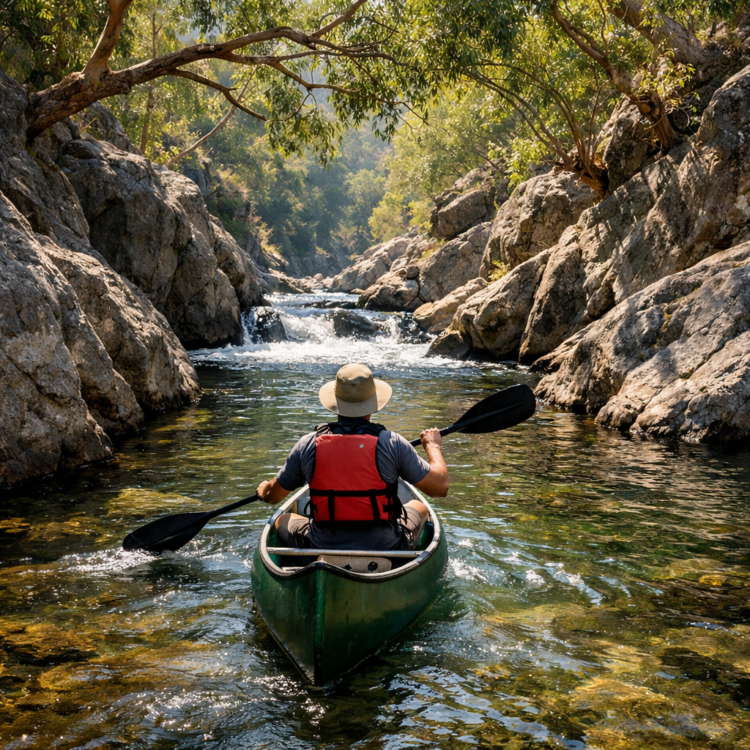
If you’re planning on canoeing Warrabah National Park, you’re in for one of the New England region’s best-kept paddling secrets. About an hour’s drive from Tamworth on Kamilaroi Country, the Namoi River carves through this compact wilderness in a series of rocky gorges and stretches of calm water punctuated by playful rapids. Unlike some of the region’s more sedate waterways, the Namoi here has character—granite boulders the size of cars, sudden drops, and enough current to make you pay attention.
Why the Namoi River Is Perfect for Intermediate Paddlers
The stretch of river running through Warrabah National Park sits in a sweet spot for canoeists and kayakers with a bit of experience under their spray skirts. You won’t find flat, mirror-still water here—this isn’t a lazy float. The Namoi rushes over rock shelves and around bends flanked by towering granite formations, creating Grade 1 to Grade 2 rapids depending on recent rainfall and river height.
That level of challenge makes it ideal if you’ve paddled a few times before and want something more engaging than a dam or slow-moving creek. The current does the work between rapids, giving your arms a rest while you scan the banks for eastern grey kangaroos coming down to drink or the tell-tale ripple of a platypus surfacing near the reeds. (Early morning or dusk are your best chances for a platypus sighting, though they’re famously elusive.)
Planning Your Paddle: Launch Points and River Conditions
Most paddlers doing canoeing in Warrabah National Park launch from or near the campground, which sits right on the riverbank and makes an excellent base. The campground offers basic facilities—pit toilets, fire rings, and a bush setting—but no powered sites or tank water, so come fully self-sufficient with drinking water and supplies.
River conditions change seasonally and after heavy rain, so it’s essential to check water levels and weather before you set out. The Namoi can rise quickly during wet periods, turning those Grade 1 riffles into something considerably more aggressive. Contact the Tamworth Visitor Information Centre or check the NSW National Parks website for current conditions and any park alerts. Summer and autumn generally offer the most reliable flows without the flash-flood risk of winter storms.
What to Bring
- A canoe or kayak suitable for moving water—inflatable toys won’t cut it on the rocky sections
- Personal flotation devices for everyone (non-negotiable)
- Dry bags for food, phone, and camping gear if you’re doing an overnight trip
- Sun protection: hat, sunscreen, long sleeves—the gorge walls reflect heat and UV
- At least two litres of water per person for a half-day paddle
- A basic first aid kit and a way to signal for help (the park is remote)
The Gorge Section: Where Canoeing Warrabah National Park Gets Dramatic
The highlight of any paddle here is threading through the gorge sections where the granite walls rise steeply on either side and the river narrows. Light filters down in shafts through the river red gums leaning overhead, and the water takes on a deep olive-green tint over the deeper pools.
You’ll need to read the water—look for the V-shaped tongue of smooth water that marks the safest line through each rapid, and avoid the upstream-facing Vs and standing waves that signal submerged rocks. If you’re new to rapids, scout from the bank first; there’s no shame in portaging around a section that looks beyond your skill level. The boulders lining the banks make for easy (if occasionally sweaty) carry-arounds.
Between the whitewater sections, calm pools open up where you can drift and simply absorb the isolation. Red-necked wallabies browse the slopes above the waterline. Wedge-tailed eagles ride thermals overhead. The only sounds are your paddle dipping and the distant rush of the next rapid downstream.
Swimming Spots and Riverside Camping Along the Way
Canoeing the Namoi River at Warrabah isn’t all adrenaline—some of the deep pools between rapids are sublime for a swim on a hot day. Pull your boat onto a sandy beach (there are several tucked into bends), and you’ll find water surprisingly cool even in mid-summer, fed by springs upstream. The granite slabs warming in the sun make perfect spots to stretch out afterward.
If you’re planning a multi-day paddling trip, you can camp at established sites along the river or set up a lightweight bush camp on the banks (check current park regulations on dispersed camping). Evenings by the Namoi are magical—the cliffs hold the day’s warmth, and as the light fades, the river comes alive with the calls of frogs and nocturnal birds. Build a small fire (if conditions allow) and watch the stars come out in numbers you’ll never see in Tamworth, just an hour away.
Getting to Warrabah from Tamworth and What Else to Explore
From Tamworth, head north on the New England Highway (passing the Big Golden Guitar on your way out of town) and follow signs toward Warrabah National Park—the drive takes about an hour along partly sealed, partly unsealed roads. A 2WD vehicle can make it in dry conditions, but a high-clearance vehicle is more comfortable on the rougher park access roads.
The park isn’t just for paddlers. Bushwalking trails wind up onto the ridges for panoramic views over the gorge, and the fishing for Australian bass and yellowbelly can be excellent (bring a current NSW recreational fishing licence). If you’re keen on more water-based exploring in the region, Lake Keepit is about 45 minutes from Tamworth and offers a completely different paddling experience—broad, calm water with a Reflections Holiday Park on the shore if you prefer facilities over bush camping.
Make It Happen: Practical Details for Your Trip
Because Warrabah is remote and facilities are minimal, self-sufficiency is the rule. There’s no mobile reception in the park, no shops, and no tap water. Pack everything you need for your paddling adventure, including a comprehensive first aid kit and emergency supplies. If you don’t own a canoe or kayak, you’ll need to arrange a rental in Tamworth or further afield before you arrive—there are no on-site hire operators.
For current park entry fees, camping bookings, and up-to-date track and river conditions, check with the NSW National Parks & Wildlife Service or call into the Tamworth Visitor Information Centre before you head out. They can also advise on water levels and recent weather that might affect your paddle plans.
Canoeing Warrabah National Park isn’t a tick-the-box tourist experience—it’s a genuine wilderness paddle that rewards preparation and basic river skills with solitude, wildlife encounters, and some of the most dramatic river scenery in the New England region. The Namoi won’t disappoint.
You might also like:
- Mount Kaputar Hiking Trails: Your Weekend Base in Moree
- Picnicking at Tamworth Regional Botanic Garden: The Asian Garden’s Hidden Tables
For current opening hours, prices and bookings, see Tamworth Region – Getting to Tamworth.

Caravan Parks Near the Big Golden Guitar Tamworth
September 12, 2026 at 3:02 am
[…] Canoeing the Namoi River in Warrabah National Park: A Hidden Paddle Paradise […]
Driving to Port Macquarie from Sydney: Your Complete Road Trip Guide | ClassifiedZ
September 13, 2026 at 1:05 pm
[…] Canoeing the Namoi River in Warrabah National Park: A Hidden Paddle Paradise […]