
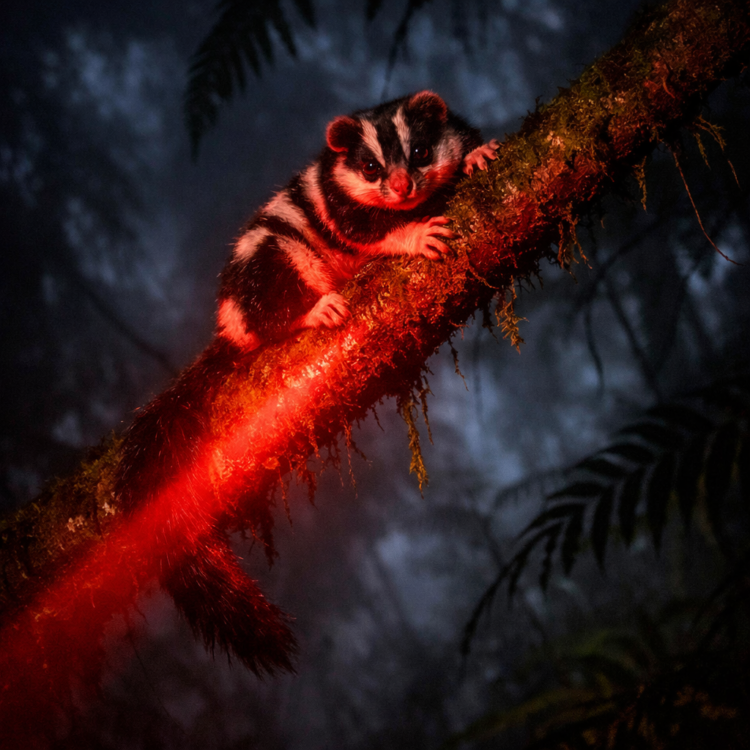
Night walks in the Daintree Rainforest offer a completely different experience from daytime hiking, revealing a hidden world of nocturnal creatures that remain invisible under the sun. This 135-million-year-old rainforest in far north Queensland becomes an entirely different place after dark—when possums leap between branches, insects glow on tree trunks, and the chorus of frogs rises to a near-deafening pitch.
Why Walking the Daintree After Dark Changes Everything
Most visitors explore the Daintree during daylight and miss roughly 60% of the wildlife. The forest’s mammals, amphibians, and many of its most unusual invertebrates are strictly nocturnal. By day, you might spot birds and the occasional lizard. After sunset, the canopy fills with striped possums, tree kangaroos make their cautious descents to feed, and Boyd’s forest dragons—camouflaged and motionless on branches all day—begin their nightly hunting.
The soundscape shifts dramatically too. What’s relatively quiet at noon becomes a layered symphony: cicadas, frogs calling from every water source, and the rustle of bandicoots foraging through leaf litter.
What You’ll Actually See on Night Walks in the Daintree Rainforest
Ringtail and brushtail possums are almost guaranteed sightings, often close enough that you’ll see their eyes reflecting your torch beam from just metres away. Green tree frogs cling to leaves at eye level. If you’re lucky—and patient—you might spot a Lumholtz’s tree kangaroo, though these are shy and easily spooked by noise or sudden light.
Look down as much as up. The forest floor hosts giant centipedes, stick insects as thick as your thumb, and spiders (including the impressive but harmless golden orb weavers, whose webs span entire clearings). Fungi glow with bioluminescent foxfire on rotting logs.
Guided Tours vs. Self-Guided Night Walks
Guided nocturnal walks are worth every dollar. Local guides know where tree kangaroos have been spotted recently, which water sources attract frogs, and can identify animals by call alone. They’ll also point out camouflaged creatures you’d walk straight past—the leaf-tailed gecko pressed flat against bark, the python coiled in the understory.
Self-guided night hiking is possible on some boardwalk trails, but you’ll need good equipment, solid navigation skills, and ideally shouldn’t go alone. Check with the visitor centre about which trails permit after-dark access.
Practical Tips for Daintree Rainforest Night Walks
Timing matters. Head out about 30-45 minutes after full darkness—early enough that animals are active, late enough that your eyes have adjusted. Tours typically run between 7pm and 10pm, depending on the season (remember, Queensland is in the Southern Hemisphere, so sunset times vary significantly between summer and winter).
Bring a good red-light torch or headlamp. Red light is less disturbing to wildlife than white light, and many animals won’t flee if you use it properly. Keep beams low and indirect—never shine directly into an animal’s eyes for more than a second.
What to Wear and Pack
- Long sleeves and trousers (mosquitoes and scrub itch mites are relentless after dark)
- Closed walking shoes with good grip—boardwalks get slippery with dew
- Insect repellent containing DEET or picaridin
- A small backpack for water and your camera
- Rain jacket, even in dry season (sudden showers are common)
Best Time of Year for Nocturnal Wildlife in the Daintree
The dry season (roughly June through October) offers more comfortable conditions—lower humidity, fewer leeches, and clearer night skies. But the wet season brings explosive frog activity. After heavy rain, every puddle and stream fills with calling males, and you’ll see species that remain hidden the rest of the year.
Tree kangaroo sightings peak in the cooler months when they’re more active and spend more time at lower elevations. Possums are year-round residents but are easier to spot when fruiting trees are in season.
Safety and Etiquette for After-Dark Rainforest Exploration
Stay on marked trails always. It’s easy to become disoriented in darkness, and stepping off-path damages sensitive vegetation. The Daintree is crocodile habitat—never approach water sources after dark, even streams that look shallow.
Keep noise to an absolute minimum. Whisper only when necessary. The more silent you are, the closer wildlife will approach. If you’re on a guided tour, resist the urge to chat between sightings—you’ll hear (and therefore see) far more if the group stays quiet.
Move slowly and pause often. Your eyes need time to adjust to what torchlight reveals. Some of the best sightings come when you stop moving entirely for several minutes and let the forest resume its normal activity around you.
Booking Your Daintree Night Walk
Several operators run guided nocturnal tours, departing from various points along the Daintree coast. Check the official tourism website for current pricing and availability, as tours often book out days in advance during peak season. Most tours run for 1.5 to 2 hours and provide torches, though bringing your own backup is wise.
If you’re staying at an eco-lodge within the rainforest, ask about private guided walks—these are often more flexible on timing and pace than group tours. Either way, experiencing the Daintree after sunset isn’t optional. It’s when the ancient forest truly reveals itself.
You might also like:
- The Powerstation Museum Tamworth: When Streetlights Changed Everything
- Where to Stay at Tamworth Country Music Festival: Your Accommodation Survival Guide
For current opening hours, prices and bookings, see Great Barrier Reef Marine Park Authority.
