
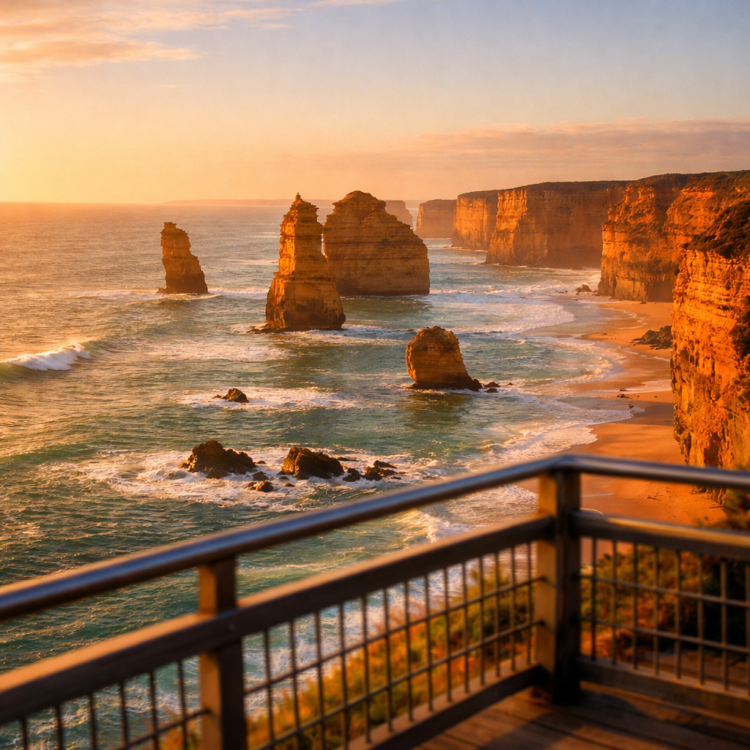
If you want to experience the Twelve Apostles sunrise without the crowds and in the best possible light, you’ll need to set your alarm for an ungodly hour. But here’s what nobody tells you in those glossy brochures: that 5am wake-up call along Victoria’s Great Ocean Road will deliver one of the most spectacular displays of natural light you’ll ever photograph.
The limestone stacks that make up this famous formation glow amber and gold in the first hour after dawn, while the viewing platforms remain blissfully empty. By 9am, tour buses have arrived and the magic hour is gone.
Why Twelve Apostles Sunrise Beats Sunset Every Time
Most visitors show up mid-morning or at sunset. They’re missing the best show.
Sunrise on this stretch of the Great Ocean Road faces east, which means the light hits the rock stacks head-on rather than backlighting them. The limestone absorbs the warm tones and practically glows. At sunset, you’re shooting into the sun with the Apostles in shadow.
There’s also the practical matter of space. The main viewing platform fills up fast during daylight hours, but arrive before 6:30am and you’ll often have it to yourself. That means you can set up a tripod without someone’s selfie stick in your frame, and actually take your time composing shots.
The Weather Window
Check the forecast the night before, but don’t be discouraged by a bit of cloud. Some of the most dramatic Twelve Apostles sunrise shots happen when broken clouds catch fire in shades of pink and orange above the stacks. Solid overcast is less ideal, though the soft light can still work. Strong wind is your real enemy—it kicks up sea spray that coats your lens.
Where to Position Yourself for the Best Twelve Apostles Sunrise Shots
The main viewing area has multiple platforms, and your position matters. The western end (to your left as you face the ocean) gives you cleaner angles of the clustered stacks without as much platform railing in the way.
For the classic postcard composition, head to the far western platform. This puts you roughly parallel to the main grouping of stacks, allowing you to frame them with the beach and surf in the foreground. As the sun rises behind you and to your left, watch how the light rakes across the limestone faces.
Gibson Steps Alternative
If you’re after something different, consider Gibson Steps—just three minutes’ drive east along the Great Ocean Road. The steep staircase (about 70-80 steps) takes you down to beach level. From here, you can shoot the Apostles from below as dawn light hits them, with waves in the immediate foreground. Access depends on tide and conditions, so check locally before descending.
Practical Timing for Your Twelve Apostles Sunrise Visit
Actual sunrise times vary dramatically by season, since Victoria sits well south. In summer (December-February), sunrise can be as early as 6am. Winter (June-August) means you can sleep in a bit more—sunrise pushes toward 7:30am.
Plan to arrive at least 30-40 minutes before official sunrise. The pre-dawn blue hour offers its own photographic opportunities, and you’ll want time to scout positions and adjust your camera settings before the main event.
The golden hour lasts roughly 45 minutes to an hour after sunrise, depending on atmospheric conditions. Don’t pack up the moment the sun crests the horizon—some of the best light comes 20 minutes later when the entire scene is bathed in warm, angled rays.
What to Bring for a Great Ocean Road Dawn Shoot
Layer up. Coastal Victoria at dawn is cold and windy, even in summer. That wind coming off the Southern Ocean cuts right through a single fleece.
- Wide-angle lens (16-35mm range) for capturing the full formation and sky
- Telephoto zoom (70-200mm) to isolate individual stacks
- Sturdy tripod—wind can be fierce on the exposed platforms
- Lens cloth and rain cover (sea spray is constant)
- Headlamp for pre-dawn setup
- Thermos of hot coffee or tea
- Multiple batteries (cold drains them faster)
Where to Stay for Easy Twelve Apostles Sunrise Access
Port Campbell, roughly ten minutes’ drive east of the Twelve Apostles, is the closest town with accommodation options. Staying here means you can roll out of bed at 5:30am and still make it for the best light.
Apollo Bay, about 90 minutes west, offers more dining and accommodation choices but requires a much earlier start. If you’re road-tripping, consider timing your drive to overnight in Port Campbell specifically for the dawn shoot, then continuing your journey along the Great Ocean Road afterward.
Check with your accommodation about current track and platform access—occasionally weather or maintenance can affect viewing areas, and locals will know before official websites are updated.
After the Shoot: Making the Most of Early Starts
Once you’ve captured the sunrise, you’re already up and the day is young. The nearby Loch Ard Gorge, just five minutes’ drive west, is another spectacular formation worth exploring in morning light. The walking tracks and lookouts are typically empty at this hour.
Alternatively, grab breakfast in Port Campbell, then continue your Great Ocean Road journey west toward the Grampians or back east toward Melbourne while the morning light remains soft and clear. That early start you dreaded suddenly gives you an entire day ahead with the best photographs already in your camera.
The Twelve Apostles sunrise isn’t just about avoiding crowds—though that’s reason enough. It’s about catching these ancient limestone stacks in light that transforms them from geological features into glowing monuments. Your alarm clock might hate you for it, but your camera roll will thank you.
You might also like:
- Finding the Hello Koalas Sculpture Trail Hidden Gems: Off-the-Beaten-Track Koalas Worth Hunting Down
- How to Price Items for a Moving Sale: Get the Most Value Without Turning Buyers Away
For current opening hours, prices and bookings, see Australia.com (Tourism Australia) – Uluru & Kata Tjuta.
