
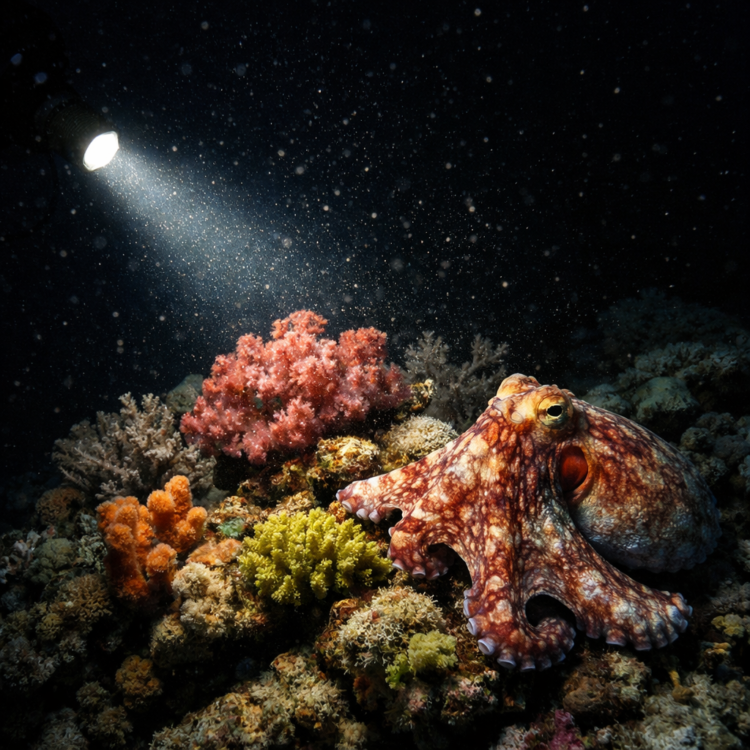
Night diving the Great Barrier Reef transforms the world’s largest coral reef system into something almost unrecognisable from the daytime snorkel tours. When your torch beam cuts through the darkness off the coast of Queensland, you’ll spot hunting octopuses, sleeping parrotfish cocooned in mucus bubbles, and coral polyps extending their feeding tentacles—a hidden universe that vanishes at dawn.
Why Night Diving the Great Barrier Reef Beats Daytime Dives
The reef’s nocturnal shift change is like watching a theatre company swap out an entire cast between matinee and evening shows. Daytime reef fish tuck themselves into crevices to sleep, while predators emerge to hunt. Spanish dancers—vivid crimson sea slugs the size of dinner plates—glide through the water column, performing moves you’d never witness in daylight hours.
Bioluminescence is the other secret. Wave your hand through the water and watch tiny plankton spark like underwater fireworks. Some dive operators will ask you to turn off all torches for a minute or two mid-dive. The effect is surreal—pure darkness broken only by these microscopic light shows.
Creatures You’ll Only Meet After Dark
- Moray eels hunting in open water (they stay hidden in crevices during the day)
- Coral crabs and shrimp species that remain concealed by daylight
- Feeding lionfish using their ornate fins to corral smaller fish
- Squid and cuttlefish changing colour patterns as they communicate and hunt
- Sharks on patrol—reef sharks are more active and bolder after sunset
When to Book Your Night Dive on the Great Barrier Reef
Most operators run night dives year-round from Cairns and Port Douglas, but timing matters. Queensland’s winter months (June through August) bring cooler water temperatures—you’ll want a thicker wetsuit. Summer (December through February) offers warmer water but also brings marine stingers to inshore reefs, so most operators head to outer reef sites where stinger suits are still recommended but the problem is less severe.
Moon phases affect visibility and marine behaviour. A new moon creates darker conditions (better for bioluminescence, more challenging for nervous divers), while a full moon can illuminate the reef enough that you barely need your torch. Check the lunar calendar when you’re booking if you have a preference.
What to Expect During a Night Dive Experience
You’ll typically board late afternoon and reach the reef site as the sun sets. Most night diving experiences on the Great Barrier Reef start with a daytime or dusk dive at the same site—this familiarises you with the layout before full darkness falls, which is smart planning if you’re new to diving after dark.
Your dive light becomes your lifeline. Operators provide a primary torch, but many divers bring a backup. You’ll also get a glow stick or strobe to attach to your tank valve so the divemaster can track everyone in the group. Stay close. The sensation of depth and distance warps in the dark, and it’s surprisingly easy to drift away from your buddy.
Most night dives last 30-45 minutes—shorter than daytime dives because air consumption increases when you’re managing the extra cognitive load of navigating in darkness. The boat keeps lights on as a beacon, and most sites feature a descent line lit with chemical glow sticks.
Essential Skills and Requirements for Reef Night Diving
You’ll need an open water diving certification at minimum. Some operators require proof of a recent dive (within the past year) or an Advanced Open Water cert, so check requirements when booking. If you’re certified but haven’t dived after dark before, consider taking a night diving specialty course—many dive shops in Cairns offer these, and they’ll dramatically increase your comfort level.
Buoyancy control matters more at night. You can’t see the reef floor as easily, and the last thing you want is to crash into coral you didn’t spot. New night divers often discover they’ve been relying on visual cues more than they realised. Practice your neutral buoyancy during daytime dives if you’re at all rusty.
Choosing Your Night Dive Operator in Queensland
Cairns and Port Douglas both offer numerous operators running night dives to various reef sites. Some combine it with an evening meal on the boat, while others run express trips for divers short on time. Check the official visitor information websites for current options, prices, and what’s included in each package.
Ask about group sizes—smaller groups (six divers or fewer) give you more flexibility to explore and linger over interesting finds. Also confirm whether equipment hire is included or additional, and whether they provide underwater lights or you need to arrange your own.
What to Pack for Your Night Dive
Beyond standard dive gear, bring warm layers for the boat ride home (even Queensland winter nights can feel chilly when you’re wet), seasickness medication if you’re prone to it, and a backup dive light if you own one. A reef-safe sunscreen is still necessary for the late afternoon sun before you dive.
Why You Should Take the Night Dive Plunge
After a night dive on the Great Barrier Reef, daytime snorkelling feels incomplete—like you’ve only read half the story. The reef’s after-dark personality is stranger, more primeval, and dramatically less crowded than the daytime tourist experience. You’ll share the water with maybe a dozen other divers rather than hundreds of snorkellers.
The darkness also forces you to slow down. Your torch beam becomes a moving spotlight, revealing small dramas playing out in a circle of light—a shrimp cleaning a moray eel’s teeth, a sleeping fish jerking awake as your light passes over. You notice details that blur past during busy daytime dives when you’re trying to see everything at once.
Is it slightly nerve-wracking the first time? Sure. But that edge of adrenaline makes it memorable. Just remember to breathe, stay with your buddy, and keep your torch pointed down unless you’re signalling—you’ll avoid blinding your fellow divers and preserve everyone’s night vision. The reef’s been doing this nocturnal shift for millions of years. You’re just dropping in to watch the show.
You might also like:
- Cotton Farm Tours Near Moree: What to Expect Behind the Bales
- How to Test Used Phones Before Buying: A Complete Checklist
For current opening hours, prices and bookings, see Australia.com (Tourism Australia) – Uluru & Kata Tjuta.
