
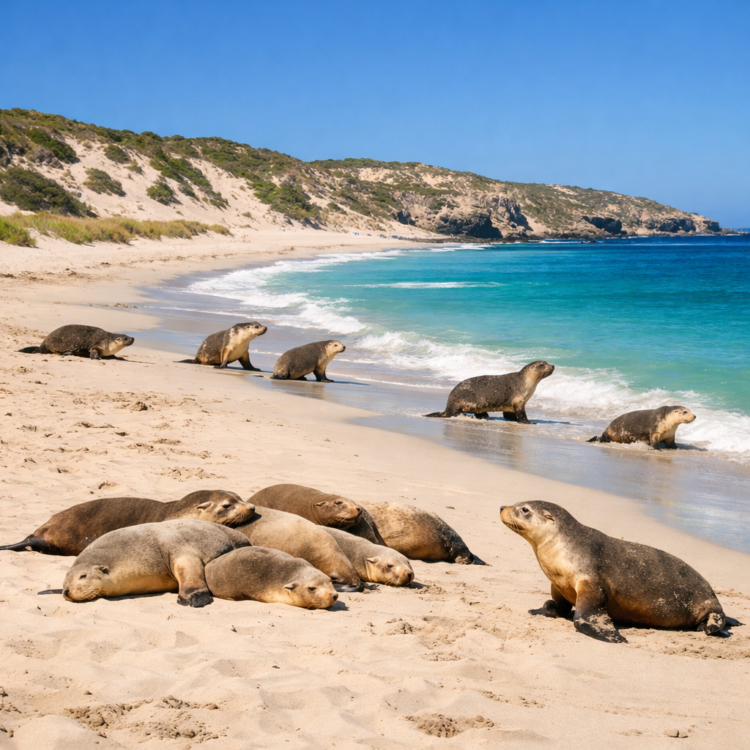
If you’re hoping to see sea lions on Kangaroo Island, you’re in for something special—this South Australian island is one of the few places in the world where you can watch Australian sea lions in their natural habitat. Unlike their cousins that migrate vast distances, these chunky marine mammals stay close to home year-round, hauling out on the same beaches where they were born.
The question isn’t really whether you’ll see them (you almost certainly will), but when to time your visit for the most rewarding experience.
Why Kangaroo Island’s Sea Lions Are Worth the Trip
Australian sea lions are one of the rarest seal species on the planet. They breed only along the southern and western coasts of Australia, and Kangaroo Island hosts several significant colonies. What makes them particularly fascinating is their unusual breeding cycle—unlike most seals, they don’t breed seasonally. Each colony follows its own 17-18 month cycle, which means pups can be present at different times depending on which beach you visit.
You’ll find these animals are genuinely wild, not habituated in the way zoo animals are, yet surprisingly tolerant of quiet human observers. Bulls can weigh up to 250 kilograms and sport a distinctive cream-coloured mane. Watch them lumber across the sand and you’d never guess how graceful they become the moment they hit the water.
Best Time to See Sea Lions on Kangaroo Island
Here’s the good news: any time of year works. Because Australian sea lions breed year-round on their staggered schedule, you’ll find animals ashore during every season. However, the experience does shift with the calendar.
Summer (December through February) brings warmer weather and calmer seas, making beach access easier and more comfortable. You’ll see sea lions sprawled in the sun, often in heaps of dozing bodies that look more like giant slugs than apex predators. The heat doesn’t bother them—they’re built for these conditions.
Winter (June through August) is breeding season at Seal Bay, the island’s most accessible colony. If you time your visit for these months, you might see newborn pups learning to swim in the shallows or bulls engaged in noisy territorial disputes. The weather can be wild—bring layers and waterproofs—but the wildlife activity ramps up considerably.
Where to Find Sea Lion Colonies
Seal Bay Conservation Park, on the south coast, is the marquee destination. It’s home to around 600 sea lions and offers both guided beach walks and a self-guided boardwalk with elevated views. The guided walks get you down onto the sand among the animals (at a respectful distance), while rangers share insights about individual sea lions they’ve come to know over years of observation.
For a wilder, less-visited experience, head to other beaches around the island where sea lions haul out. The exact locations change with the tides and seasons, so check with the visitor information centre or your accommodation for current advice on where animals have been spotted recently. These encounters tend to be more spontaneous and unpredictable.
What to Expect During Your Sea Lion Encounter
If you join a guided walk at Seal Bay, you’ll spend about 45 minutes on the beach. Group sizes are kept small, and rangers enforce strict distance rules—typically staying at least 10 metres from the animals. This isn’t a petting zoo. These are powerful wild animals with sharp teeth, and the rules exist to protect both you and them.
The sea lions will largely ignore you if you’re quiet and still. They spend up to three days at sea hunting, then come ashore for similar stretches to rest and digest. What looks like lazy sunbathing is actually essential recovery time. You might see:
- Mothers nursing pups (pups stay dependent for up to 18 months)
- Young sea lions play-fighting in the shallows
- Bulls patrolling their territory with impressive bellowing calls
- Animals scratching themselves with their flippers or tossing sand onto their backs to regulate temperature
Practical Tips for Visiting Kangaroo Island Sea Lions
Book your Seal Bay tour in advance, especially during summer and school holidays. Check the official South Australia national parks website for current entry fees and tour times—these change seasonally.
The island sits off the coast near Adelaide, accessible by ferry from Cape Jervis or by flights from Adelaide. Once you’re on the island, you’ll need a car—distances are significant and public transport is essentially non-existent. Factor in at least two full days to see the sea lions plus the island’s other wildlife, including koalas, wallabies, and echidnas.
Bring binoculars even for Seal Bay. While the guided walks get you close, having optics lets you watch behaviours from the boardwalk without disturbing resting animals.
Making the Most of Your Visit
Early morning and late afternoon are prime times for animal activity and better light for photography. Midday sun washes out colours and sends most sea lions into deep sleep mode.
Combine your sea lion visit with other wildlife spotting on Kangaroo Island—the island is genuinely one of Australia’s best destinations for seeing native animals in the wild. You’re likely to encounter kangaroos, koalas, and diverse birdlife all within the same day.
The sea lions aren’t going anywhere. Their loyalty to these beaches, generation after generation, is precisely what makes them so easy to find and so vulnerable to disturbance. Treat the encounter with the respect it deserves, and you’ll come away with one of those rare wildlife experiences that actually lives up to the anticipation.
You might also like:
- How to Photograph Reflective Items for Online Listings Without Glare
- The Surprising Benefits of Exercising in Complete Darkness
For current opening hours, prices and bookings, see Parks Australia – Uluru-Kata Tjuta National Park.
