
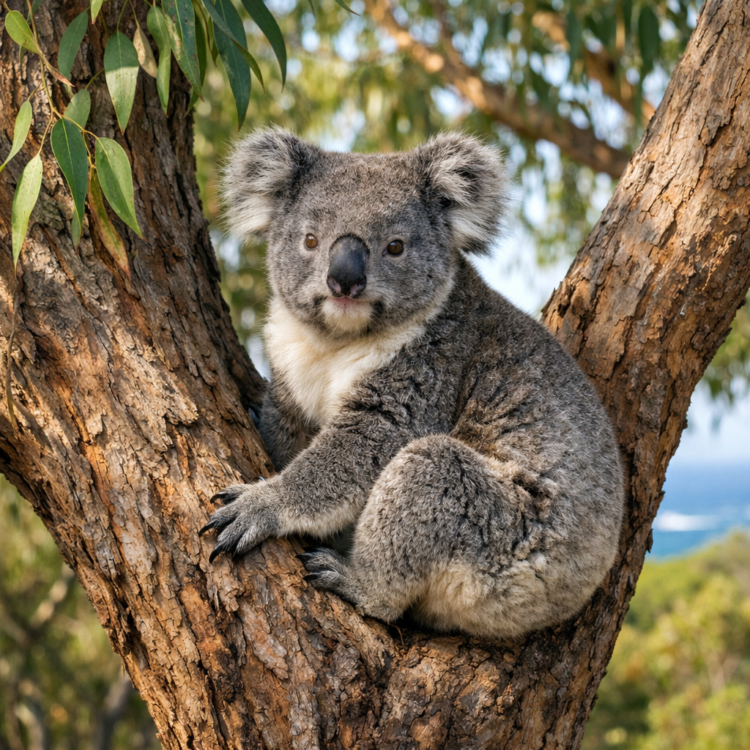
If you want to see wild koalas in Australia without peering through zoo enclosures, Kangaroo Island is your answer. This island off the coast of South Australia near Adelaide is home to one of the country’s healthiest koala populations, and they’re genuinely wild—dozing in the forks of eucalyptus trees, munching leaves, occasionally making that startling grunting call that sounds nothing like you’d expect.
The island’s 4,400 square kilometres hold far more than koalas, though. You’ll spot wallabies at dusk, watch Australian sea lions sprawled on beaches, and if you’re lucky, cross paths with an echidna shuffling through the bush.
Why Kangaroo Island Is the Best Place to See Wild Koalas
Koalas on Kangaroo Island are disease-free, unlike many mainland populations struggling with chlamydia. The island was never home to native koalas—eighteen were introduced from Victoria in the 1920s, and without natural predators or disease, they thrived. Today the population sits around 50,000.
That density means your chances of spotting them are excellent. Drive along any road lined with manna gums and look up. The koalas aren’t hiding—they’re right there, grey bundles wedged in tree forks, often close enough to the ground that you can see their faces without binoculars.
The Best Spots to Find Koalas
Hanson Bay Wildlife Sanctuary and Flinders Chase National Park on the island’s west end are reliable koala territory. The eucalyptus groves around Stokes Bay and the Cygnet River area are equally good. You don’t need a guide—just drive slowly, scan the trees, and pull over safely when you spot that telltale grey lump.
Early morning and late afternoon are best, though koalas sleep up to 20 hours a day, so you’ll see them any time. They’re most active around dusk when they might actually move branches or munch leaves rather than simply existing as fuzzy boulders.
What Else You’ll Encounter When You See Wild Koalas and More
Kangaroo Island earned its name for a reason. Kangaroos and wallabies are everywhere, particularly around campgrounds and beach access roads at dawn and dusk. Drive carefully after dark—they’re a real collision risk.
The island’s sea lion colonies are the real surprise. Seal Bay Conservation Park on the south coast lets you walk on the beach (with a guide) among Australian sea lions—they’ll ignore you completely, flopped in the sand like enormous sausages. Check the official website for tour times and current booking details.
Wildlife You Might See
- Koalas in eucalyptus forests across the island
- Australian sea lions at Seal Bay and other coastal spots
- Wallabies and kangaroos, especially at dusk
- Echidnas shuffling along roadsides
- Diverse birdlife including black cockatoos and ospreys
- Fur seals at rocky points along the coast
Practical Tips for Finding Wild Koalas on Kangaroo Island
You’ll need to get to the island first. Ferries run from Cape Jervis on the South Australian mainland (about 90 minutes south of Adelaide by car) to Penneshaw on the island’s east coast. The crossing takes around 45 minutes. There are also flights from Adelaide to Kingscote, the island’s main town. Book transport ahead, especially in summer.
Hire a car—the island is too spread out for anything else. Sealed roads connect the main towns, but some of the best wildlife spots are down unsealed roads that are usually fine in a 2WD (check conditions during winter). Petrol stations are limited, so fill up in Kingscote or Penneshaw.
Accommodation ranges from campgrounds to cottages and eco-lodges. Book ahead during summer (December to February) and school holidays. The island gets busy, but it never feels crowded once you’re out on the roads.
When to Visit to See Koalas and Other Wildlife
Koalas are there year-round—they don’t migrate or hibernate. Spring (September to November) brings wildflowers and baby animals, though. Autumn (March to May) offers mild weather and fewer visitors.
Summer can be scorching, and the island has experienced serious bushfires in recent years. Check fire conditions before you visit, and if there’s a total fire ban, postpone or cancel—the island takes fire seriously. Winter (June to August) is cool and can be rainy, but wildlife viewing is still excellent and accommodation is cheaper.
Respecting Wildlife on Your Visit
Stay in your car or keep a respectful distance on foot. Koalas might look cuddly, but they’re wild animals with sharp claws. Never try to touch or feed any wildlife—it’s illegal and stresses the animals.
Sea lions can move surprisingly fast and may bite if they feel cornered. At Seal Bay, stay with your guide and follow instructions. On other beaches where you might encounter them independently, give them a wide berth.
Take all rubbish with you and stick to marked trails in national parks. For current entry fees, tour bookings, and park alerts, check the official South Australia National Parks website and Tourism Kangaroo Island site before you travel.
The island’s isolation is what’s kept its wildlife so healthy. Your visit helps fund conservation efforts—just make sure you’re one of the visitors who leaves no trace beyond your boot prints in the sand.
You might also like:
- How to Pack Fragile Items for Local Delivery: A Buyer and Seller’s Guide
- Cotton Farm Tours Near Moree: Inside the Harvest Season Experience
For current opening hours, prices and bookings, see Parks Australia – Uluru-Kata Tjuta National Park.
