
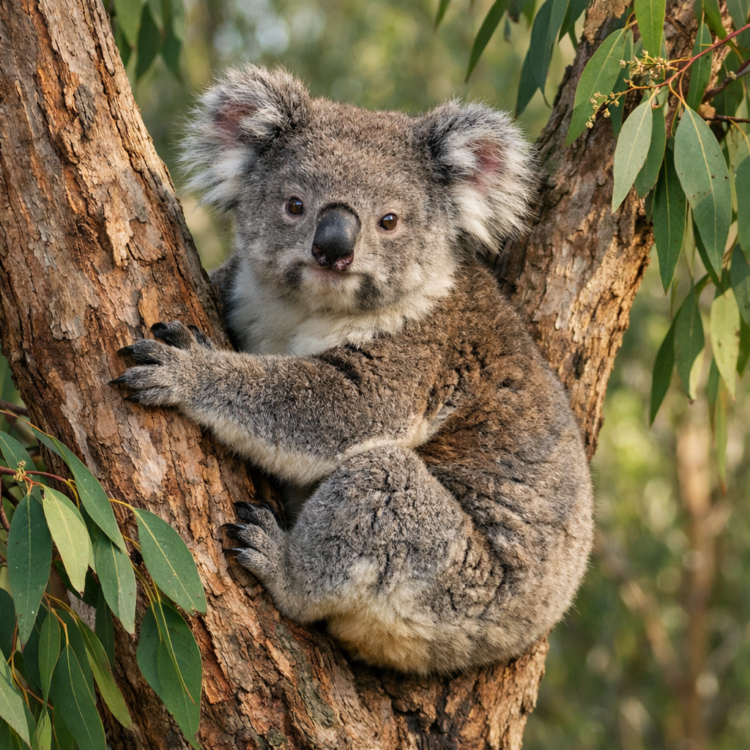
If you want to see koalas in the wild in Australia, there’s nowhere quite like Kangaroo Island. Off the coast of South Australia near Adelaide, this island sanctuary is home to healthy populations of koalas that actually spend their days munching eucalyptus leaves in roadside trees—no enclosures, no handlers, just wild animals doing what they do best.
Why Kangaroo Island is Your Best Bet for Wild Koalas
The koala population on Kangaroo Island is thriving. Unlike many mainland areas where habitat loss has taken its toll, the island’s eucalyptus forests remain relatively intact. Koalas were introduced here in the 1920s to create a disease-free insurance population, and they’ve flourished ever since.
What makes spotting them so reliable? The island’s koalas aren’t skittish around people, and the population density in key areas means you’ve got excellent odds of seeing multiple animals in a single afternoon. You’ll spot their grey furry shapes wedged in tree forks, often at surprisingly accessible eye level.
Where Exactly to Look for Koalas in the Wild
Head straight to the eucalyptus woodlands around Flinders Chase National Park and along the road to Seal Bay. The stretch between Vivonne Bay and Seal Bay Conservation Park is particularly productive—drive slowly and scan the trees on both sides.
Early morning and late afternoon are prime times. Koalas are most active at dawn and dusk when they move between trees to feed. Midday finds them sleeping (they snooze up to 20 hours a day), but a sleeping koala wedged in a tree fork is still a koala you’ve found in the wild.
Practical Spotting Tips
- Look for grey lumps in the forks of manna gum and blue gum trees
- Scan systematically—check every tree trunk from ground to canopy
- Pull over safely when you spot one; others are often nearby
- Bring binoculars for koalas high in the canopy
- Never attempt to touch or feed wild koalas
What Else You’ll Encounter While Spotting Koalas
The beauty of Kangaroo Island is that koalas are just the beginning. Wallabies graze along roadsides at dusk. Echidnas waddle across hiking trails with their unmistakable spiny shuffle. At Seal Bay Conservation Park, Australian sea lions lounge on the sand—you can join a guided beach walk to see them up close (check the official website for tour times and current fees).
The island’s birdlife is spectacular too. Keep your eyes peeled for glossy black cockatoos, a threatened species that’s relatively common here.
When to Visit for Koala Spotting
Kangaroo Island works year-round for wildlife watching, but each season offers something different. Summer (December to February) brings warm weather and baby animals in pouches. Winter (June to August) is cooler and quieter, with fewer tourists and koalas that descend to lower branches to escape the wind.
Spring (September to November) is arguably ideal—mild temperatures, wildflowers in bloom, and active wildlife as animals emerge from winter. Autumn (March to May) offers similar conditions with the bonus of fewer visitors than spring.
Getting to Kangaroo Island and Getting Around
The island sits about 15 kilometres off the South Australian coast. You’ll reach it either by ferry from Cape Jervis (about a 45-minute crossing) or by a short flight from Adelaide. The ferry takes vehicles, which you’ll definitely want—public transport is virtually non-existent, and the best wildlife spots are spread across the island.
Check the ferry operator’s website well in advance for schedules and booking, especially during peak holiday periods when services fill up. If you’re flying in, car hire is available at the airport; book ahead.
Making the Most of Your Koala-Spotting Trip
Give yourself at least two full days on the island—three is better. That gives you time to explore different habitats, revisit productive spots at optimal times, and simply slow down enough to notice the wildlife around you.
Accommodation ranges from campgrounds to farm stays to boutique lodges. Book ahead, particularly in summer. Stock up on supplies in Kingscote or Penneshaw; out in the bush, services are limited.
Drive cautiously after dark. Kangaroo Island earned its name honestly—kangaroos, wallabies, and other wildlife are active at night and collisions are common. If you’re serious about seeing koalas in their natural environment without the crowds of more famous Australian destinations, Kangaroo Island delivers. You’ll leave with memory cards full of photos and the satisfaction of encountering Australia’s iconic wildlife on their own terms, in their own trees.
You might also like:
- The Best Time to Visit Moree Hot Springs for True Relaxation
- Flying into Tamworth: Why the Airport Route Beats the Long Drive (And What to Expect)
For current opening hours, prices and bookings, see Great Barrier Reef Marine Park Authority.
