
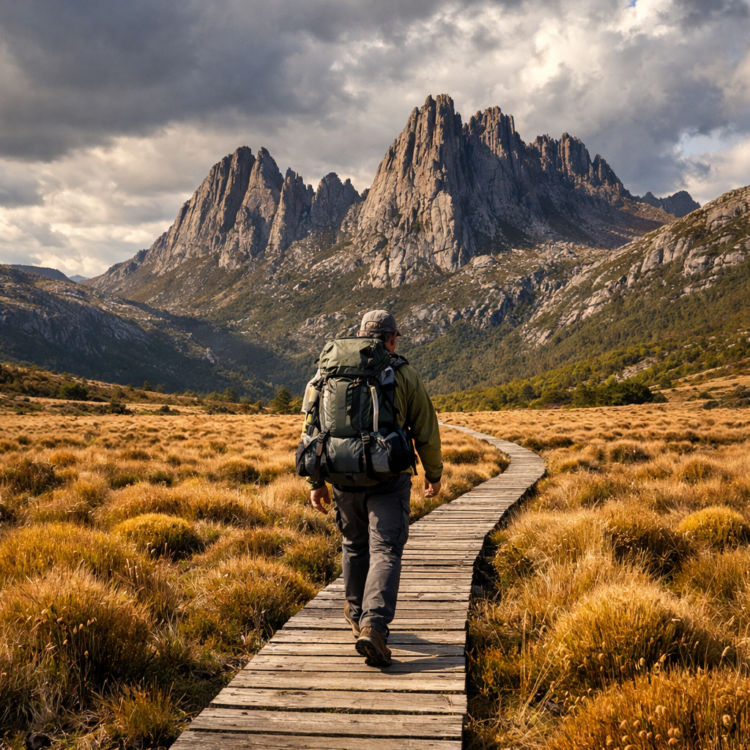
The Overland Track Tasmania expedition draws hikers from around the world to traverse 65 kilometres of alpine moorlands, ancient rainforest, and glacial valleys. This six-day journey through Cradle Mountain-Lake St Clair National Park cuts through the heart of Tasmania’s wilderness, offering an immersive experience you simply can’t get on a day walk.
Why the Overland Track Tasmania Stands Apart
Unlike many Australian bushwalks that follow coastal paths or eucalypt forest, the Overland Track plunges you into subalpine terrain that feels almost otherworldly. You’ll climb weathered dolerite peaks, wade through button grass plains that stretch to distant mountains, and camp beside tarns so clear they mirror the sky perfectly. The track runs roughly north to south, starting at Cradle Mountain and finishing at Lake St Clair—Australia’s deepest natural freshwater lake.
The wilderness here is protected as part of the Tasmanian Wilderness World Heritage Area. Wombats waddle across campsites at dusk. Currawongs call from stands of ancient King Billy pines, some more than a thousand years old.
When to Walk: Tasmania’s Track Season
The official booking season runs from late October through May, which aligns with Tasmania’s warmer months (remember, Australia’s seasons are reversed from the Northern Hemisphere). Most walkers choose January or February for the most stable weather, though “stable” is relative—this is Tasmania, where four seasons in one day isn’t just a saying.
Summer temperatures range from cool to mild, typically 10-20°C during the day, but nights can drop near freezing even in January. Snow is possible any month of the year above 1,000 metres. Winter walking is technically allowed but requires serious alpine experience and winter camping gear; most choose the warmer window for good reason.
Permits, Bookings, and Planning Your Overland Track Hike
You’ll need a permit during peak season, and spaces are limited to manage environmental impact. Book well ahead—popular dates fill up months in advance. Check the Parks and Wildlife Service Tasmania website for current permit costs, availability, and the online booking system.
The standard itinerary takes six days and five nights, though fit walkers sometimes do it in five. You can only walk north to south during the booking season (this one-way system prevents track congestion). Side trips to peaks like Mount Ossa—Tasmania’s highest at 1,617 metres—add extra kilometres but are absolutely worth the climb if weather allows.
What the Walk Involves
Daily distances average 10-13 kilometres, which sounds gentle until you factor in the terrain. You’re carrying a full pack (expect 15-20kg), climbing over tree roots slick with rain, and navigating long boardwalk sections built to protect fragile alpine vegetation. Some days involve significant elevation gain, particularly if you tackle the side peaks.
Preparing for Your Overland Track Tasmania Adventure
Gear makes or breaks this walk. You’ll be completely self-sufficient between the public huts, which provide basic shelter with sleeping platforms but no mattresses, heating, or cooking facilities. Many walkers opt for tents anyway, since huts can be crowded and noisy during peak season.
Essential items include:
- A quality four-season sleeping bag rated to at least -5°C
- Waterproof jacket and pants (not just water-resistant—proper waterproof)
- Hiking boots you’ve already broken in (blisters at day one won’t improve by day six)
- Fuel stove and all food (there are no resupply points)
- Water purification tablets or filter
- First aid kit and blister treatment
- Emergency locator beacon or PLB (available for rent if you don’t own one)
Pack weight is crucial. Dehydrated meals save significant grams over tinned food. Every spare item you leave behind makes those uphill sections more bearable.
The Reality of Walking Tasmania’s Premier Track
This isn’t a manicured trail with cappuccinos at the end of each day. Expect mud—thick, boot-sucking mud that clings to everything. Expect weather that turns from sunshine to horizontal rain in thirty minutes. The famous Tasmanian weather can test even experienced hikers.
But here’s what makes it magical: the solitude once day walkers turn back at Crater Lake, the sight of Mount Ossa emerging from morning mist, the exhausted satisfaction of reaching your hut as light fades. You’ll share trail stories with fellow walkers from a dozen countries, all slightly soggy, all grinning.
Getting There and Back
Most people base themselves in either Launceston or Hobart before and after the walk. Shuttle services run from both cities to the Cradle Mountain trailhead, and will collect you from Lake St Clair at the southern end—check the Parks and Wildlife Service website for current operator details. Some walkers arrange car shuttles, leaving one vehicle at Lake St Clair before being driven to Cradle Mountain to start.
Build in buffer days at both ends. Flight delays happen, and finishing the track a day late because of bad weather shouldn’t mean you miss your plane home. Launceston and Hobart both offer proper showers, pub meals, and gear shops if you discover you’ve forgotten something critical.
The Overland Track earns its reputation not through Instagram-perfect moments (though you’ll get plenty of those), but through the cumulative experience of carrying everything you need on your back through one of Earth’s most pristine wilderness areas. Six days is long enough to fall into the rhythm of walking, to stop checking your phone, to remember why you wanted to do this in the first place. Just don’t forget the waterproofs.
You might also like:
- The Tamworth Powerstation Museum: Why Australia’s First Electric Street Lighting Still Sparks Joy
- Pop-Up Bars and Long Lunches: Your Guide to Taste Tamworth Festival
For current opening hours, prices and bookings, see Australia.com (Tourism Australia) – Uluru & Kata Tjuta.
