
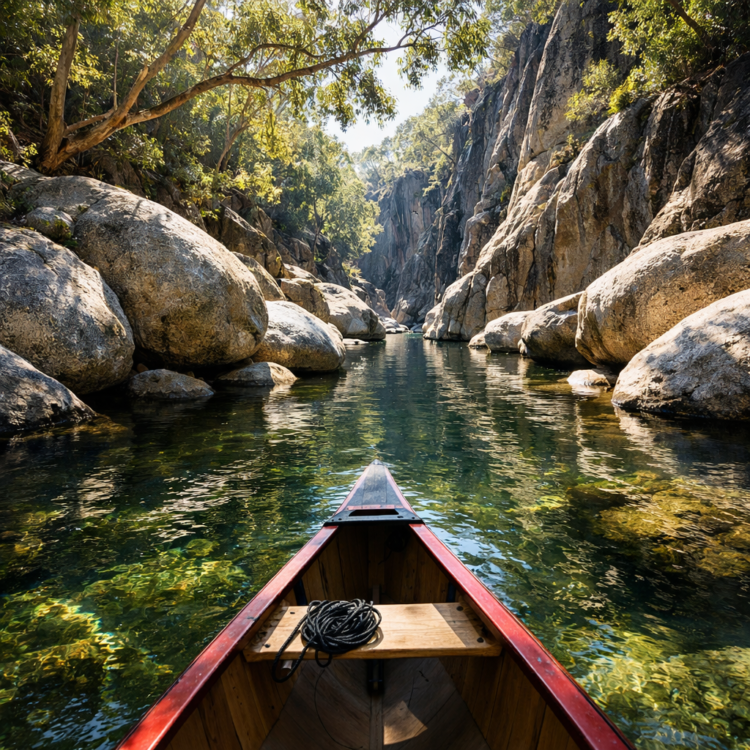
Canoeing Warrabah National Park puts you right in the heart of one of the New England region’s most dramatic river landscapes. The Namoi River cuts through towering granite boulders and narrow gorges, creating a paddle route that feels a world away from the country music buzz of Tamworth, yet sits less than an hour’s drive northeast of the city. If you’re looking for a paddling adventure that combines technical interest with genuine wilderness beauty, this is it.
Why the Namoi River Gorge Is Perfect for Intermediate Paddlers
The stretch of river through Warrabah rewards canoeists and kayakers who are comfortable handling mild rapids and navigating around rock gardens. You’re not dealing with whitewater chaos, but the river does have character — shallow rapids over granite shelves, tight turns between boulders, and occasional deeper pools where the current slows and the gorge walls rise steeply on either side.
Water levels vary dramatically with the season. After good rain, the river runs swift and high, covering some of the rock obstacles but adding speed and power. In drier months, you might find yourself doing more dragging than paddling in the shallows. Always check recent conditions with the Tamworth Visitor Information Centre or local paddling groups before you load the canoe onto the roof.
Planning Your Canoeing Warrabah National Park Trip
The campground at Warrabah is the natural base for a paddling visit. It sits right on the river, so you can unload your gear, set up your tent, and be on the water within minutes. The park has basic facilities — pit toilets, picnic tables, fire rings — but no powered sites or potable water on tap, so come self-sufficient.
Most paddlers opt for a half-day or full-day out-and-back route from the campground, exploring upstream into the gorge or downstream toward calmer stretches. There’s no formal put-in infrastructure, just a sandy bank where you can slide your canoe into the current. Bring a dry bag for anything you want to keep safe, and pack out everything you bring in — the park’s remote location means rubbish services are non-existent.
What to Bring for a Day on the Namoi
- Your own canoe or kayak (there are no rentals on-site)
- Personal flotation device for every paddler (non-negotiable)
- Drinking water — at least two litres per person
- Sun protection: hat, long sleeves, high-SPF sunscreen
- Dry bag for phone, snacks, and first-aid kit
- River shoes or old sneakers you don’t mind getting wet
- A waterproof map or GPS if you’re venturing far from camp
What You’ll See While Paddling Through the Gorge
The granite formations are the showstoppers. Massive rounded boulders — some the size of small cars — punctuate the riverbed and line the banks, stained with lichen and worn smooth by millennia of floods. In places, the gorge pinches tight enough that the rock walls feel close enough to touch from your canoe.
Wildlife sightings are a bonus, not a guarantee, but they happen often enough to keep your eyes scanning the banks. Eastern grey kangaroos come down to drink in the early morning and late afternoon. Red-necked wallabies favour the shadier pockets of bush along the water’s edge. And if you’re exceptionally lucky and exceptionally quiet, you might spot a platypus foraging in the shallows at dawn or dusk — they’re present in the Namoi, though reliably elusive.
Swimming and Fishing Opportunities at Warrabah
Even if you’re visiting Warrabah primarily for the paddling, the swimming holes deserve attention. After a morning navigating rapids, anchoring your canoe beside a deep pool and diving in is one of the region’s great simple pleasures. The water stays cool even in summer, fed by upstream springs and shaded by the gorge.
Fishing is another popular activity here — the Namoi holds Murray cod, yellowbelly, and catfish. Check current NSW fishing regulations and size limits before you cast a line, and note that some sections may have catch-and-release restrictions to protect breeding populations.
Getting to Warrabah National Park from Tamworth
The drive from Tamworth takes roughly 50 minutes via the New England Highway and Warrabah Road. The final stretch into the park is unsealed and can get rough after heavy rain — a two-wheel-drive vehicle will manage in dry conditions, but higher clearance helps. If you’re towing a trailer with canoes, take it slow on the gravel.
There’s no mobile reception once you enter the park, so download maps ahead of time and let someone know your plans before you head out. For current road conditions and park alerts, check with the Tamworth Visitor Information Centre or the NSW National Parks website before you leave town.
Combining Canoeing with a Broader New England Itinerary
If you’re travelling from Sydney or Brisbane and making the drive to the New England region, Warrabah pairs well with other Tamworth-area attractions. Spend a night or two at one of the local caravan parks — Tamworth Holiday Park on Goonoo Goonoo Road or BIG4 Paradise Tamworth with river walk access — to sort your gear and supplies before heading out to the national park.
After your paddling adventure, Lake Keepit is only about 45 minutes away and offers a completely different water experience: calm, expansive, ideal for a lazy afternoon swim or a shoreline barbecue at the Reflections Holiday Park. Back in Tamworth itself, the Oxley Lookout provides a perfect sunset vantage point to decompress after a day of physical activity on the river.
Canoeing Warrabah National Park isn’t the easiest tick on a New England itinerary — it requires your own boat, a willingness to camp rough, and enough paddling skill to handle a lively river. But that’s precisely why it remains one of the region’s most rewarding escapes. You’ll share the gorge with birds, maybe a platypus, and not much else.
You might also like:
- Flying into Tamworth: Why the Airport Route Beats the Long Drive (And What to Expect)
- How to Clean Used Furniture Before Selling: A Step-by-Step Guide
For current opening hours, prices and bookings, see Visit NSW – Tamworth.
