
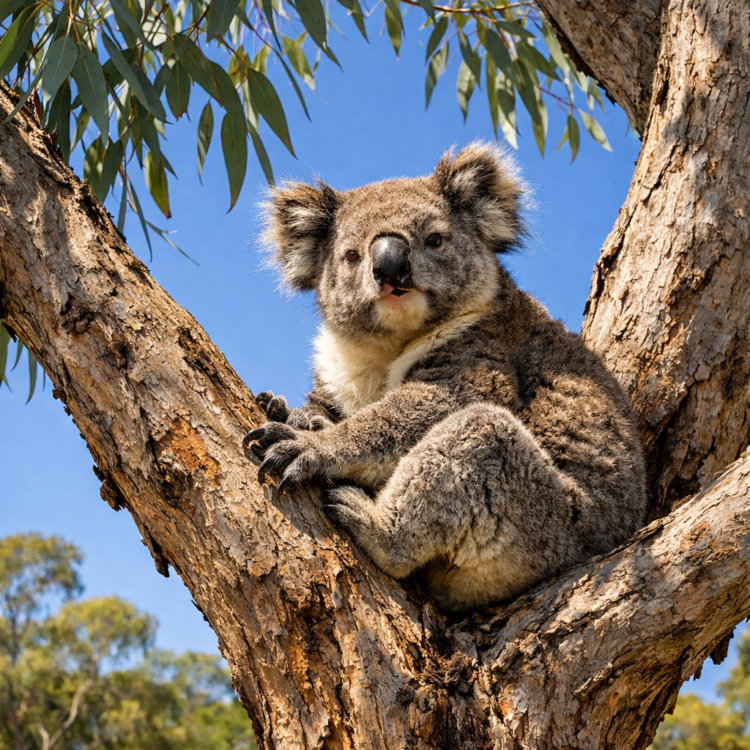
If you’re wondering where to see wild koalas in Australia without the crowds or enclosures, Kangaroo Island off the coast of South Australia is your answer. This isn’t a zoo experience. Here, koalas doze in the forks of manna gum trees you can walk beneath, their grey fur visible against blue sky, while the rest of the island’s native wildlife—sea lions, wallabies, echidnas, and hundreds of bird species—go about their business around you.
Why Kangaroo Island Is the Best Place to See Wild Koalas
Mainland Australia has koalas, but spotting them in the wild takes luck and patience. Kangaroo Island’s koala population is thriving, descendants of animals introduced in the 1920s to a predator-free environment with abundant eucalyptus. The result? High koala density in certain areas, particularly around the island’s woodland reserves.
You’ll find them most easily along walking tracks where the canopy is low enough to see into. Early morning and late afternoon are prime times—that’s when koalas are more likely to be awake and moving between trees, though even a midday snoozer curled in a tree fork is an impressive sight when you’re standing directly below.
What Makes It Different from Zoo Encounters
There’s no glass, no handler holding the animal for photos. You look up. They look down (maybe). The koala decides when it climbs, when it eats, when it sleeps. That’s the trade-off, and it’s worth it.
Where to See Wild Koalas on Kangaroo Island
The Hanson Bay Wildlife Sanctuary, on the island’s south coast, is koala-spotting gold. Walk the trails here and you’ll likely see multiple koalas without trying too hard. The eucalyptus woodland is thick, the trees are the right height, and the population is dense enough that even casual visitors get lucky.
Flinders Chase National Park, toward the western end of the island, also has good numbers. Koalas often appear along the Cape du Couedic Road and near the Rocky River campground. Bring binoculars—they make the difference between “I think that grey blob is a koala” and “I can see its nose twitching.”
The Eucalyptus distillery area and Cygnet River township are other reliable spots locals recommend. Check with the visitor centre in Penneshaw or Kingscote for current details on access and the best recent sightings.
Practical Tips for Finding Wild Koalas in Australia
Koalas sleep 18-22 hours a day. Your job is to scan the trees methodically, looking for grey lumps wedged in forks or draped over branches. They blend in better than you’d expect.
- Walk slowly and look up frequently—your neck will ache, but that’s the price of koala-watching
- Listen for rustling and the surprisingly loud grunting calls males make during breeding season
- Stick to marked walking trails to protect habitat and avoid disturbing wildlife
- Never attempt to touch or feed koalas; they have sharp claws and a bite to match, and it’s illegal to interfere with native wildlife
- Bring a zoom lens or binoculars—most koalas will be 5-15 metres above you
When to Visit Kangaroo Island to See Koalas and Other Wildlife
Koalas are year-round residents, so there’s no bad season. That said, spring (September to November) brings wildflowers and active wildlife as temperatures warm. Summer (December to February) can be hot—pack water and sun protection. Winter (June to August) is mild compared to much of Australia, with fewer tourists and lower accommodation prices.
The island’s other wildlife follows different rhythms. Sea lions at Seal Bay are present year-round, but penguin activity peaks in summer evenings. Echidnas emerge more in cooler months. If you’re traveling specifically to see multiple species in the wild, check the official Kangaroo Island visitor website for seasonal wildlife activity before booking.
Getting to Kangaroo Island from Adelaide
Kangaroo Island sits off the coast near Adelaide. The SeaLink ferry from Cape Jervis (about 90 minutes’ drive south of Adelaide) takes 45 minutes to Penneshaw. Flights from Adelaide to Kingscote take roughly 30 minutes. Both options require advance booking, especially during Australian school holidays and summer.
Once on the island, you’ll need a vehicle—distances are significant, and wildlife hotspots are spread across the island’s 4,400 square kilometres. Rental cars are available in Kingscote and Penneshaw; book ahead, as the island’s fleet is limited.
What Else You’ll See (Besides Koalas)
The magic of Kangaroo Island isn’t just where to see wild koalas in Australia—it’s that koalas are one act in a much larger show. Australian sea lions sprawl on Seal Bay’s sand, close enough to watch them yawn and scratch. Wallabies graze at dusk near most accommodations. Echidnas waddle across roads (drive carefully). The birdlife is extraordinary: glossy black cockatoos, white-bellied sea eagles, and tiny fairy wrens darting through coastal scrub.
At dusk, little penguins return to their burrows at Penneshaw and Kingscote. Guided tours run at specific sites—check locally for details and booking requirements, as permits are needed to protect nesting colonies.
A Final Word on Wild Encounters
Seeing koalas in the wild means accepting you’re entering their space on their terms. You might see a dozen in an hour. You might see one, far away, doing absolutely nothing interesting. But that glimpse of grey fur against green leaves, the knowledge that this animal chose this tree this morning, the patience required to wait and look and listen—that’s what makes the experience real. And on Kangaroo Island, your odds are better than almost anywhere else in the country.
You might also like:
- How to Price Garage Sale Items: A Room-by-Room Guide to Fair Pricing
- Getting Around Australia: Why Domestic Flights Beat Road Trips for First-Time Visitors
For current opening hours, prices and bookings, see Great Barrier Reef Marine Park Authority.
