
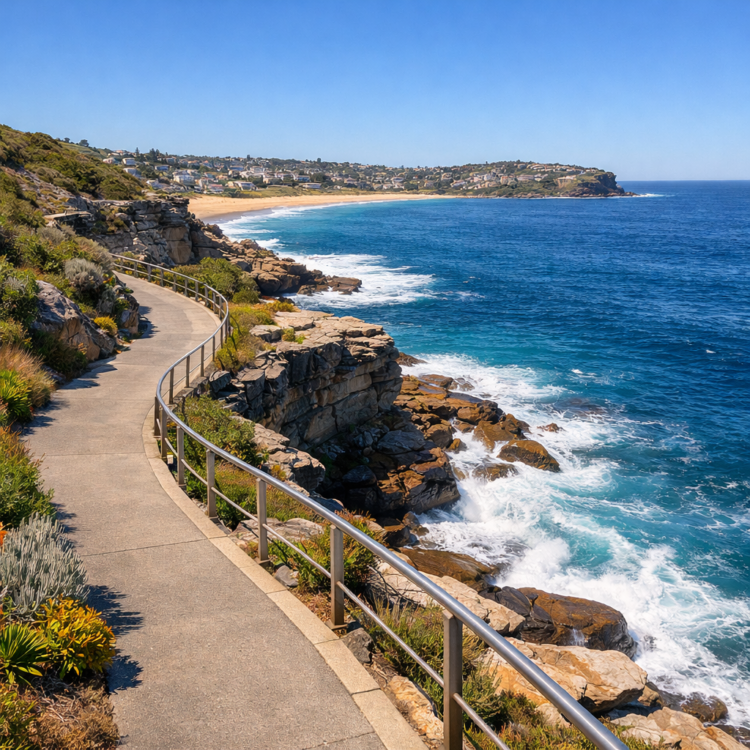
The Bondi to Bronte walk is the secret weapon of Sydney’s famous coastal trail, delivering the most dramatic scenery in a compact, manageable distance. While the full Bondi to Coogee route gets all the guidebook glory, this first section between Bondi Beach and Bronte Beach concentrates the best bits into roughly two kilometres of clifftop path that takes 45 minutes to an hour at a leisurely pace.
Why the Bondi to Bronte Walk Beats the Full Route
The full six-kilometre walk to Coogee is lovely, sure. But the stretch from Bronte onwards flattens out into suburban parks and residential streets, losing the wild coastal drama that makes this walk special in the first place. The Bondi to Bronte section delivers jagged sandstone cliffs, thundering ocean pools, hidden beaches, and enough Instagram-worthy lookouts to fill your camera roll twice over.
You’ll still tick off the highlight stops — Mackenzies Bay, Tamarama Beach, and Bronte’s iconic ocean pool — without the extra two hours of walking through less interesting terrain. This makes it perfect for families with younger kids, anyone visiting Sydney on a tight schedule, or people who’d rather spend their afternoon swimming than slogging along footpaths.
What You’ll Actually See Along the Way
Start at the southern end of Bondi Beach, where the path climbs immediately onto the headland. Within five minutes you’re standing above Mackenzies Bay, a tiny cove ringed by cliffs where locals leap from the rocks into deep turquoise water. It’s clothing-optional if you venture down the steep stairs, though most people just admire the view from above.
The path hugs the clifftop here, close enough to feel the spray when waves explode against the rocks below. Tamarama Beach appears next — a compact crescent of sand nicknamed ‘Glamarama’ for its fashion-conscious crowd. The beach sits in a natural amphitheatre of sandstone, creating one of Sydney’s most photogenic swimming spots despite (or because of) the challenging surf.
Between Tamarama and Bronte, the walk reaches its scenic peak. You’re thirty metres above the ocean, looking back toward Bondi’s sweep of sand with the city skyline hazy in the distance. Native coastal scrub — banksias, coast rosemary, and salt-tolerant eucalypts — clings to the cliff face, somehow thriving in the salt wind.
Timing Your Bondi to Bronte Coastal Walk
Early morning delivers the best light and the fewest people, especially on weekends when the path becomes a parade by mid-morning. Aim for a 7am or 8am start if you’re visiting between December and February (Australian summer). The walk faces east, so you’ll catch golden light on the water and avoid squinting into the sun.
Winter months (June through August) bring calmer seas and crisp air, though you’ll want a light jacket for the wind. The path can get slippery after rain, so check conditions if there’s been recent weather. Sydney’s shoulder seasons — March to May and September to November — offer the sweet spot of mild temperatures and manageable crowds.
Best Stops for Swimming
- Bondi Icebergs Pool: The iconic ocean pool at your starting point, carved into the rocks at Bondi’s southern end
- Tamarama Beach: Beautiful but notoriously dangerous surf — swim between the flags only
- Bronte Beach: The most family-friendly swimming, with a protected pool and patrolled beach
- Bronte Baths: Free ocean pool at the southern rocks, perfect for a post-walk dip
Practical Tips for Walking Bondi to Bronte
The path is paved and well-maintained, but there are stairs. Lots of them. You’ll climb and descend several sets between beaches, so this isn’t a flat seaside stroll. Wear proper shoes — thongs (flip-flops) are doable but not ideal on the steps.
Bring water, sunscreen, and a hat. There’s minimal shade along the clifftop sections, and the Sydney sun is intense even on overcast days. You can refill water bottles at Tamarama and Bronte, where you’ll also find cafés and public facilities.
The walk is wheelchair accessible in sections but not continuously — check with Sydney’s official visitor information for current accessibility details if you need them. Dogs are allowed on leash outside of 9am-4pm in summer months, but double-check the current rules before bringing your pet.
Ending at Bronte: What’s There and How to Get Back
Bronte rewards you with one of Sydney’s best neighbourhood beaches. The grassy park behind the sand is perfect for a post-walk picnic, and there’s a cluster of cafés along the beachfront. The ocean pool at the southern end of the beach offers protected swimming with waves washing over the edges.
Getting back to Bondi is simple: bus route 378 runs directly between Bronte and Bondi Beach every 15-20 minutes, or you can catch the 379 to Bondi Junction train station if you’re heading elsewhere in Sydney. Both buses stop right near Bronte Beach. Check Transport for NSW’s website for current schedules and ticketing information.
Alternatively, do the Bondi to Bronte walk in reverse and finish at Bondi, where you’ll have more dining options and easier transport connections. The path works equally well in either direction, though starting at Bondi means the views ahead of you rather than behind as you walk.
Why This Walk Captures Sydney Better Than the Full Route
This concentrated stretch of coastline shows you what makes Sydney special: dramatic Pacific Ocean meeting sandstone cliffs, world-famous beaches tucked into rocky coves, and locals treating spectacular scenery as their everyday backyard. You’ll pass morning swimmers doing laps in ocean pools, surfers checking breaks from the clifftop, and families throwing birthday parties in beachside parks.
The Bondi to Bronte walk gives you Sydney’s coastal beauty without demanding your entire day. Save your energy for that swim at Bronte Baths, that coffee overlooking the beach, that second piece of banana bread at the café. You’ve earned it.
You might also like:
- A Paddock-to-Plate Journey: Where to Taste Moree’s Pecan Harvest
- Night Walks in the Daintree Rainforest: A Guide to After-Dark Wildlife Spotting
For current opening hours, prices and bookings, see Parks Australia – Uluru-Kata Tjuta National Park.
