
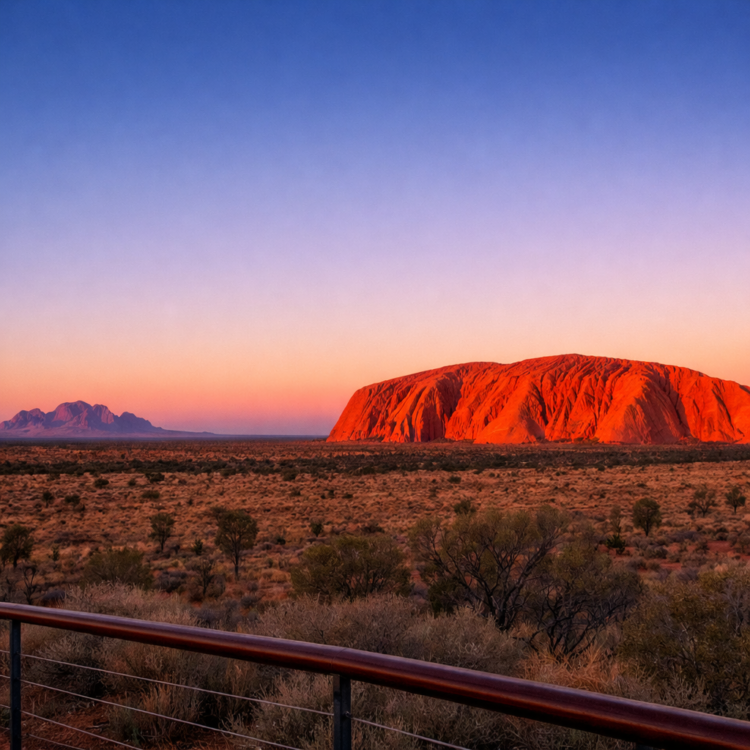
Watching sunrise at Uluru transforms the massive sandstone monolith from charcoal grey to glowing ember-red in the space of twenty minutes. It’s the Red Centre’s signature moment, and for good reason: the colour shifts are so vivid, so rapid, that you’ll find yourself holding your breath as the rock seems to ignite from within. But getting it right requires some planning, especially if you’re balancing a visit to nearby Kata Tjuta and Alice Springs in your itinerary.
Why Sunrise at Uluru Beats Sunset
Most first-time visitors assume sunset is the main event. After all, that’s when Uluru glows its famous deep red, right? True—but sunrise offers something more intimate. The light hits Uluru from behind you, illuminating the western face while the sky behind the rock stays soft and cool. There are fewer crowds at dawn, the air is cooler (crucial if you’re visiting between October and March), and the wildlife is more active.
The colour sequence is subtler but more varied. You’ll see lavender, then pink, then orange, then that signature burnt sienna as the sun climbs. By mid-morning, the rock has settled into a flat terracotta that doesn’t change much until late afternoon.
Where to Watch: The Talinguru Nyakunytjaku Viewing Platform
The purpose-built sunrise viewing area in Uluru-Kata Tjuta National Park is Talinguru Nyakunytjaku, perched on a sand dune about 20 minutes’ drive from Yulara (the resort town near Ayers Rock Airport). The platform gives you an elevated view of both Uluru to the west and Kata Tjuta to the southwest—the only spot where you can see both landmarks at once.
Arrive at least 30 minutes before official sunrise time. The pre-dawn blue hour is half the show. Park gates open early to accommodate dawn visitors; check current opening times at the visitor centre when you collect your park pass, as seasonal variations apply. Bring a torch for the walk from the car park to the platform—it’s flat and easy, but unlit.
Timing Your Red Centre Itinerary Around Dawn
Here’s where trip planning gets interesting. Sunrise times in the Red Centre swing dramatically with the seasons—from around 5:45am in summer (December-February) to past 7:00am in winter (June-August). That early summer start can feel brutal, especially if you’re still adjusting after flying into Alice Springs or taking the short flight to Ayers Rock Airport.
Consider this sequence: drive the 4.5 hours from Alice Springs the day before your planned Uluru sunrise, check into accommodation in Yulara, and use the afternoon to visit Kata Tjuta’s Valley of the Winds walk while the light is still good. Wake early the next morning for sunrise, then spend the daylight hours doing the Uluru base walk or shorter rim walks before either driving back to Alice Springs or catching an onward flight.
If you only have one dawn in the Red Centre, give it to Uluru. Kata Tjuta’s tallest dome rises about 546m—actually higher than Uluru’s 348m above the plain—but the sunrise colour show is more diffused across the multiple rock formations. Save Kata Tjuta for morning or late-afternoon light instead.
What to Bring for an Uluru Dawn Visit
The desert temperature swings are no joke. Even in summer, dawn can be cool enough for a fleece; in winter (June-August), you’ll want a proper jacket, beanie, and gloves. The sun climbs fast, though. Layer up so you can peel off as the temperature rises 15 degrees in an hour.
- Warm layers (temperatures can drop to near-freezing in winter)
- A headlamp or small torch for the pre-dawn walk
- Camera with a full battery (cold drains power faster)
- Water—at least a litre per person, more in warm months
- Insect repellent (flies wake up fast once the sun is up)
- Breakfast or snacks (there are no facilities at the viewing platform)
Respecting Anangu Culture During Your Visit
The Anangu people have been the traditional owners of this land for more than 30,000 years, and Uluru holds deep spiritual significance. Photography is permitted at the designated sunrise viewing area, but certain sacred sites around the base are marked as no-photography zones. Pay attention to the signage.
Climbing Uluru was permanently closed in 2019 at the request of the traditional owners—a decision that reflects the rock’s cultural importance. The base walk and other trails offer more than enough access to appreciate the landscape without causing cultural harm. If you’re curious about Anangu perspectives on the land, the Cultural Centre near the base walk is worth a visit (check opening hours when you arrive).
After the Sun Rises: Making the Most of Your Morning
Don’t rush off the moment the colour show ends. As the sun climbs higher, the landscape around Uluru comes alive: you’ll spot bird activity, see the texture of the rock face sharpen in the angled light, and watch the shadow side of Uluru shift from charcoal to rust. The viewing platform has interpretive signs explaining the geology and cultural significance of what you’re seeing.
From the sunrise platform, you’re well-positioned to drive around to the Mala Walk (an easy 2km return trail along Uluru’s base) or tackle the full 10.6km base walk before the day heats up. Both give you an entirely different perspective on the rock: up close, Uluru isn’t smooth at all, but deeply textured with caves, waterholes, and pockmarked surfaces that change character every hundred metres.
The combination of sunrise at Uluru, a walk at Kata Tjuta, and a night or two in Alice Springs makes for a compact but rich Red Centre itinerary. Just remember: the desert rewards early risers. Set that alarm, brave the cold, and you’ll understand why so many people call that first light on Uluru the highlight of their Australian travels.
You might also like:
- How to Test Used Phones Before Buying: A Complete Checklist
- Canoeing Warrabah National Park: Your Guide to Paddling the Namoi River Gorge
For current opening hours, prices and bookings, see Australia.com (Tourism Australia) – Uluru & Kata Tjuta.
