
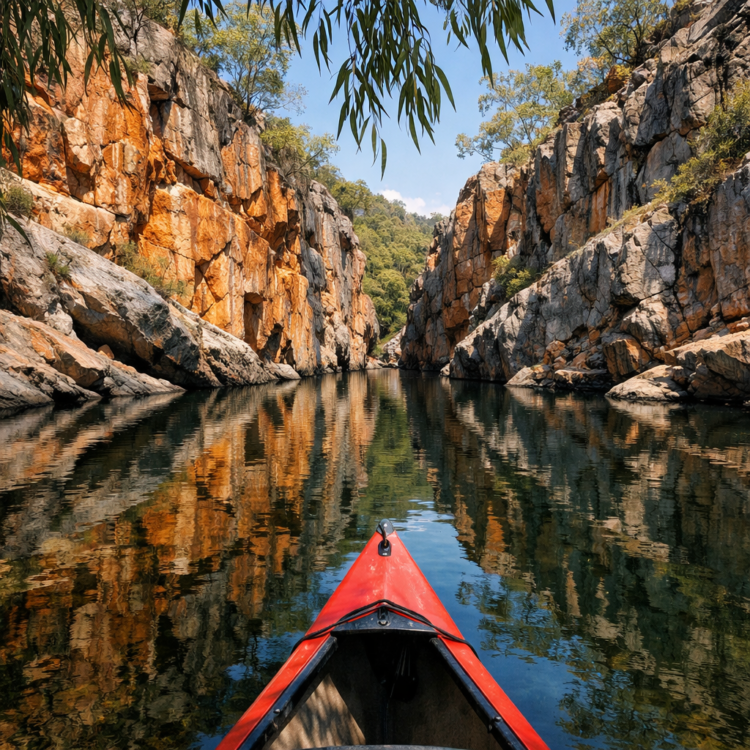
Canoeing Warrabah National Park takes you into one of the most striking river landscapes in the New England region, where the Namoi River has carved a winding path through ancient granite country about an hour’s drive northeast of Tamworth. Unlike the gentler farm-country creeks nearby, this is a river with personality—rock gardens, small rapids, deep pools beneath sheer cliff faces, and long quiet stretches where the only sound is your paddle dipping into tea-coloured water.
Why Paddle Warrabah Instead of Other Rivers Near Tamworth
The Namoi through Warrabah isn’t a casual float. The park’s dramatic gorges and granite boulders create a paddling experience that feels remote and wild, even though you’re barely an hour from town. You’ll navigate around house-sized rocks, slip through narrow channels, and pull up on sandy banks where eastern grey kangaroos drink at dawn.
The river here isn’t always deep—water levels dictate whether you’re in for a lazy drift or a bit of rock-dodging. Late winter through spring (July to November) typically offers the most reliable flow after good rainfall, though you’ll want to check conditions before you load the canoe. Summer can leave some sections too shallow to paddle comfortably, turning your boat into an expensive toboggan.
Where to Launch and What Section to Paddle
The campground at Warrabah National Park sits right on the river and makes the obvious launch point for most paddlers exploring canoeing Warrabah National Park. From there, you can head upstream into the tightest part of the gorge—a there-and-back paddle through the most dramatic scenery—or drift downstream toward more open country.
Upstream is where the gorge really shows off. Granite walls rise 50 metres or more on both sides, casting deep shadows even at midday. The river narrows, speeds up a touch over rock bars (nothing truly technical, but you’ll need basic boat control), then opens into glassy pools perfect for a swim. Plan two to three hours for a relaxed upstream paddle and return, longer if you’re stopping to fish or explore side gullies.
Downstream is gentler and wider, better for beginners or anyone who’d rather float than work. The gorge walls ease back, the current slows, and you’ll spot more birdlife—herons, cormorants, the occasional azure kingfisher if you’re quiet and lucky.
River Conditions and What Canoe to Bring
This isn’t a whitewater river, but it’s not a lake either. A stable touring canoe or sit-on-top kayak handles the mix of calm water and minor rapids best. Inflatable kayaks can work in higher water, but you’ll curse them when you’re scraping over rocks in low flow.
Always check the latest river height information before your trip—the Tamworth Visitor Information Centre or the NSW National Parks website can point you toward current conditions. After heavy rain, the Namoi can rise quickly and turn pushy; in drought, it might not be worth launching at all.
Swimming Spots You’ll Find While Canoeing Warrabah National Park
Some of the best swimming holes in the park are only accessible by boat. Look for the deep pools where the current slows after a rapid—typically at the base of cliffs or just downstream of big boulder jams. The water stays cool even in summer, fed by springs upstream, and the granite makes for clean, sandy-bottomed pools.
One favourite (you’ll know it when you see it) is a broad pool beneath a towering orange-and-grey rock face about 40 minutes upstream from the campground. The cliff catches the afternoon sun, and the water is deep enough to dive from the lower rocks if that’s your style. Just test the depth first—rivers change their beds.
Wildlife, Fishing, and What Else Lives Here
Paddle quietly in early morning or late afternoon and you’ve got a decent chance of spotting a platypus. They’re here, feeding in the shallows and around submerged logs. Red-necked wallabies browse the riverbanks at dusk, and if you’re camped overnight, listen for the territorial barking of grey kangaroos echoing off the gorge walls after dark.
Anglers come for the Murray cod and yellowbelly (golden perch), though fishing regulations apply—check the NSW DPI rules and size limits before you cast. Some paddlers bring a rod and drift with a lure out, combining a lazy float with the chance of dinner.
Practical Tips for Your Warrabah Paddling Trip
The campground at Warrabah National Park makes an ideal base, with sites close to the river and basic facilities (pit toilets, no power). Book ahead through the NSW National Parks website, especially during school holidays or long weekends when Tamworth locals head out for a night under the stars.
- Bring everything with you—there’s no shop, no phone signal, and no freshwater taps. Pack drinking water, food, fuel, and a first-aid kit.
- Wear a PFD (personal flotation device) on the water. The river is remote; help is a long way off if something goes wrong.
- Sun protection is non-negotiable. Even on cooler days, the granite reflects heat and light, and the gorge can be an oven by midday.
- A dry bag for your phone, keys, and snacks is worth its weight—capsize in a rapid and you’ll wish you had one.
- Check fire restrictions before your trip. Total fire bans are common in summer, and even gas stoves may be prohibited.
Getting to Warrabah from Tamworth
From Tamworth, head east on the Oxley Highway toward Walcha, then follow the signs north to Warrabah—it’s about 90 kilometres and takes just over an hour on sealed and good-quality unsealed roads. The final stretch into the park is gravel but suitable for most 2WD vehicles in dry conditions. Heavy rain can make the access road slippery; check with the Tamworth Visitor Information Centre for current road conditions if the forecast is wet.
If you’re visiting during the Tamworth Toyota Country Music Festival in January, escaping to Warrabah for a few days of paddling and camping makes a brilliant counterpoint to the crowds and busking on Peel Street. The river doesn’t care about golden guitars—it just keeps rolling through its ancient gorge, waiting for you to paddle it.
You might also like:
- How to Clean Used Furniture Before Selling: A Step-by-Step Guide
- Taste Tamworth Festival: How to Plan the Perfect Pop-Up Bar Crawl
For current opening hours, prices and bookings, see Visit NSW – Tamworth.

Lake Keepit Camping Weekend: Sailplanes & Stillwater
September 11, 2026 at 8:01 am
[…] Canoeing Warrabah National Park: Your Guide to Paddling the Namoi River Gorge […]