
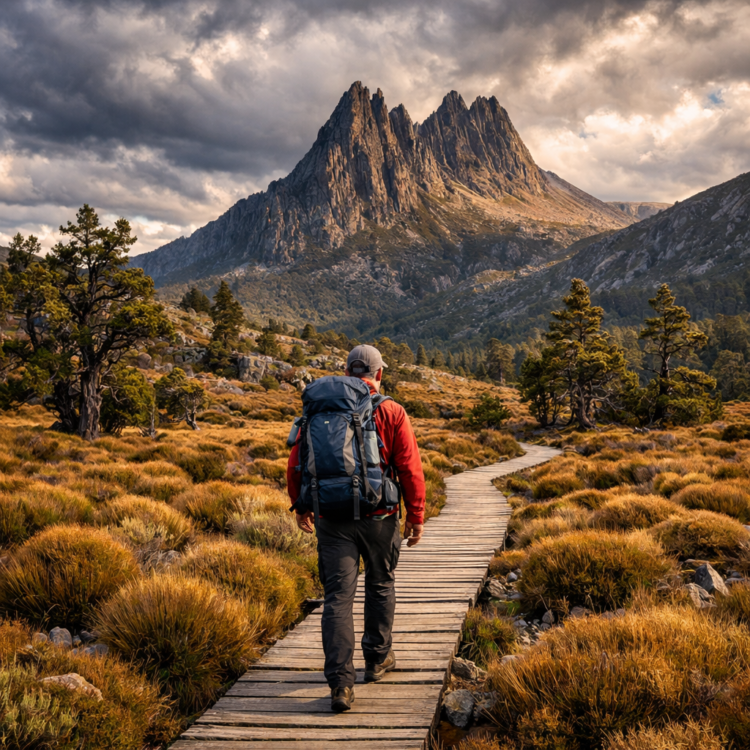
Hiking the Overland Track Tasmania is one of those experiences that recalibrates your sense of wilderness. This 65-kilometre trail cuts through the heart of the Tasmanian Wilderness World Heritage Area, linking Cradle Mountain in the north to Lake St Clair in the south. You’ll walk across buttongrass moorlands that stretch to distant peaks, descend into cool-temperate rainforest hung with moss, and scramble up side trails to mountain summits where the wind hits hard enough to make you laugh.
Why Hiking the Overland Track Should Be on Your List
Tasmania is an island state known for its wilderness areas and national parks, and the Overland Track represents the best of what that means. Unlike a day hike, this multi-day walk immerses you in country that feels genuinely remote. You’ll sleep in huts (or your tent pitched nearby), filtering water from icy streams and watching wombats graze at dusk outside your shelter.
The track takes most people five to six days, though walkers can add side trips to peaks like Mount Ossa (Tasmania’s highest at 1,617 metres) or detour to waterfalls that tumble over dolerite cliffs. The seasons are reversed from the Northern Hemisphere here in the Southern Hemisphere, so summer runs from December to February—but even then, expect cold snaps and rain. That unpredictability is part of the appeal.
When to Walk and How to Secure Your Permit
The Overland Track operates on a booking system during the peak season, which typically runs from late October through May. During these months, walkers must travel north to south and start from Cradle Mountain. Numbers are capped to protect the environment and maintain the experience, so book well ahead—especially for summer dates.
Check the official Parks and Wildlife Service Tasmania website for current permit costs, availability, and booking procedures. Outside the peak season (winter months, roughly June through August), you can walk without a booking, but conditions become significantly more challenging. Snow and ice are common, daylight hours shrink, and some huts may have reduced facilities.
What the Weather Will Throw at You
Even in summer, Tasmania’s alpine weather shifts fast. You might start the day under blue skies and end it huddled in your rain jacket as sleet hammers the hut roof. Pack for four seasons. Temperatures can drop near freezing at night, even in January, and the plateau sections offer no shelter from wind.
The Track Itself: What Each Day Looks Like
Most walkers break the Overland Track into six stages, though fit hikers can push through in five. The first day climbs out of Cradle Valley, skirting Cradle Mountain itself (a side trip to the summit adds a couple of hours but delivers views across dozens of peaks and glacial tarns). You’ll cross boardwalks over fragile alpine vegetation, then drop into forest.
Middle days take you past Windermere Hut, across the exposed Pelion Plains, and through stands of ancient King Billy pines and deciduous beech that glow gold in autumn. Lake St Clair appears on the final stretch—Australia’s deepest natural freshwater lake. Many walkers arrange a ferry pickup from Narcissus Hut to Cynthia Bay rather than adding the extra four-hour walk out along the lakeshore.
Side Trips Worth the Extra Kilometres
Don’t skip Mount Ouse. The detour adds about three hours return but rewards you with 360-degree views over the Central Plateau. Similarly, the scramble up Barn Bluff is steep and exposed, but you’ll stand on a summit where the whole World Heritage Area spreads out below.
Packing Smart for a Multi-Day Walk in Tasmania
Because huts provide shelter (though bunk space isn’t guaranteed—always carry a tent), you can travel lighter than on a fully self-supported trek. Still, this is no lightweight overnight. Here’s what you need:
- Waterproof jacket and pants (not water-resistant—actually waterproof)
- Warm layers including fleece or down, even in summer
- Sturdy hiking boots with ankle support; the track is often muddy and root-crossed
- Sleeping bag rated to at least zero degrees Celsius
- Cooking gear and fuel (huts have gas cookers, but bring backup)
- Water treatment (filter or tablets; all water should be treated)
- First aid kit and personal locator beacon if you have one
Food is on you—plan for high-energy meals that don’t require lengthy cooking. Dehydrated camping meals are popular, but some walkers swear by wraps, cheese, salami, and instant noodles bulked up with tinned tuna.
Getting There and What Comes After
Most walkers fly into Launceston or Hobart, then arrange transport to Cradle Mountain. Several shuttle services operate between cities and the trailhead—check current operators and schedules through visitor centres or the Parks website. At the southern end, you’ll finish at Lake St Clair, where buses can take you back to Hobart or Launceston.
Build in a rest day after your walk. Your legs will thank you, and both Hobart and Launceston offer excellent food, local whisky distilleries, and hot showers—luxuries that feel earned after six days in the wilderness.
The Moment You’ll Remember
For many, it’s not the summits or the huts, but something smaller. Maybe it’s a currawong landing on your pack to investigate lunch. Or the way mist lifts off a tarn at dawn, revealing mountains you didn’t know were there. Tasmania’s wilderness has a way of getting under your skin—quietly, without fanfare. The Overland Track just gives you six days to notice.
You might also like:
- Night Walks in the Daintree Rainforest: What You’ll Find After Dark
- Mount Kaputar Hiking Trails: Your Weekend Itinerary from Moree
For current opening hours, prices and bookings, see Parks Australia – Uluru-Kata Tjuta National Park.
