
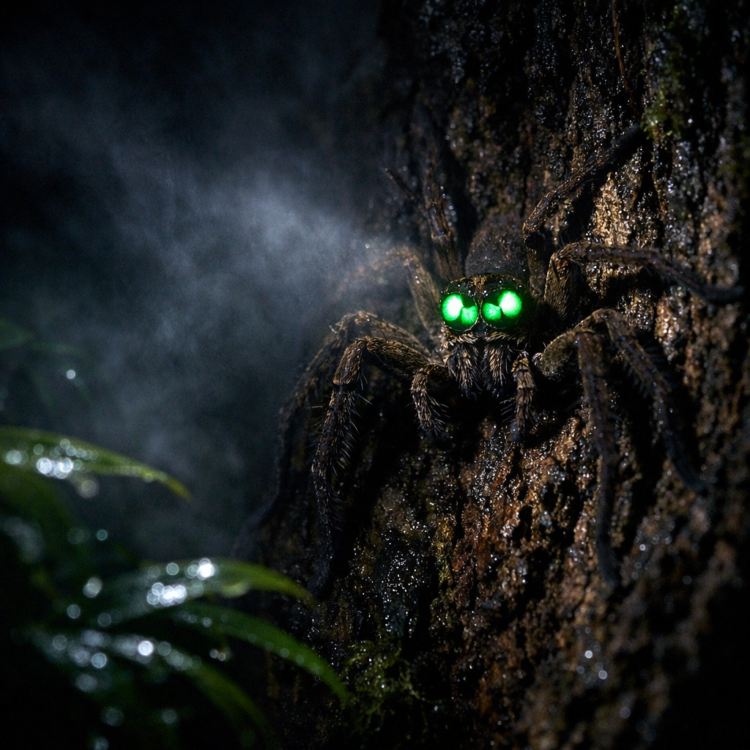
A Daintree Rainforest night walk is nothing like walking through the same forest during daylight hours. This 135-million-year-old rainforest in far north Queensland comes alive after dark with creatures you’d never encounter on a morning stroll—tree kangaroos browsing overhead, giant stick insects the length of your forearm, and spiders with eyes that glow like tiny stars when your torch beam catches them.
The sounds shift, too. The daytime bird chorus gives way to the croaking of frogs, the rustle of possums in the canopy, and if you’re lucky, the haunting call of a bush stone-curlew somewhere in the darkness.
Why a Daintree Rainforest Night Walk Is Worth Your Time
Most visitors see the Daintree during the day and miss about 60% of the rainforest’s wildlife. Mammals, in particular, wait until after dark to emerge. Boyd’s forest dragon—a prehistoric-looking lizard—sleeps on branches at eye level, bright green and completely visible when you’d never spot one moving through undergrowth by day.
Nocturnal tours reveal a different ecosystem. The forest floor becomes a highway for bandicoots and white-tailed rats. Pythons drape themselves over low branches. Even the insects put on a show: bioluminescent fungi glow pale green on rotting logs, and during the right season, you might see fireflies blinking in synchronized patterns.
What Makes Night Different
Your eyes adjust to new focal points. Instead of scanning the canopy for birds, you’re looking for eyeshine—the reflection of torchlight in animal eyes. Spiders are easiest to spot this way. Their eyes reflect blue-white, and once you learn to recognize that pinpoint gleam, you’ll realize they’re everywhere.
What to Bring on Your Night Walk in the Daintree
A good headlamp or torch is essential—preferably one with a red light setting, which disturbs wildlife less than white light. Most guided tours provide these, but it’s worth checking when you book. Check the official visitor information website for current tour operators and what’s included in their packages.
Here’s what else you’ll want:
- Long, lightweight trousers and a long-sleeved shirt (protection from mosquitoes and wait-a-while vines)
- Closed-toe shoes with good grip—the boardwalks can be slippery after rain
- Insect repellent (apply before you start; avoid reapplying on the trail where it might affect wildlife)
- A small backpack to keep your hands free
- Water bottle
- Camera with good low-light capability, though managing a camera and torch simultaneously is trickier than it sounds
Guided Tours vs. Independent Daintree Night Walks
You can walk some Daintree boardwalks independently after dark, but a guided tour dramatically increases what you’ll see and understand. Local guides know where to look and, crucially, what you’re looking at. That brown lump on a branch isn’t just a lump—it’s a leaf-tailed gecko whose camouflage is so perfect you’d walk past a dozen of them on your own.
Guides also carry spotlights powerful enough to illuminate the canopy, where much of the action happens. They’ll point out the eyeshine of a coppery brushtail possum fifty feet up, or track the movement of a tree kangaroo you’d never see with a headlamp alone.
If you do venture out independently, stick to established boardwalks like the Jindalba and Dubuji boardwalks. Never go off-trail at night—the risk of getting disoriented or encountering a cassowary is real.
Best Time for Night Walks in the Daintree Rainforest
Tours typically start around sunset and run for two to three hours. The hour just after dark tends to be most productive, as nocturnal animals begin their evening routines.
Seasonally, the cooler, drier months from June through August offer more comfortable walking conditions, though Queensland’s far north never gets truly cold. Summer (December through February) brings heat, humidity, and afternoon storms—but also peak breeding activity for frogs and insects, which means more noise and more to see. The trade-off is sweat and mosquitoes.
What About Rain?
Light rain doesn’t cancel tours, and some animals are more active in damp conditions. Frogs, obviously, love it. Heavy downpours make walking less pleasant and reduce visibility, but the rainforest smells incredible when wet—a rich, earthy scent you won’t forget.
Creature Highlights You Might Encounter
Every Daintree night walk is different, but a few species show up reliably. Striped possums are common on certain trails, recognizable by their skunk-like stripes and the sound of them tearing bark to reach grubs. Green tree frogs often perch on railings, completely unbothered by human presence.
Amethystine pythons are less common but unforgettable when spotted—Australia’s longest snake, sometimes exceeding five meters. They’re non-venomous and typically hunting for possums or birds in the canopy. Stick insects are almost guaranteed; the Daintree is home to species as long as your hand, moving in slow motion across leaves.
And then there are the eyes. Once you start spotting eyeshine, you’ll see it everywhere—orb-weaver spiders, wolf spiders, huntsmen, and the occasional frog staring back at you from a puddle.
Booking Your Daintree Rainforest Night Walk
Several operators run night tours from different access points around the Daintree. Some start near Cape Tribulation, others closer to the Daintree River crossing. Tour sizes vary, and smaller groups generally mean better wildlife viewing—fewer footsteps, less noise, more flexibility to pause when something interesting appears.
Check official websites for current prices, departure times, and booking requirements. Some tours include pickup from accommodation in the area, which is convenient if you’re staying nearby and eliminates the challenge of driving unfamiliar rainforest roads in the dark.
The Daintree after dark isn’t just a different time of day—it’s a different world entirely. The forest you walked through that morning becomes something ancient and alive in ways sunlight never reveals. Bring your torch, your curiosity, and a willingness to look closely. The rainforest will do the rest.
You might also like:
- Canoeing Warrabah National Park’s Namoi River: Your Gorge-to-Gorge Paddling Guide
- Where to Stay at Tamworth Country Music Festival: Your Accommodation Survival Guide
For current opening hours, prices and bookings, see Parks Australia – Uluru-Kata Tjuta National Park.

Multi-Day Wilderness Walks in Tasmania: A Guide to Hiking the Overland Track | ClassifiedZ
September 16, 2026 at 2:48 am
[…] Night Walks in the Daintree Rainforest: What You’ll Find After Dark […]