
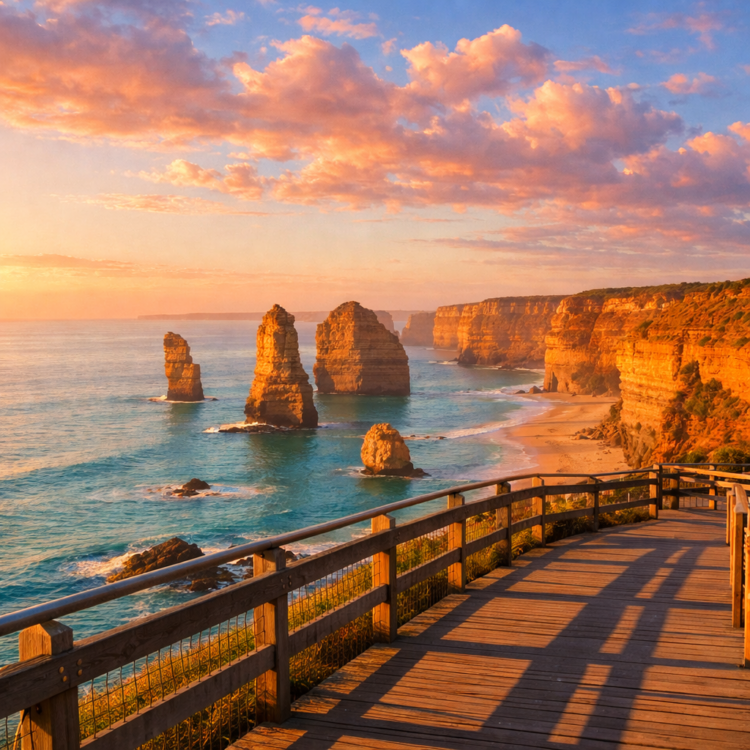
The best time to drive Great Ocean Road isn’t just about season or weather—it’s about light, direction, and what you actually want to see. Drive west from Melbourne in the afternoon and you’ll squint into the sun for hours, missing half the coastal views. Drive east at dawn and you’ll have the Twelve Apostles bathed in soft morning gold, practically to yourself.
Most road trip guides tell you what to see. Few tell you when to see it, or which direction lets you pull over safely at the best moments. After years of watching visitors park on the wrong side of the road at sunset or arrive at the Apostles in harsh midday glare, here’s how to time your Great Ocean Road drive for the light you’ll actually want to remember.
Why Direction Matters More Than You Think
The Great Ocean Road hugs the coast heading roughly southwest from near Melbourne, then curves back northeast. If you drive the classic route—Torquay to Port Fairy, heading west—you’ll be on the inland side of the road for most of the journey. That means crossing traffic every time you want to pull into a lookout.
Worse, afternoon and evening sun sits directly ahead of you. The ocean views everyone raves about? You’ll see them backlit, washed out, through a windscreen full of glare.
Drive east instead—Port Fairy to Torquay—and suddenly you’re on the ocean side. Every scenic pullout is a simple left turn. The Twelve Apostles, the Loch Ard Gorge, the cliffs near Princetown—all of them face east, which means sunrise and morning light hit them straight on. Golden hour becomes your companion, not your adversary.
The Best Time to Drive Great Ocean Road by Season
Summer (December to February) brings long daylight hours and calmer seas, but also crowds and harsh midday sun that flattens the limestone stacks into pale shadows. If you’re committed to a westbound drive, summer’s extended evenings at least give you a chance at late golden hour around 7–8 pm.
Autumn (March to May) is the sweet spot. Softer light, fewer tourists, and still-mild temperatures make early morning starts genuinely pleasant rather than a test of willpower. The ocean takes on deeper blues and greens as the sun angle drops.
Winter (June to August) can be dramatic—storm light, moody skies, waves crashing against the Apostles—but prepare for rain and short days. You’ll need to time your drive carefully to catch the limited morning light. Spring (September to November) offers wildflowers and crisp air, though weather can be unpredictable.
Sunrise at the Twelve Apostles: Why It’s Worth the Early Alarm
Set your alarm for an hour before dawn. Yes, really.
The Twelve Apostles viewing platform is open 24 hours, and arriving in the dark means you’ll walk down to the boardwalk in near-silence, maybe sharing the space with one or two other photographers. As the sky lightens, the limestone stacks emerge from shadow—first as silhouettes, then glowing soft pink and gold as the sun clears the horizon behind you.
The light is never better than this. By 10 am, the same scene will be flat, the rock faces blown out by overhead sun, the parking lot jammed with tour buses. Check the weather forecast and sunrise time before you go; the official visitor information website for the Great Ocean Road has current conditions and webcams.
Planning Your Route and Timing
If you’re driving east (the photographer’s route), consider these stops in order:
- Port Fairy for an overnight stay before your early start
- The Twelve Apostles at sunrise (aim to arrive 30 minutes before dawn)
- Loch Ard Gorge by mid-morning when the sun fully illuminates the gorge floor
- Gibson Steps around late morning
- Apollo Bay for lunch
- The inland rainforest detours (Otway Ranges) in filtered afternoon light
This east-to-west itinerary gives you the hero shots early, then lets you explore the quieter sections without stressing about missing the best light. The entire drive takes about four hours without stops, but budget a full day—or better, two—to actually experience it.
Practical Tips for Golden Hour Driving
The Great Ocean Road is narrow and winding in sections, with sheer drops and limited shoulders. Never stop on the road itself for photos, no matter how stunning the view. Official lookouts exist for a reason.
In winter, sunrise can mean driving in pre-dawn darkness on unfamiliar roads. Take it slow. Kangaroos and wallabies are active at dawn and dusk—collisions are common and dangerous.
Fuel up before you leave; stations are sparse along remote stretches. Download offline maps. And if you’re shooting photos, bring a polarising filter to cut glare off the water—even perfect morning light benefits from it.
When to Skip the Drive Entirely
Heavy fog and low cloud can roll in fast off the Southern Ocean, reducing visibility to almost nothing. If the forecast shows thick marine fog or storm warnings, postpone. The Apostles shrouded in mist might sound romantic, but the reality is a grey carpark and zero views.
Similarly, if you’re only able to drive midday in summer, you’re better off spending that time in the Otway Ranges rainforest where the canopy softens the light. Save the coastal icons for when you can do them justice.
The best time to drive Great Ocean Road ultimately depends on what you want to bring home—snapshots to say you were there, or images that capture why Victoria’s coast earns its reputation. Drive east at dawn, and you’ll get the latter.
You might also like:
- Tamworth Regional Gallery and Country Pubs: A Perfect Cultural Crawl
- Winter at Moree Artesian Spa: Why Cold Weather Makes the Perfect Hot Springs Escape
For current opening hours, prices and bookings, see Parks Australia – Uluru-Kata Tjuta National Park.
