
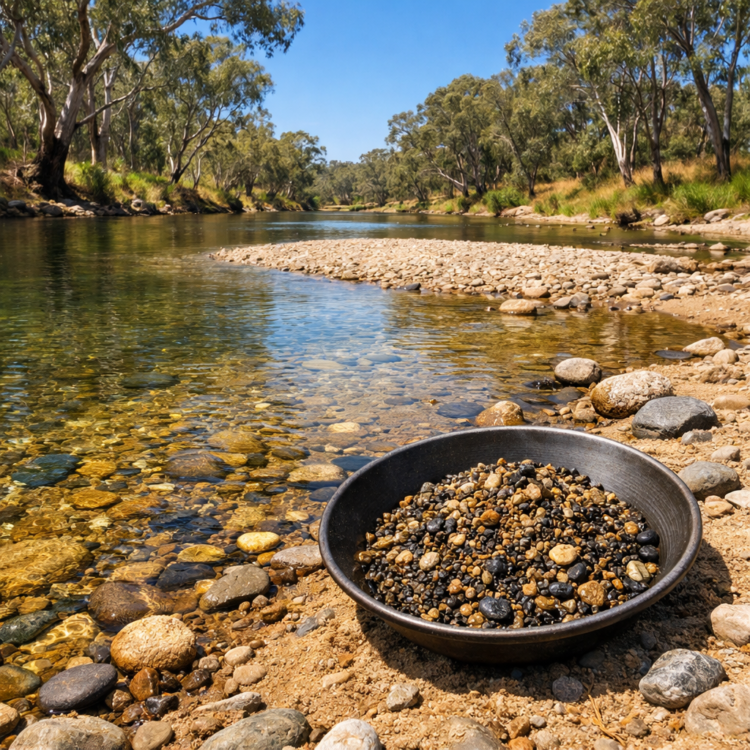
Fossicking on the Peel River near Tamworth offers a hands-on treasure hunt that costs nothing but time and gets you wading in clean, cold water under open sky. This isn’t a commercial gemstone park with manicured pits — it’s the real thing, where the Peel winds through Kamilaroi Country and carries traces of sapphires, garnets, zircons, and the occasional speck of gold from the New England high country upstream.
Why the Peel River Is Worth Your Fossicking Bucket
The Peel carves through ancient volcanic geology. Over millennia it’s washed gemstones and heavy minerals downstream, concentrating them in gravel bars and bends where the current slows. You’re not going to strike it rich, but you will get your hands dirty — and there’s a genuine thrill when a tiny blue sapphire or deep-red garnet catches the light in your pan.
The river itself is the drawcard here. It’s shallow enough in most stretches to work the gravel without needing pumps or sluices, and the setting — gums leaning over sandy banks, cockatoos overhead — beats any theme park fossicking experience. Bring a folding chair, a hat, and low expectations, and you’ll have a day that’s more about being outside than getting rich.
What You’ll Actually Find While Gem Fossicking
Sapphires are the headline act, usually small (think rice-grain size or smaller), and ranging from pale blue through to greenish and yellow tones. Garnets turn up more often — little wine-red crystals that glow when wet. Zircons, topaz, and other semi-precious stones appear occasionally. Gold? Rare, but present in fine flakes if you’re patient and work the right spots.
The key is learning to recognize what you’re looking at. A sapphire fresh from the river looks nothing like a cut gem in a jeweller’s window. It’s dull, sometimes opaque, and easy to dismiss as a pebble. Take a small magnifying loupe if you have one, or just collect anything that looks interesting and sort through it at home in good light.
Fossicking on the Peel River: Where and How
You’ll need to check current regulations and access with the Tamworth Visitor Information Centre before heading out — fossicking rules, land access, and permit requirements can change. Generally, you’ll be looking at public river reserves and areas where fossicking is permitted on Crown land.
Gravel bars on the inside of bends are classic spots. Dig down past the top layer of sand to the heavier gravel underneath — that’s where the good stuff settles. Work methodically: scoop gravel into your pan, swirl it in the shallows to wash away the lighter material, and check what’s left. Repeat until your back aches or the sun gets too fierce.
Essential Gear to Bring
- A sturdy metal or plastic fossicking pan (available at camping or prospecting stores)
- A small garden trowel or hand shovel
- Old sneakers or river sandals with grip — the rocks are slippery
- A wide-brimmed hat, sunscreen, and plenty of water
- Small containers or film canisters for collecting finds
- A folding camp chair if you want breaks on the bank
Combining Fossicking with Fishing on the Peel
The Peel River isn’t just for gem hunters. It’s also home to Murray cod, yellowbelly (golden perch), and catfish, making it a worthwhile fishing spot if you bring a rod along. You can fossick a gravel bar in the morning when the light’s good, then throw in a line from the shade during the afternoon heat. Check current NSW recreational fishing rules and size limits before you cast — the regulations are there to protect the river’s ecology.
The stretch of river around Tamworth is accessible and relatively easy to work, but don’t overlook upstream areas if you have a vehicle that can handle unsealed roads. Quieter bends away from town often see less pressure and can be more productive.
What to Expect (and What Not To)
This is slow, meditative work. You’ll spend hours crouched by the water, panning load after load of gravel, finding nothing, then suddenly — a glint. That’s the hook. Don’t come expecting to fund your holiday; come because you want an excuse to spend a day by a river doing something with your hands.
The Peel runs clear most of the year, but after heavy rain it can rise and colour up fast. Always check weather and river conditions before heading out, and never fossick in fast or flooded water. If you’re visiting Tamworth during the Country Music Festival in January or the Taste Tamworth Festival in April, a quiet morning on the river makes a perfect counterpoint to the town’s busier attractions.
Getting There and Staying Nearby
Tamworth sits right on the Peel River, about 400 kilometres northwest of Sydney — roughly a five-hour drive via the Pacific Motorway, Hunter Expressway and New England Highway. If you’re flying in, Tamworth Regional Airport is ten minutes from the CBD with flights from Sydney and Brisbane. For fossickers planning a few days, both Tamworth Holiday Park on Goonoo Goonoo Road and BIG4 Paradise Tamworth (with direct access to the Tamworth River Walk) offer convenient bases. Check with each park directly for current rates and booking details.
Before you set out, stop by the Tamworth Visitor Information Centre near the Big Golden Guitar for up-to-date advice on river access, fossicking permits, and the best stretches to try. Local knowledge saves hours of wandering down dead-end tracks. Then get your boots wet, fill your pan, and see what the Peel River gives up.
You might also like:
- How to Write a Pet Adoption Listing That Gets Noticed
- How to Write a Pet Adoption Ad That Gets Results
For current opening hours, prices and bookings, see Visit NSW – Tamworth.
