
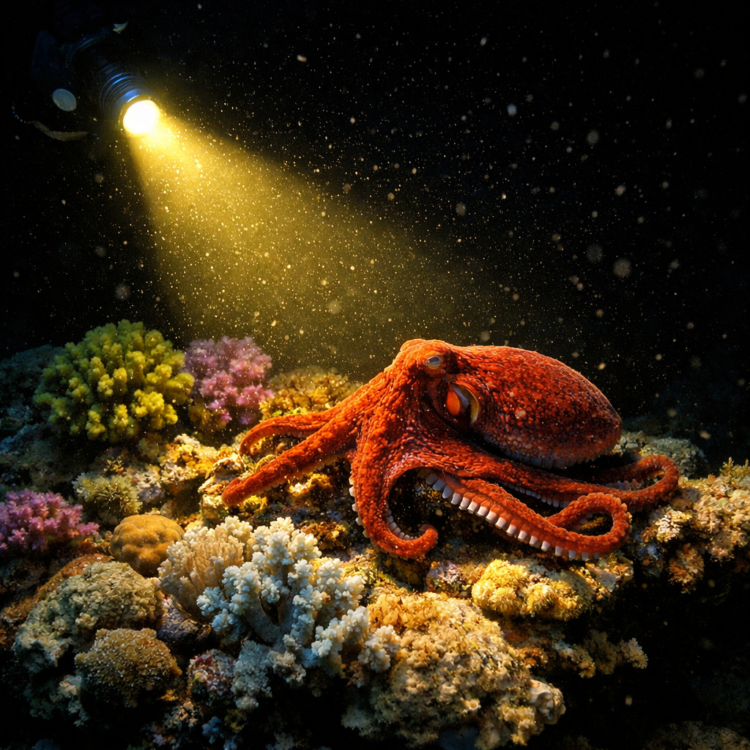
Night diving Great Barrier Reef sites offers something most visitors never see: the reef’s nocturnal shift change. As daylight fades, diurnal fish tuck themselves into crevices, while octopuses, lobsters, and moray eels emerge to hunt. The coral polyps extend their feeding tentacles, transforming the reef into a living, breathing organism that looks nothing like its daytime self.
Why Night Diving the Great Barrier Reef Is Worth the Nerves
Your first dive into darkness feels counterintuitive. Everything you’ve learned about diving happens in sunlight, and now you’re descending with only a torch beam cutting through black water. But that initial flutter of apprehension disappears the moment you spot your first Spanish dancer nudibranch—a brilliant red ribbon rippling through your light.
The reef’s colour palette shifts dramatically. Your torch reveals colours that water filters out during the day: vivid reds, deep purples, and shocking oranges that practically glow. Parrotfish sleep wrapped in transparent mucus cocoons they secrete for protection—strange biological sleeping bags you’d never witness on a morning dive.
Bioluminescence is the real showstopper. Turn off your torch and wave your hand. The water explodes with tiny green-blue stars as disturbed plankton light up in defense. It’s like swimming through a galaxy.
What to Expect on a Night Dive Tour
Most operators running night dives on the Great Barrier Reef depart from Cairns or Port Douglas in the late afternoon. You’ll typically do a twilight dive first—entering the water before sunset so you can watch the reef transition as natural light fades. The full night dive follows after dark.
Expect smaller groups than daytime trips. Night diving requires an advanced or Night Diver certification with most operators (check specific requirements when booking). If you’re not certified, some offer guided night snorkelling instead, which still delivers plenty of nocturnal magic from the surface.
You’ll use three lights: a primary torch, a backup, and often a chemical glow stick attached to your tank so your dive buddy and guide can track you. Briefings are longer and more detailed than daytime dives. The emphasis is on staying close, communicating with light signals, and moving slowly.
Marine Life You’ll Likely Encounter
- Octopuses hunting across coral bommies, skin flashing through colour changes
- Crayfish and crabs emerging from daytime hiding spots
- Moray eels swimming freely in open water (they’re actually quite graceful)
- Sleeping turtles wedged under ledges
- Giant trevally and other predators using your torch to hunt disoriented fish
- Squid attracted to your lights, hovering just at the edge of your beam
Best Time and Conditions for Reef Night Diving
Water temperature stays relatively consistent year-round off Queensland’s coast, ranging from 24-29°C depending on season. Summer (December to February) brings warmer water but also stinger season—you’ll dive in a full stinger suit. Winter months (June to August) offer excellent visibility, though water is slightly cooler.
Moon phase matters more than you’d think. A new moon means darker water and more dramatic bioluminescence, while a full moon provides ambient light that makes navigation easier for nervous first-timers. There’s no wrong choice, just different experiences.
Visibility can actually improve at night. Daytime winds that stir up sediment often die down after sunset, and the reef’s 24-hour current patterns sometimes bring clearer water after dark. That said, conditions vary by site and season—check with your operator about current visibility at your chosen location.
Practical Tips for Your First Night Dive Experience
Test all your lights before boarding the boat. Seriously—don’t wait until you’re gearing up. Battery failures happen, and you can’t descend without a working primary and backup torch.
Your buoyancy control needs to be solid. Night diving the Great Barrier Reef isn’t the time to be fighting to stay off the bottom or bouncing toward the surface. If you’re rusty, do a daytime refresher first. You’ll enjoy the night dive far more if your skills are sharp.
Stay close to your buddy and guide. It’s easy to become disoriented in limited visibility, and that gentle current you barely noticed during the day feels more significant when you can’t see reference points. Most operators use a dive line for navigation between the boat and the reef.
Don’t shine your torch directly in other divers’ eyes—the red filter on your mask isn’t enough to prevent temporary blindness. Point it at what you want them to see, or use it to illuminate your hand signals.
Booking Your Night Dive: What to Check
Operators have varying certification requirements and minimum dive experience standards. Some want at least 20 logged dives before you join a night trip; others accept newly certified divers with instructor supervision. Check the official website or contact the visitor centre in Cairns or Port Douglas for current operator details, prices, and specific requirements.
Ask about group sizes. Smaller groups mean more personalised attention from guides who can point out cryptic creatures you’d otherwise swim past. Also confirm what’s included—some operators provide all equipment including torches, while others expect you to bring your own.
The best night diving sites off the reef vary by operator and conditions. Many use moorings at sites they visit during the day, while others specialise in locations that specifically come alive after dark. Trust your operator’s local knowledge about where the nocturnal action is best on your particular visit.
After Dark on the World’s Largest Reef
You’ll surface from your dive buzzing with adrenaline, comparing sightings with other divers over hot chocolate on the return trip. The Great Barrier Reef stretches over 2,300 kilometres, visible from space, home to thousands of species—but it’s in darkness that you glimpse its secret life, the version of itself it only shows after the day-trippers head home. That’s the dive you’ll remember long after your suntan fades.
You might also like:
- Chasing Thermals: A Weekend of Gliding at Lake Keepit Near Tamworth
- Gliding Over Lake Keepit: A Weekend of Soaring Adventures Near Tamworth
For current opening hours, prices and bookings, see Great Barrier Reef Marine Park Authority.

Best Time to Photograph the Twelve Apostles | Light Guide
September 15, 2026 at 7:02 am
[…] Night Diving the Great Barrier Reef: A Different World After Dark […]