
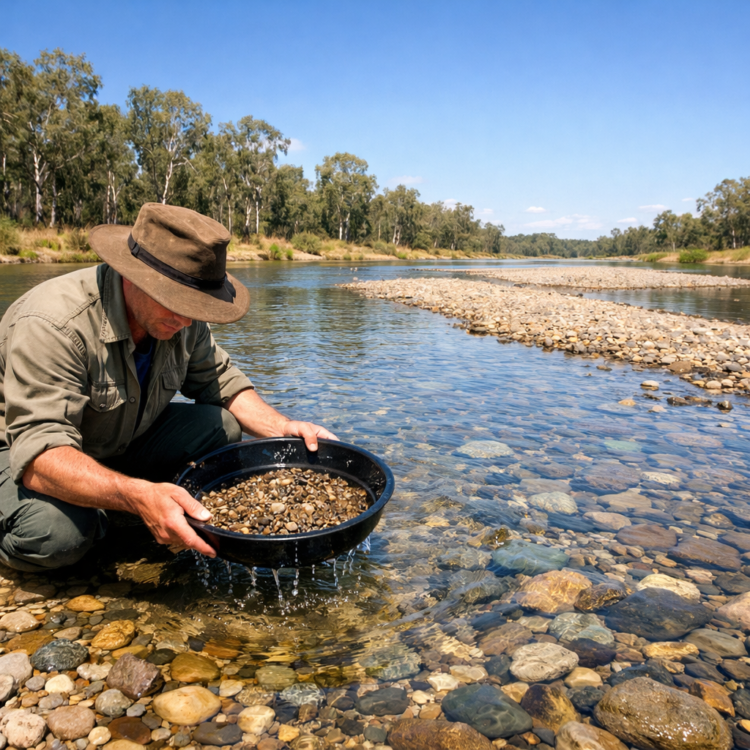
Peel River fossicking near Tamworth, New South Wales, is one of those rare activities where even beginners can walk away with something precious — and it doesn’t cost much more than a licence and patience. The river that winds through Australia’s country music capital carries more than water; its gravel beds hide sapphires deposited over millennia, washed down from ancient volcanic basalt flows upstream. The best part? You don’t need to drive hours into the outback to try your hand at gem hunting.
Why the Peel River Holds Gemstones
The New England region sits on Kamilaroi Country, and its geology tells an ancient story. Millions of years ago, volcanic activity deposited basalt across this landscape, and within those flows formed corundum — the mineral family that includes sapphires and rubies. As the Peel River carved its way through the countryside, it eroded these old basalt deposits and carried the gems downstream, concentrating them in gravel bars and shallow bends.
You’re not looking for enormous stones. Most finds are small — a few millimetres to perhaps a centimetre — but they’re genuine sapphires. Blue is the classic colour, but the Peel also yields greens, yellows (called parti sapphires when they show multiple colours), and even the occasional deep teal. It’s the kind of treasure hunt where the searching is half the reward, but finding even a tiny rough stone you can tumble and polish makes the day memorable.
Where to Fossick Along the Peel River
The stretch of river accessible from Tamworth itself offers some opportunities, particularly where the Tamworth River Walk trails bring you close to the water. But serious fossickers head a bit further afield to the upper reaches of the Peel, where the riverbed widens into gravel bars and the flow slows enough to let you work the material.
Public fossicking areas exist on Crown land along the river, but access points and exact regulations can change. Check with the Tamworth Visitor Information Centre for current advice on where you’re permitted to fossick — some stretches cross private property where you’ll need landholder permission, and others are off-limits during certain times of year to protect the riverbank.
Bring a map or GPS. The best spots aren’t always signposted, and mobile reception can be patchy once you’re out of town.
What You Need for Peel River Fossicking
Before you even think about scooping gravel, you need a Fossicking Licence from the NSW Department of Regional NSW (formerly Primary Industries). It’s inexpensive and covers you across the state for fossicking on unrestricted Crown land. You can apply online or pick one up in town — don’t skip this step, as rangers do check, and fossicking without a licence can mean fines.
Your kit doesn’t need to be fancy:
- A small hand trowel or garden fork for digging gravel
- A mesh sieve or colander (hardware stores sell them cheap; 5mm mesh works well)
- A bucket or shallow tray to wash and sort material
- A magnifying loupe or jeweller’s eyeglass to inspect stones
- Sturdy boots that can get wet — riverbeds are slippery
- Hat, sunscreen, and plenty of water (shade is scarce along the river)
- A small container or film canister to store any finds
Some fossickers bring a portable sluice box to speed up sorting, but beginners do fine with just a sieve and patience. The sapphires are heavy, so they settle to the bottom of your pan while lighter quartz and sand wash away.
How to Spot a Sapphire in River Gravel
This is where Peel River fossicking separates the optimists from the realistic. Rough sapphires don’t sparkle like a cut gem in a jeweller’s window. They look like dull, waxy pebbles, often hexagonal in cross-section if you’re lucky enough to find a crystal with its natural shape intact. Colours are muted under a layer of grime — a blue sapphire might look dark grey until you wet it and hold it to the light.
Work the gravel in shallow water if you can. Scoop a few handfuls into your sieve, dunk it in the current, and shake gently to let the finer material wash through. What’s left are the heavier stones. Pick through them slowly, wetting each candidate and checking for that telltale lustre and weight. Quartz is common and looks similar at first glance, but it’s lighter and has a glassy shine rather than the soft glow of corundum.
Most days you’ll find a few possibles. Some will turn out to be nothing; others might be tiny sapphires worth keeping. Even experienced fossickers go home empty-handed sometimes — that’s the nature of it.
Combine Fossicking with Fishing on the Peel
The Peel River isn’t just for gem hunters. It’s a decent fishing spot, too, particularly for yellowbelly (golden perch) and the occasional Murray cod in the deeper pools. If you’ve got a NSW Recreational Fishing Licence (also required), you can bring a rod and try your luck while you’re out there. The same gravel bars that concentrate sapphires often mark good fishing structure.
Pack a small tackle box and some lures suited to golden perch — soft plastics or diving hard bodies work well. Early morning or late afternoon are the prime times, when the light is softer and the fish are actively feeding. Even if the fossicking is slow, a couple of fish on the line makes the trip worthwhile, and you’ll have the river largely to yourself outside of peak summer weekends.
Plan Your Fossicking Trip from Tamworth
Tamworth sits roughly 400 kilometres northwest of Sydney — about five hours’ drive via the Pacific Motorway, Hunter Expressway and New England Highway — and it’s well set up as a base for exploring the Peel River and the wider New England region. Tamworth Regional Airport is just ten minutes from town, with Qantas and Link Airways flights from Sydney and Brisbane, and NSW TrainLink runs daily trains from Sydney if you’d rather not drive.
For accommodation, both Tamworth Holiday Park (formerly City Lights Holiday Park, on Goonoo Goonoo Road in Hillvue, about 1.5 kilometres from the Big Golden Guitar) and BIG4 Paradise Tamworth offer convenient bases with access to the Tamworth River Walk. Both have facilities to rinse off muddy boots and gear after a day on the river. Check with each park directly for current rates and pet policies if you’re bringing a dog along.
Stock up on supplies in town before you head out — Tamworth has everything from hardware stores for sieves and tools to tackle shops for fishing gear. The Tamworth Visitor Information Centre, near the Big Golden Guitar on the New England Highway, can provide up-to-date maps, fossicking area advice, and contact details for any landholder permissions you might need.
Whether you find a handful of tiny sapphires or just spend a quiet afternoon working the gravel with the sound of the river in your ears, Peel River fossicking offers a different side of the New England region. It’s hands-on, it’s hopeful, and it connects you to the landscape in a way that driving past never could.
You might also like:
- Terry Hie Hie Aboriginal Area: Walking the Yana-y Warruwi Track Near Moree
- How to Price Used Furniture That Sells Fast Without Leaving Money on the Table
For current opening hours, prices and bookings, see Tamworth Region – Getting to Tamworth.

Making the Most of Koala Encounters at Billabong Zoo Port Macquarie | ClassifiedZ
September 13, 2026 at 7:03 pm
[…] Peel River Fossicking: Where to Find Sapphires Near Tamworth NSW […]