
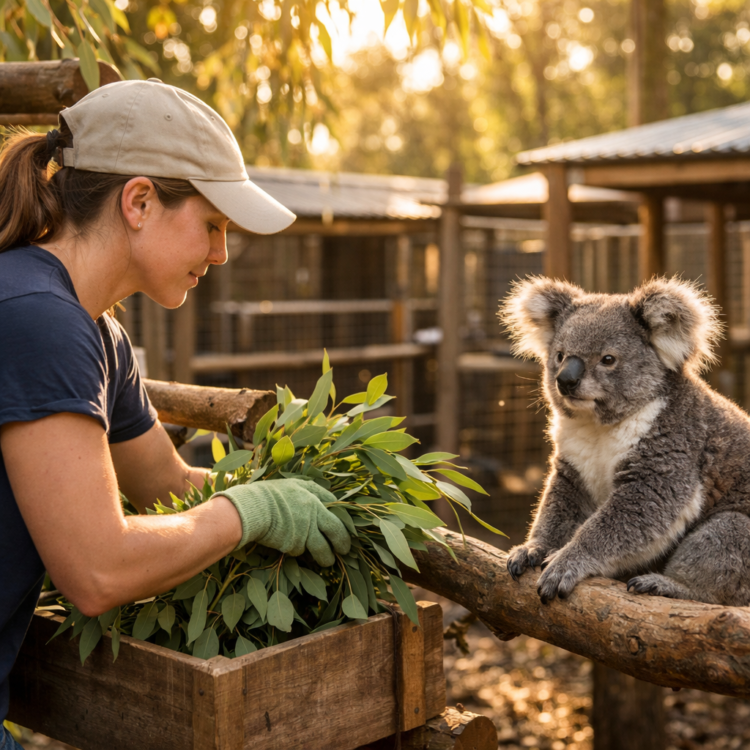
The Port Macquarie Koala Hospital opens its gates to visitors twice daily for feeding time, and this is when the wildlife rehabilitation centre truly comes alive. Since 1973, this not-for-profit facility has been rescuing sick and injured koalas, and watching the dedicated volunteers prepare and deliver meals to dozens of recovering patients offers an unexpectedly moving window into what modern wildlife conservation actually looks like.
Why Feeding Time at the Koala Hospital Is Different
Unlike a zoo enclosure where koalas doze in gum trees for tourists, the koala rehabilitation centre operates as a working hospital. Every resident here arrived with a specific injury or illness—car strikes, dog attacks, chlamydia, bushfire burns. During feeding sessions, volunteer guides walk visitors through the outdoor yards while explaining each koala’s individual story and prognosis.
You’ll see carers delivering fresh eucalyptus branches to each enclosure, and this is where the real education begins. Koalas are famously picky eaters, and sick or stressed koalas become pickier still. Volunteers must learn which of the dozens of local eucalyptus species each patient prefers, sometimes driving hours to collect specific leaf varieties. One koala might only eat swamp mahogany from a particular creek. Another refuses everything except forest red gum tips.
What to Expect During Your Port Macquarie Koala Hospital Visit
Feeding times typically run in the morning and late afternoon—check the official website for current schedules before you visit. The sessions last about 45 minutes and are free to attend, though the hospital relies entirely on donations and volunteers.
You’ll start at the information centre, where staff provide an overview of the facility’s work. Then you’ll move through the treatment yards in a small group. The atmosphere is quieter than you might expect. Koalas recover better without noise and commotion, so guides speak in measured tones and ask visitors to do the same.
What You’ll Learn Along the Way
- How to spot signs of illness or injury in wild koalas (helpful if you’re driving the coastal roads around Port Macquarie)
- Why chlamydia is the biggest threat to koala populations and how the hospital treats it
- Which patients are likely to return to the wild and which will become permanent residents due to injuries
- The eucalyptus collection schedule and how much leaf matter a single koala consumes daily
- What happens during koala surgery and intensive care (the hospital has a full treatment facility)
The Koalas You Might Meet
Because this is a hospital rather than a static wildlife park, the koala residents change constantly. Some stay only days before release. Others remain for months of treatment. A few live here permanently because their injuries prevent survival in the wild.
During your visit, you’ll likely see koalas at various stages of recovery—from the intensive care patients visible through viewing windows to the nearly-healed individuals in larger outdoor enclosures practicing their climbing skills. Carers know every patient by name and can recount their rescue circumstances in detail. The storytelling is what transforms this from a simple animal viewing into something deeper.
Planning Your Koala Hospital Experience
The facility is located in Port Macquarie, where the Hastings River meets the Pacific Ocean roughly halfway between Sydney and Brisbane. If you’re driving up from Sydney (about five hours via the Pacific Highway), consider timing your arrival for an afternoon feeding session. Flying into Port Macquarie Airport from Sydney takes only an hour, and the hospital makes an excellent first or final stop on a Mid North Coast itinerary.
Combine your hospital visit with a walk along the nearby Port Macquarie Coastal Walk, which connects Town Beach to Tacking Point Lighthouse over nine kilometres. You’ll pass several of the town’s seventeen beaches—perfect koala habitat country where eucalyptus forest meets coastal heath. Keep your eyes on the trees; wild koalas do live in pockets around town, though they’re far easier to spot when a volunteer is pointing them out.
Supporting the Koala Rehabilitation Work
The koala hospital treats hundreds of patients annually, funded entirely through public donations and staffed almost exclusively by volunteers. Admission is free, but the donation boxes at the exit see heavy use from visitors who’ve just heard a carer describe driving two hours in the middle of the night to collect a koala hit by a car.
You can also “adopt” a koala patient—essentially sponsoring their care while they recover—or shop at the small gift shop where proceeds fund medical equipment and eucalyptus collection vehicles. For current adoption programs and donation information, check with the hospital directly or ask staff during your visit.
After Your Koala Hospital Visit
Port Macquarie offers plenty more wildlife encounters if you’re still in the mood. Billabong Zoo Koala & Wildlife Park provides the hands-on koala photo experience the hospital doesn’t offer, while Sea Acres Rainforest Centre has an elevated boardwalk through the coastal forest ecosystem where wild koalas actually live. The Hello Koalas Sculpture Trail scattered throughout town celebrates the region’s connection to these iconic marsupials with hand-painted koala sculptures.
But honestly? The feeding sessions at the rehabilitation centre will likely stick with you longer than any photo opportunity. There’s something about watching a volunteer gently place fresh leaves into an enclosure while explaining that this particular koala—still recovering from burns—will never be able to grip branches quite the same way again. That’s when koala conservation stops being an abstract concept and becomes a story about individual animals, dedicated people, and a coastal town that’s built an entire culture around protecting its most famous residents.
You might also like:
- Winter Soaking: Why Cool Months Are Best for Moree Artesian Spa Visits
- Weekend Camping at Lake Keepit: Sailplanes, Stars and Stillwater
For current opening hours, prices and bookings, see Visit NSW – Port Macquarie.
