
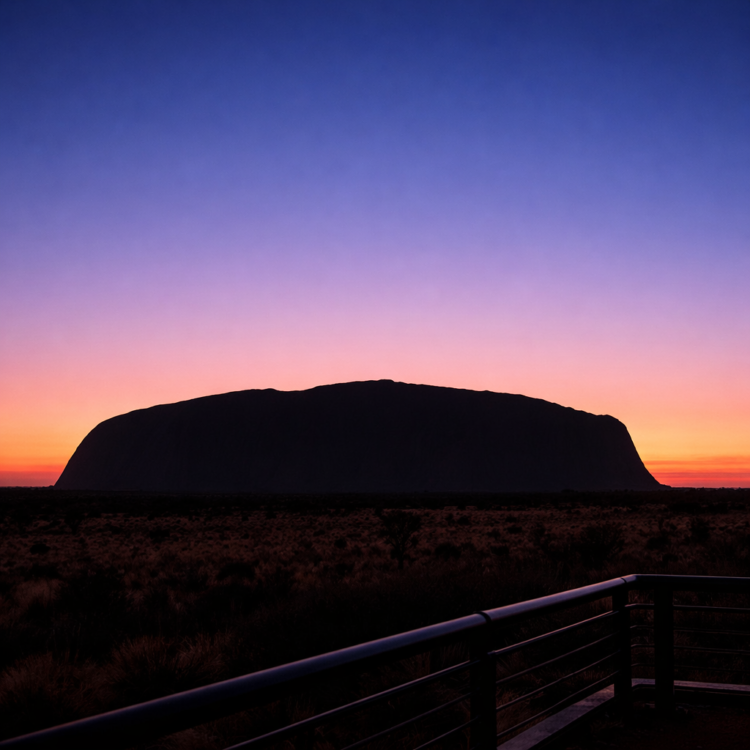
Watching sunrise at Uluru is unlike any dawn you’ve experienced before. As the first light spills across the desert, the massive sandstone monolith shifts through a spectrum of colours—deep indigo to violet, burnt orange to crimson, finally settling into the terracotta glow that photographers chase. It’s not just beautiful. It’s transformative.
Why Sunrise at Uluru Beats Sunset Every Time
Most visitors show up for sunset, and it’s lovely—but you’ll be facing away from the Rock itself, watching it darken while the sky performs. Dawn reverses everything. You’re looking directly at Uluru’s 348-metre face as light floods across it, catching every crevice and curve that the Anangu people have watched for more than 30,000 years.
The crowds thin out considerably too. While the sunset viewing area fills with tour buses, the sunrise spots attract those willing to set an alarm in the dark. You’ll share the moment with people who genuinely want to be there, not those ticking boxes on an itinerary.
The Temperature Advantage
Summer in the Red Centre (December to February) is brutal—daytime temperatures can make afternoon viewing uncomfortable. Winter (June to August) brings crisp mornings but pleasant days. Either way, sunrise gives you the best light when temperatures are most bearable, especially if you’re planning to walk the base afterward.
Where to Watch Sunrise at Uluru
The official Talinguru Nyakunytjaku viewing platform is purpose-built for this. It’s about a five-minute drive from the Cultural Centre, with elevated platforms that frame both Uluru and Kata Tjuta (whose tallest dome rises about 546 metres) in the distance. Park rangers open the gates before dawn—check current opening times at the visitor centre when you arrive, as they shift with the seasons.
From the platform, Uluru sits roughly 25 kilometres away. That distance matters. You’re far enough to see the entire monolith with its 9.4-kilometre base in context, close enough to watch individual faces catch light at different moments.
Timing Your Uluru Sunrise Visit
Don’t just roll up at the official sunrise time listed on weather apps. The real show starts 30 to 40 minutes earlier, when the sky begins its shift from black to deep blue and the desert floor is still invisible below you. That pre-dawn period, when stars fade and the first hint of colour touches the horizon, sets the stage for everything that follows.
The entire experience—from first light to full sun—takes about an hour. Then the light flattens and hardens, and the magic’s done until tomorrow. If you’re staying at Ayers Rock Airport area (about 30 kilometres from the park entrance), you’ll need to leave your accommodation at least 90 minutes before sunrise to allow for the drive and park entry.
What to Bring for a Red Centre Dawn
Desert nights are shockingly cold, even in summer. Pack layers you can peel off as the sun warms the air:
- Warm jacket or fleece (essential in winter, still useful in summer)
- Long pants—shorts will leave you miserable in the pre-dawn chill
- Closed shoes with grip; viewing platforms can be dewy and slippery
- Camera with low-light capability (phone cameras struggle in the dim early stages)
- Headlamp or torch for walking from car park to platform in darkness
- Water bottle—you’ll want it after sunrise if you’re doing the base walk
- Small thermos of coffee or tea (there are no facilities at the viewing area)
A tripod helps if you’re serious about photography, but isn’t essential. The platform provides stable surfaces for resting cameras.
After the Sun Rises: Making the Most of Your Morning
Once the sun is fully up, you’re already in Uluru-Kata Tjuta National Park with the best light of the day ahead. The base walk at Uluru—all 9.4 kilometres if you’re keen, or shorter sections if you’re not—is far more pleasant in morning temperatures. The Mala Walk and Kuniya Walk both leave from near the Cultural Centre and take you close to the Rock’s base, where you’ll see waterholes, rock art, and the texture of the stone itself.
Stop at the Cultural Centre afterward. It opens mid-morning (check current hours at the park website) and offers crucial context about Anangu culture and why this landscape matters beyond its photogenic qualities. The traditional owners are the reason this dual-listed UNESCO World Heritage Site exists as a national park rather than a tourist playground.
Practical Details and Booking
You’ll need a park pass to enter Uluru-Kata Tjuta National Park, valid for three days. Purchase these at the entry station or online in advance. If you’re visiting from Alice Springs (about 4.5 hours drive) or flying into Ayers Rock Airport, the nearest town is Yulara, where all accommodation and services cluster.
For current park pass prices, exact sunrise times for your travel dates, and road condition updates, check the official Parks Australia website before you travel. Conditions in the Red Centre can change, and gates don’t open if weather poses safety risks.
Watching dawn break over Uluru isn’t just another sunrise. It’s a front-row seat to something ancient and ongoing, a daily transformation that happened before humans arrived and will continue long after we’re gone. Set your alarm. It’s worth the early wake-up call.
You might also like:
- Winter Soaking: Why Cool Months Are Best for Moree Artesian Spa Visits
- Chasing Thermals: A Weekend of Gliding at Lake Keepit Near Tamworth
For current opening hours, prices and bookings, see Australia.com (Tourism Australia) – Uluru & Kata Tjuta.
