
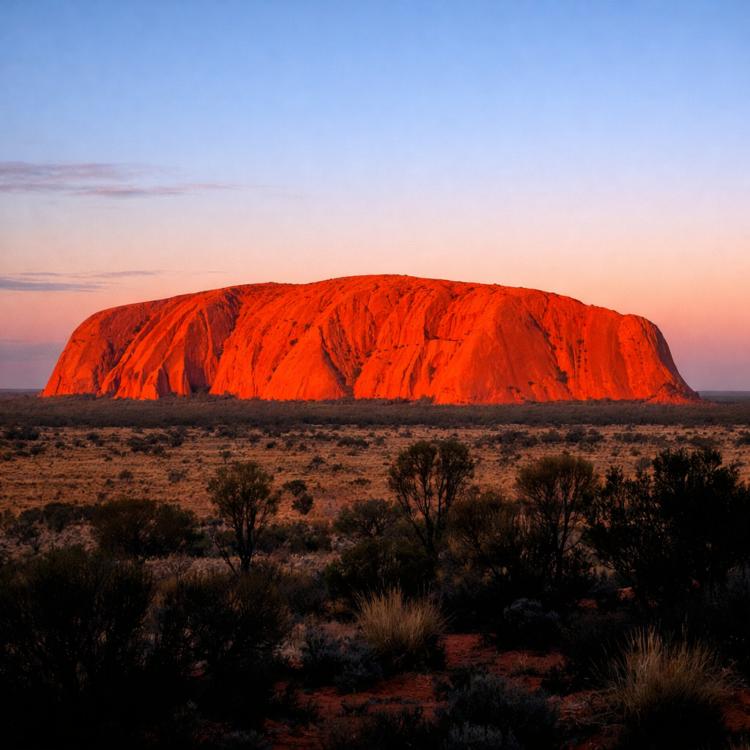
Watching sunrise at Uluru is the one experience that separates those who’ve merely seen Australia’s most famous natural landmark from those who’ve truly felt its power. In the pre-dawn darkness, with the desert air cool against your skin and the sky lightening from indigo to violet, you’ll understand why the Anangu people have revered this place for more than 30,000 years.
But here’s what most first-time visitors don’t realize: there are multiple sunrise viewing options around Uluru-Kata Tjuta National Park, each offering a completely different perspective. Your choice matters.
Why Sunrise at Uluru Beats Sunset (and It’s Not Even Close)
Yes, sunset over Uluru draws the crowds. Tour buses line up at the designated sunset viewing area, cameras at the ready. But sunrise? That’s when you see the reverse magic—the sandstone monolith emerging from shadow, cycling through charcoal grey to rust-red to burnt orange as the sun climbs behind you.
The light is softer. The temperature hovers in that sweet spot before the desert heat builds (even in summer, which runs December through February in Australia’s Southern Hemisphere). And you’ll share the moment with far fewer people.
The colour shift happens fast—maybe fifteen minutes from first light to full illumination. Bring layers; desert mornings in the Red Centre can be surprisingly cold, especially during winter months (June through August) when temperatures can drop near freezing.
The Talinguru Nyakunytjaku Viewing Platform: Your Best Bet for Uluru Dawn
This elevated viewing area gives you a two-for-one perspective: Uluru rising 348 metres to your right, and Kata Tjuta’s domed formations (the tallest reaching about 546 metres) to your left. It’s positioned southwest of Uluru, meaning the rising sun lights up the rock face directly in front of you.
The platform includes interpretive signs explaining Anangu creation stories—worth reading while you wait for dawn to break. You’ll need to arrive at least 30 minutes before sunrise to secure a good spot and let your eyes adjust to the darkness. Check the exact sunrise time and park opening hours on the official parks website before you travel, as they vary seasonally.
Getting There from Alice Springs or Ayers Rock Resort
If you’re based in Alice Springs (about 4.5 hours’ drive from the park), you’ll need to leave in the middle of the night for a sunrise visit—doable, but exhausting. Most visitors stay at Ayers Rock Resort, roughly 30 minutes from the park entrance, which makes the early wake-up call much more manageable.
The drive from the resort to Talinguru Nyakunytjaku takes about 45 minutes. Roads are sealed and well-maintained, but you’ll be driving in complete darkness with the possibility of wildlife on the road. Take it slow.
Alternative Viewpoints for Your Red Centre Sunrise
Not sold on the standard viewing platform? You have options.
- The Mala Walk trailhead: Start the base walk at dawn to experience Uluru’s colours from directly beneath the rock. You’ll be among the first people on the trail, with morning birdsong as your soundtrack.
- Kata Tjuta Dune Viewing Area: Flip the equation and watch sunrise illuminate Kata Tjuta instead. This spot sees a fraction of the visitors but offers equally dramatic colour transitions across the domed formations.
- The base walk (if you’re ambitious): The full 9.4-kilometre circuit around Uluru’s base takes 3-4 hours. Starting in darkness with headtorches, you’ll watch dawn break from constantly shifting angles—though you’ll need strong fitness and navigation confidence for this option.
What to Pack for Your Uluru Sunrise Experience
Desert mornings are deceptive. Even when the forecast promises a scorching day, that first hour before sunrise can be genuinely cold. A warm jacket is non-negotiable between May and September, and still advisable in the shoulder months.
Bring water—at least a litre per person, even though you’re not hiking far. The air is incredibly dry. A headtorch or phone torch helps navigate from car park to viewing area in the dark. And yes, bring your camera, but don’t spend the entire sunrise looking through a lens. Some moments are better filed in memory than on a memory card.
For current park entry fees, check the official Uluru-Kata Tjuta National Park website. Entry is valid for three consecutive days, so you can return for sunset or explore the walks during daylight hours. The park is dual-listed as a UNESCO World Heritage Site (both natural and cultural values), and entry fees support ongoing conservation and the Anangu traditional owners.
After the Sun Rises: Making the Most of Your Morning
Don’t rush off the moment the sun clears the horizon. That’s when most tour groups leave, and the light settles into the rich, golden quality photographers love. If you’ve chosen Talinguru Nyakunytjaku, walk to the far end of the platform—you’ll often find yourself alone with the view.
Consider timing your Uluru sunrise for the start of a full day in the park. The Mala Walk and Mutitjulu Waterhole are at their most pleasant in the soft morning light before 10am. By the time the heat builds, you can retreat to the Cultural Centre to learn more about Anangu culture, then head back to Ayers Rock Resort or Alice Springs for an afternoon rest.
The Red Centre rewards early risers. Set that alarm, brave the cold, and you’ll discover why dawn at Uluru has become the defining memory for thousands of visitors—the moment when ancient rock and fleeting light conspire to create something that photographs never quite capture.
You might also like:
- Behind the Scenes: What to Expect at Port Macquarie Koala Hospital’s 3pm Tour
- Gliding at Lake Keepit: A Weekend Learning to Fly Near Tamworth
For current opening hours, prices and bookings, see Australia.com (Tourism Australia) – Uluru & Kata Tjuta.
