
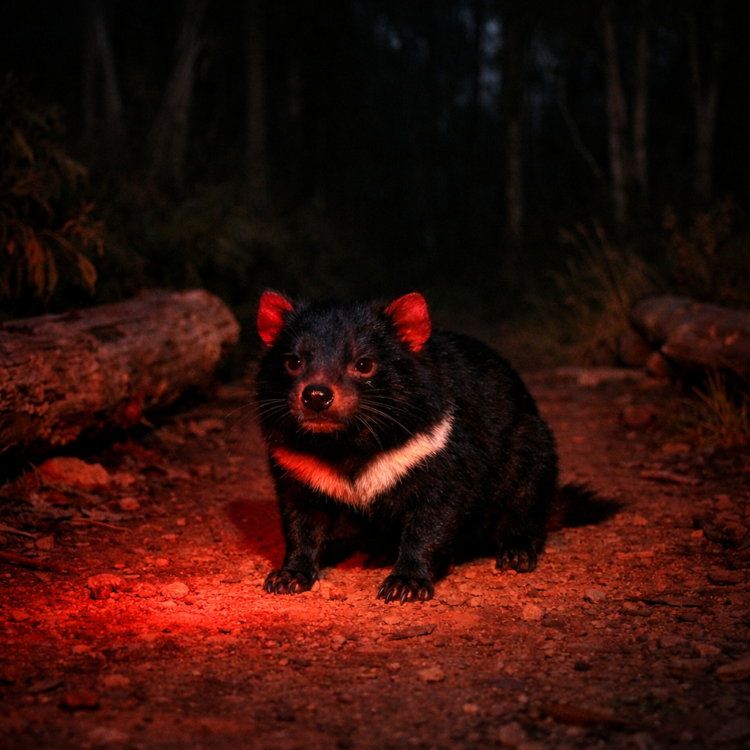
Tracking Tasmanian devils in the wild is one of Tasmania’s most extraordinary wildlife experiences, and it happens almost entirely after the sun goes down. These stocky, fierce carnivorous marsupials are notoriously elusive, but knowing where to look—and when—transforms a Tasmanian wilderness trip from pleasant to utterly unforgettable.
Why Tracking Tasmanian Devils in the Wild Beats Zoo Visits
Yes, you can see Tasmanian devils in sanctuaries across the island state. But there’s something raw and electric about spotting one in the wild, hunting along a forest track or scavenging roadside. Their powerful jaws can crush bone. Their screeches and growls—the source of their devilish name—pierce the night air with a sound you’ll never forget.
Wild devils behave differently than captive ones. They’re warier, faster, more purposeful. And you’re on their turf, playing by their rules.
Where to Find Wild Tasmanian Devils After Dark
Tasmania’s national parks and wilderness areas offer your best chances, particularly where roadkill provides easy feeding opportunities. The devils emerge at dusk and are most active between sunset and midnight, so plan your search accordingly.
Cradle Mountain-Lake St Clair National Park in the island’s northwest hosts healthy devil populations. Drive slowly along the park roads after dark with your headlights on low beam—devils’ eyes reflect green in torch light. Mount Field National Park, closer to Hobart, is another reliable spot. The eastern coast around Freycinet National Park also turns up regular sightings.
Rangers and visitor centres keep informal logs of recent sightings. Check with them before you head out—it saves hours of fruitless searching.
Essential Gear and Safety for Nocturnal Devil Tracking
Pack warm layers. Tasmania’s wilderness gets cold at night year-round, and winter (June through August) can drop near freezing. A red-lens torch preserves your night vision while letting you spot wildlife without startling them as much as white light does.
Here’s what to bring:
- Powerful torch or headlamp (preferably with a red-light setting)
- Warm, waterproof jacket and thermal layers
- Binoculars for observing from a safe distance
- Camera with good low-light performance (no flash—it stresses the animals)
- Snacks and a thermos—you might wait a while
Never approach a devil. They’re wild carnivores with a bite force that rivals animals many times their size. Observe from at least ten metres away, and if one approaches your vehicle, stay inside with windows up.
What to Expect When You Spot a Devil
Tasmanian devils are about the size of a small dog, with stocky black bodies and often a white chest stripe. They waddle more than they run, but don’t let that fool you—they’re surprisingly quick when they want to be.
If you find one feeding, you might witness the famous devil screeching. Multiple devils often congregate around large carcasses, and the resulting squabbles are loud, aggressive, and strangely fascinating. They’re not fighting to the death—just establishing a pecking order for who eats first.
Sightings are never guaranteed. Some visitors spend three nights searching and see nothing. Others spot two devils within twenty minutes of leaving their accommodation. That’s the nature of tracking wild Tasmanian devils—the uncertainty is part of the thrill.
Joining a Guided Night Tour vs. Self-Guided Tracking
Several operators run nocturnal wildlife tours specifically designed for devil spotting. Guides know the best current locations, can identify tracks and scat, and help you distinguish devils from spotted quolls (another carnivorous marsupial that looks vaguely similar in torch light).
Self-guided tracking gives you more flexibility and solitude. Rent a vehicle, download offline maps (mobile coverage is patchy), and drive the back roads of Tasmania’s national parks slowly. Pull over frequently. Listen. The wilderness here rewards patience.
Either way, check the official Tasmania Parks and Wildlife Service website for current park conditions, fire restrictions, and any temporary closures before you head out.
Conservation Context: Why Your Visit Matters
Devil facial tumour disease has devastated wild populations since the 1990s, making every sighting more precious. Conservation programs are working to protect disease-free populations and breed insurance colonies, and responsible wildlife tourism helps fund these efforts.
Keep your distance, never feed wildlife, and report any sick-looking devils to park authorities. Your observations contribute to monitoring efforts across Tasmania’s wilderness areas.
Tracking these fierce little marsupials through Tasmania’s ancient forests connects you to something rare and wild and worth protecting. The night you finally hear that unearthly screech echoing through the bush—you’ll understand why people return to Tasmania year after year, searching.
You might also like:
- Cotton Farm Tours Near Moree: Inside the Harvest Season Experience
- Hand-Feeding Peacocks at Tamworth Marsupial Park: A Toddler-Friendly Australian Wildlife Encounter
For current opening hours, prices and bookings, see Australia.com (Tourism Australia) – Uluru & Kata Tjuta.
