
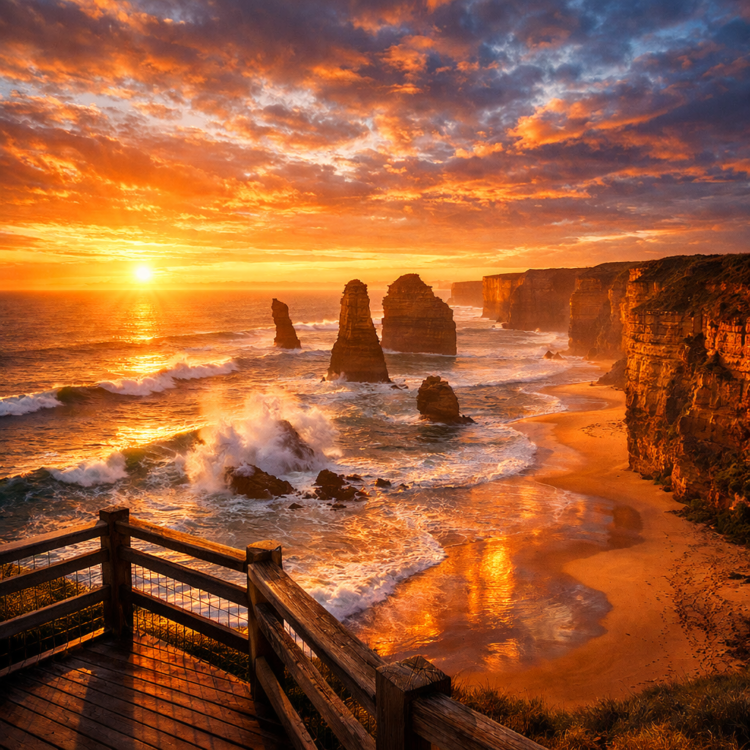
The best time to photograph the Twelve Apostles isn’t just about avoiding crowds—it’s about chasing light that turns these towering limestone stacks into something otherworldly. Dawn and dusk are the magic hours along this stretch of Victoria’s Great Ocean Road, but each delivers a completely different mood, colour palette, and set of challenges. If you’re driving all this way with a camera, you’ll want to understand what each time of day actually gives you.
Why Golden Hour Matters More Here Than Anywhere
Limestone is a chameleon. Under flat midday sun, the Apostles look impressive but pale, almost chalky. But when low-angled light rakes across their weathered faces at sunrise or sunset, every groove, every crack, every band of sediment suddenly leaps into relief. The rock glows warm—honey, amber, sometimes even pink depending on the season.
The Southern Ocean provides your foreground drama. Waves smash against the base of the stacks, throwing up white spray that catches the light. During golden hour, that spray turns golden too. It’s not subtle. It’s the kind of light that makes you understand why photographers wake up at ungodly hours.
Best Time to Photograph the Twelve Apostles: Sunrise vs Sunset
Here’s the catch: the viewing platforms face roughly south and west. That matters enormously when you’re timing your Twelve Apostles photography for optimal light.
Sunrise gives you soft, diffused light coming from behind you as you face the stacks. The Apostles are front-lit, evenly illuminated without harsh shadows. The ocean often sits calmer in the morning, and the light has a cooler, cleaner quality—pale gold verging into blue. You’ll likely have the platforms nearly to yourself, too. The downside? You won’t get that dramatic rim-lighting effect, and if the morning is overcast, you might end up with flat grey light.
Sunset is when the drama really ignites. The western light hits the stacks from the side, creating long shadows and sculptural depth. The rock faces catch fire—deep orange, red, sometimes violet as the sun drops. The sky often erupts into layers of colour that reflect off the wet sand far below. But you’ll be sharing the experience with dozens (sometimes hundreds) of other visitors, and the wind typically picks up in the afternoon, which can make long exposures trickier.
Seasonal Shifts to Consider
Victoria’s seasons flip the timing. Summer (December to February) means sunrise around 6am and sunset after 8pm—long days but also peak tourist season. Winter (June to August) brings sunrise after 7am and sunset before 6pm, with far fewer crowds and more dramatic storm light. The winter ocean is wild, the skies more volatile. You might get drenched, but the photos can be spectacular.
The Platform Strategy: Where to Position Yourself
Most visitors only see the Twelve Apostles from the main viewing platform, accessed via a short paved walk from the car park. It’s the classic view, and for good reason—it’s spectacular. But for photographers, there are better angles.
Arrive early (or stay late) and explore the full length of the platform system. The eastern end gives you a different composition, with stacks arranged in layers that work beautifully for depth. The western end frames the stacks against the headland. Move around. The best time to photograph the Twelve Apostles from different viewpoints reveals entirely different scenes.
If you’re serious about capturing something unique, the Gibson Steps platform—about two kilometres east—lets you descend to beach level (when tides and conditions permit). Down there, you’re among the stacks, not above them. The perspective is dizzying. Check tide times and safety information at the visitor centre before attempting this—conditions can change rapidly.
Practical Tips for Capturing the Shot
Here’s what you actually need to know before you arrive:
- Bring a sturdy tripod. The wind along this coast is relentless, and you’ll want longer exposures to blur that crashing surf.
- Pack lens cloths. Sea spray coats everything within minutes.
- Check the official Parks Victoria website for current access, platform closures, and safety updates before you drive out.
- Fill your tank in Apollo Bay or Port Campbell—fuel stations are sparse along this route.
- Layer your clothing. Even summer mornings can be bitterly cold on these exposed platforms.
- If you’re staying overnight, book accommodation in Port Campbell (the closest town) well in advance during school holidays and summer.
What to Expect During Your Visit
The car park sits about 500 metres from the viewing platforms via an underpass beneath the Great Ocean Road itself. The walk is paved and wheelchair accessible, though exposed to wind. There are no cafes or facilities right at the site, though there’s a large visitor centre with amenities about two kilometres back toward Port Campbell.
If you’re planning to shoot both sunrise and sunset (which many photographers do), you’ll need to fill the middle hours somehow. The drive between the car park and nearby attractions like Loch Ard Gorge, London Arch, and the Grotto takes about thirty minutes one-way, and each offers completely different photographic opportunities with different light requirements.
Why This Stretch of Coast Delivers Year-Round
Unlike some Australian landmarks that photograph best in one specific season, the Twelve Apostles reward visitors in every month. Summer brings long golden hours and calm seas. Autumn (March to May) offers fewer crowds and still-decent weather. Winter delivers the most dramatic skies and massive swells. Spring (September to November) gives you wildflowers along the clifftops and migrating whales visible from the platforms.
The key is matching your expectations to the season. Don’t expect mirror-calm winter seas, and don’t expect solitude on a January afternoon. But whatever time you arrive—if you’re there when the light is low and the ocean is doing its work—you’ll understand why this stretch of Victoria’s coast has become one of the most photographed shorelines on earth.
You might also like:
- Night Diving the Great Barrier Reef: A Different World After Dark
- Winter Soaking: Why Cool Months Are Best for Moree Artesian Spa Visits
For current opening hours, prices and bookings, see Parks Australia – Uluru-Kata Tjuta National Park.
