
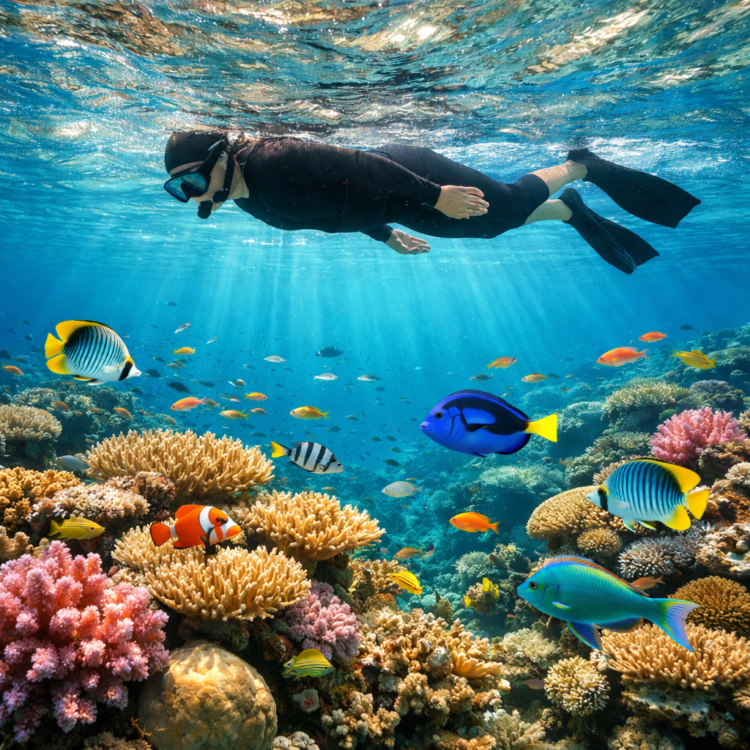
Snorkelling the Great Barrier Reef is one of those experiences that sounds straightforward until you start planning—and then you’re drowning in options. Day trips from Cairns or Port Douglas? Outer reef or inner? Full-day or half-day? If you’re new to reef snorkelling or just want to get it right the first time, here’s what actually matters.
Why Snorkelling the Great Barrier Reef Beats Staying Dry
Sure, scenic flights over the reef are spectacular—you’ll see the sheer scale of the world’s largest coral reef system stretching over 2,300 kilometres. But you won’t see the reef. The real magic happens when you put your face in the water and drift over gardens of staghorn coral while schools of parrotfish crunch past your ears.
The Great Barrier Reef is home to thousands of fish species and hundreds of coral types, and snorkelling puts you right in the middle of it all without needing dive certification or expensive equipment. It’s accessible, immediate, and honestly? The view from three metres underwater often beats the view from 300 metres up.
Choosing Your Departure Point and Tour Style
Most first-timers base themselves in Cairns or Port Douglas, and both work well for reef access. Cairns has more tour operators and budget options. Port Douglas is smaller, quieter, and slightly closer to some outer reef sites—which matters if you’re prone to seasickness, because less travel time means less rolling around on a boat.
Here’s what you actually need to decide: inner reef or outer reef? Inner reef sites are closer, cheaper, and calmer, but the coral and fish life don’t compare to the outer reef. If you’re travelling all the way to Queensland to snorkel the Great Barrier Reef, spend the extra hour on the boat and go outer. The water clarity, coral health, and sheer density of marine life make the difference obvious the moment you jump in.
Check the official tourism websites for current operators, prices, and departure times—these change seasonally and some companies offer better deals midweek.
What to Expect When You’re Actually in the Water
The first thing that surprises people? How easy it is. Modern snorkel gear is comfortable, boats anchor in calm spots, and you don’t need to swim hard—you just float and look down. Most tours include a safety briefing and a crew member in the water to help nervous swimmers.
The second thing? The sounds. Underwater, the reef crackles and pops as parrotfish scrape algae off coral and shrimp click in the crevices. It’s alive in a way you don’t expect from pictures.
Water temperature varies by season—remember, Australia sits in the Southern Hemisphere, so summer runs December through February and winter June through August. Summer water is bath-warm (you barely need a wetsuit), while winter is cooler but still swimmable with a thin wetsuit, which most operators provide. Summer also brings stinger season (roughly November to May), when jellyfish are more common, but tour boats provide full-body stinger suits and choose sites carefully.
Practical Tips for Snorkelling the Reef Like a Pro
A few things will make your day immeasurably better:
- Take seasickness tablets the night before and again that morning, even if you think you don’t get seasick. The boat ride out can be choppy, and you don’t want to spend your reef time feeling queasy.
- Bring reef-safe sunscreen—regular sunscreen damages coral. Most dive shops in Cairns and Port Douglas sell it, or order online before you arrive.
- Defog your mask properly. Spit works (seriously), or use defog solution. A fogged mask ruins the experience.
- Ask crew members where to look. They spot turtles, reef sharks, and giant clams daily and will point you toward the good stuff.
- Stay for multiple snorkel sessions. Most day trips include 2-3 different reef sites, and the third one is often the least crowded.
Why Your First Reef Snorkel Should Be on the Great Barrier Reef
Look, plenty of places around the world have good snorkelling. But the Great Barrier Reef operates on a different scale entirely—it’s visible from space for a reason. Swimming through bommies (coral formations rising from the seafloor like underwater mountains) taller than buildings, watching a Maori wrasse the size of a dog cruise past, or stumbling onto a turtle grazing in a coral garden—it recalibrates what you think “good snorkelling” means.
It’s also remarkably beginner-friendly. Tour operators in Queensland have been doing this for decades. The logistics are smooth, the safety standards high, and the crew genuinely want you to see something amazing. You don’t need experience. You just need to show up and be willing to get your face wet.
Book your trip, pack the reef-safe sunscreen, and remember: the reef looks different every single time you enter the water. Make the most of it.
You might also like:
- How to Test Used Smartphones Before Buying: A Complete Safety Checklist
- Canoeing the Namoi River at Warrabah National Park: A Paddler’s Guide
For current opening hours, prices and bookings, see Parks Australia – Uluru-Kata Tjuta National Park.
